
Ptosis is a drooping of the upper eyelid that may obstruct the upper field of vision and affect eyelid symmetry. We assess the cause, severity and eyelid muscle function to determine the most appropriate treatment.
Ptosis is the abnormal drooping of the upper eyelid. It may affect one or both eyes and can range from a slight lowering of the eyelid to more significant drooping that partially covers the pupil.
Ptosis may be present from birth or develop later in life. The causes of ptosis can be broadly grouped into the following:
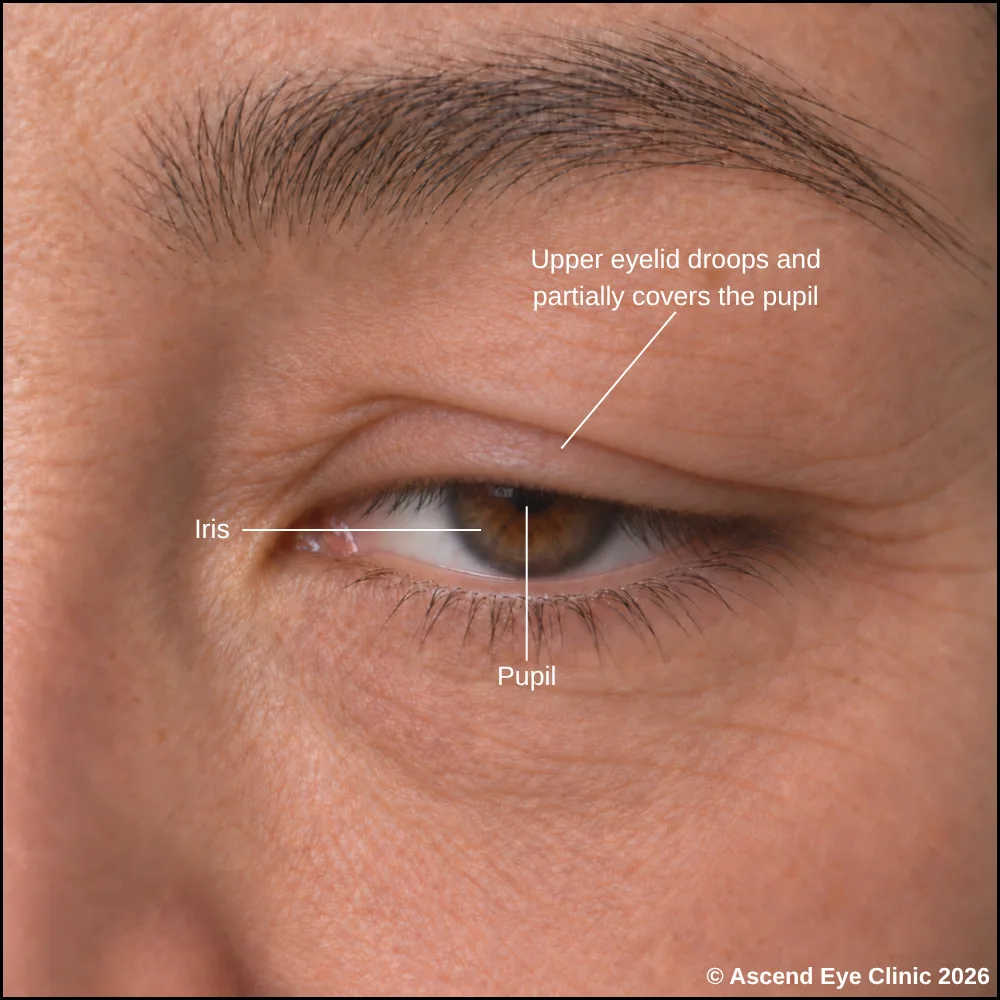


When the eyelid obstructs vision, ptosis can reduce the upper visual field and make activities such as reading or driving more difficult. Some people may also raise their eyebrows or tilt their head backwards to see more clearly, which can lead to forehead strain or tiredness around the eyes.
In some people, the drooping becomes more noticeable later in the day or when they are tired. Ptosis that develops suddenly should be assessed promptly, particularly if it is accompanied by double vision, unequal pupils, severe headache, facial weakness or weakness elsewhere in the body.
Diagnosis begins with a careful assessment of the eyelids, eyelashes and surrounding eye structures. We look at the position and movement of the eyelids, the condition of the lid margins and lashes, and any changes affecting the surface of the eye to determine the nature and extent of the problem.
Measures how clearly you can see and helps identify any reduction in vision.
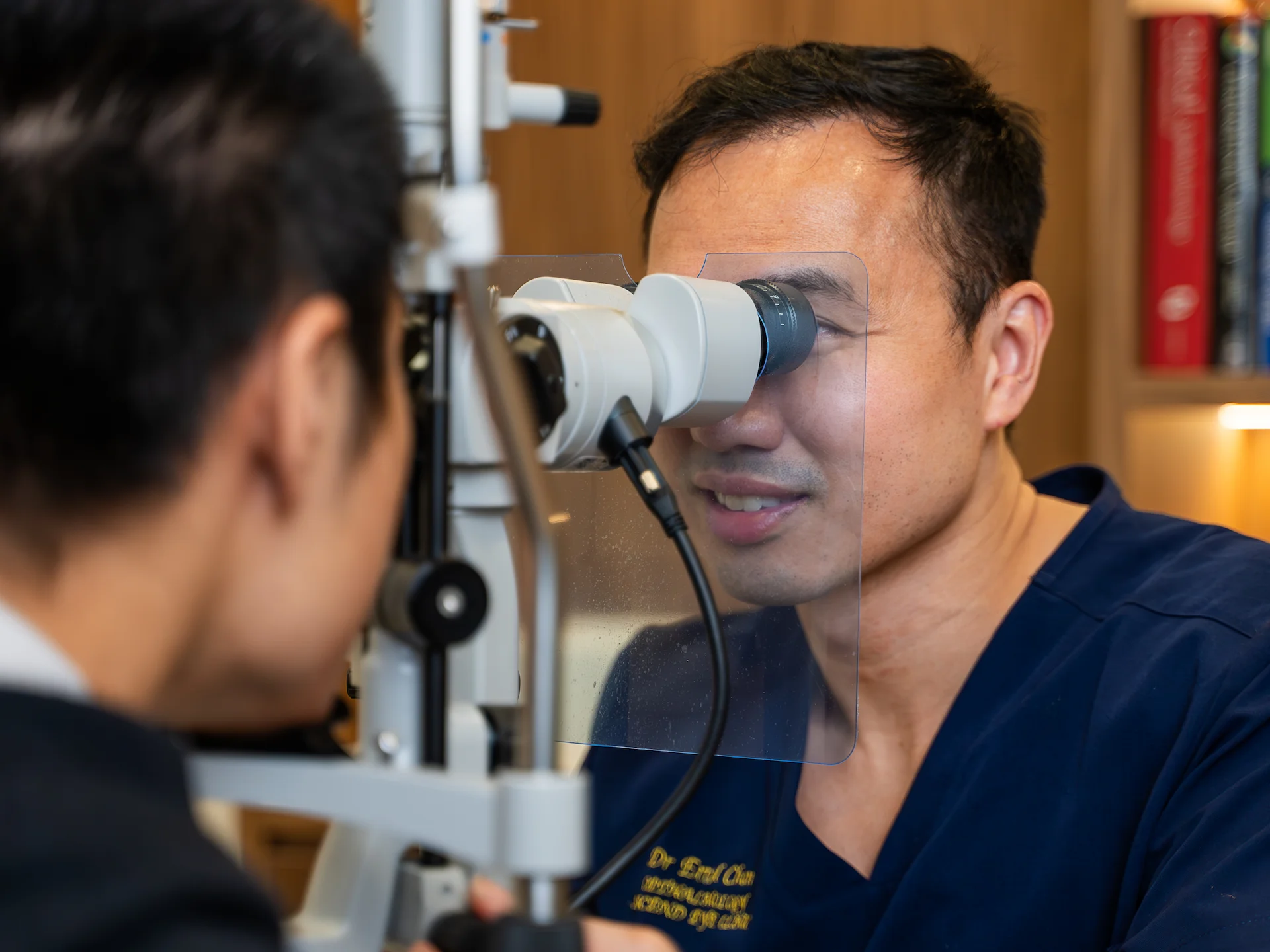
Provides a magnified view of the eyelids and eye surface to assess the position of the upper eyelid, the eyelid margin and any associated irritation or ocular surface changes.
Measures the degree of eyelid drooping and the strength of the eyelid-lifting muscles. Measurements such as marginal reflex distance and levator function help assess the severity of ptosis and guide treatment planning.
Measures whether the drooping upper eyelid is obstructing the upper field of vision and how much the visual field improves when the eyelid is lifted.
Treatment for ptosis aims to raise the upper eyelid to improve vision, symmetry, and appearance. Depending on the condition, treatment may include prescription eye drops or surgery, with the approach tailored to achieve a natural and balanced eyelid position.
For selected patients with acquired ptosis, where the upper eyelid has gradually drooped later in life because of ageing processes, medicated eye drops may be used to temporarily raise the eyelid without surgery.
The drops work by stimulating Müller’s muscle, a small muscle within the upper eyelid, causing it to contract and lift the eyelid slightly. The medication is applied directly to the affected eye once daily. Its effect is temporary, so continued daily use is required to maintain the eyelid lift.
Ptosis surgery aims to raise the upper eyelid to improve the visual field, eyelid symmetry and overall appearance. It is performed under local anaesthesia with sedation in adults, while general anaesthesia may be used for children or selected patients.
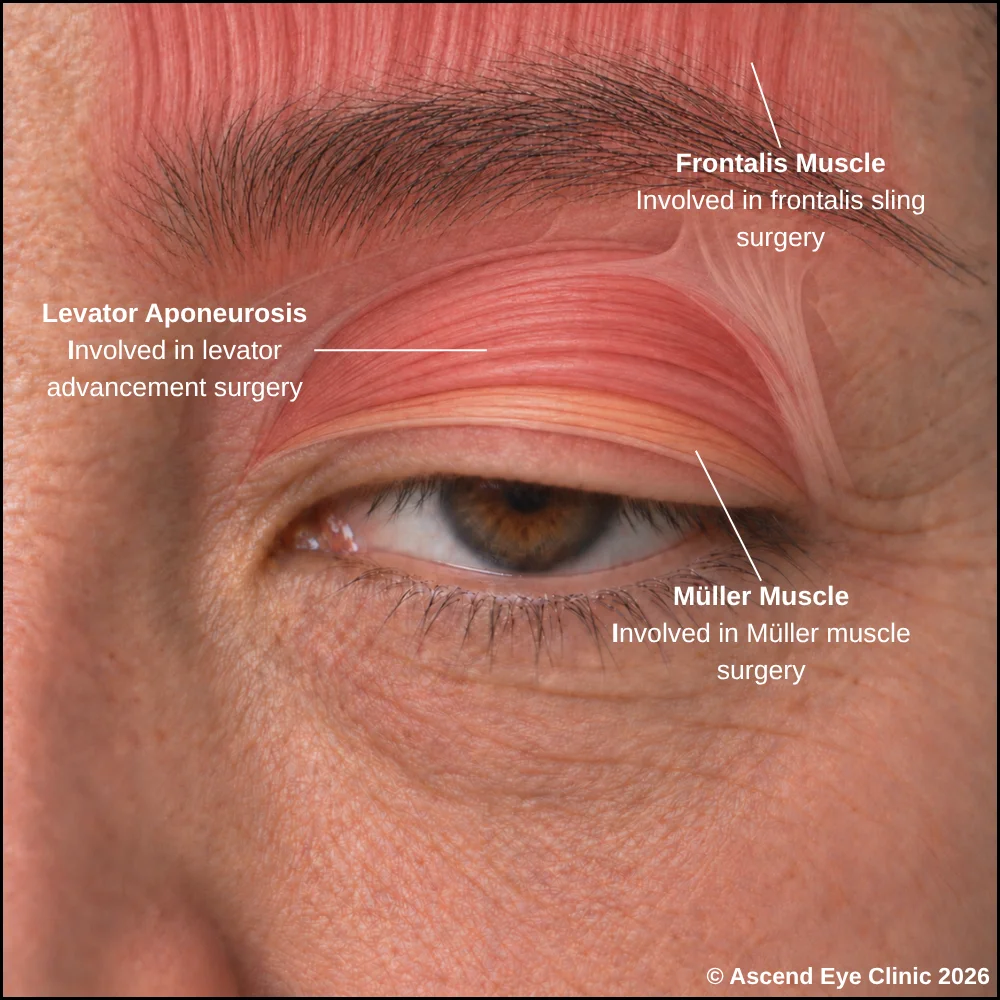
The three main surgical approaches are:
After surgery, the eyelid may feel swollen, tight or mildly uncomfortable, with temporary bruising. Some patients may also notice temporary difficulty closing the eye completely. These symptoms usually improve gradually as the eyelid heals.

Whether ptosis surgery is claimable depends on the severity of the eyelid droop and whether it meets the relevant medical criteria. Moderate to severe ptosis that affects vision or daily function may be considered a medical condition and may therefore be eligible for Medisave or insurance claims.
Assessment typically includes measurements such as the degree of eyelid drooping, levator muscle function, and visual field testing. These findings help determine whether the condition meets the required criteria for medical claims.
From your initial consultation to treatment and follow-up care, our team will guide you through every stage of your journey. We will take the time to explain your condition, answer your questions and help you feel informed and supported throughout your care.

Your consultation begins with a detailed assessment of your vision and eye health. Depending on your condition, this may include measurements of your vision and eye pressure, examination of the front and back of the eye, and advanced diagnostic imaging.
Our team will guide you through each test and explain what is being assessed. Your results will then be carefully reviewed to understand your individual needs and determine whether monitoring or treatment may be recommended.
Every eye and every patient is different. Your treatment plan will be tailored according to your examination findings, visual needs, general health and lifestyle.
We will explain the recommended treatment, its expected benefits, possible risks and any suitable alternatives in a clear and straightforward manner. You will have time to ask questions and consider your options before deciding how you would like to proceed.
Before your treatment, our team will guide you through the necessary preparations, paperwork and medication instructions. Where applicable, we will explain how to use your prescribed eye drops and how to care for your eyes afterwards.
We understand that undergoing a procedure can feel unfamiliar or worrying. Our team will be available to answer your questions and ensure that you know what to expect before the day of your treatment.
On the day of your procedure, you will arrive at the hospital or surgical centre where your operation has been scheduled. The surgical team will help you prepare and explain what will happen at each stage.
Anaesthetic eye drops or other forms of anaesthesia may be used, depending on the procedure, to keep you comfortable. Your doctor and the surgical team will support and reassure you throughout the operation.
Most eye surgeries are performed as day procedures, although the duration and recovery process will depend on the treatment you receive. Your vision may be temporarily blurred afterwards, so you should arrange for someone to accompany you home and should not drive unless your doctor has advised that it is safe to do so.
We will provide clear instructions on how to care for your eyes, use any prescribed medication and manage your activities during recovery. We will also explain which symptoms are expected and when you should contact the clinic for further advice.
Follow-up appointments allow us to monitor your vision, assess your recovery and identify any concerns at an early stage. Our team remains accessible should you have any questions or concerns throughout your recovery.
If your upper eyelid is affecting your vision, causing eye strain or creating noticeable asymmetry, a detailed assessment can help determine the cause and whether treatment is appropriate.
Book a consultation at Ascend Eye Clinic to discuss your symptoms and the most suitable treatment options.
A suddenly drooping eyelid is not always due to simple age-related ptosis. It can sometimes be related to a problem affecting the nerves or muscles that control the eyelid. If the drooping appears suddenly, especially together with double vision, unequal pupils, facial weakness or other neurological symptoms, it should be assessed promptly.
Sometimes the eye itself is normal, but a lower upper eyelid makes the opening of that eye appear smaller. Ptosis can therefore make one eye look smaller even when both eyeballs are the same size.
Yes. Age-related ptosis is common. Over time, the tissue connecting the eyelid-lifting muscle to the eyelid can stretch or weaken, causing the upper eyelid to sit lower than before.
Eyelid position can become more noticeable when the muscles around the eyes are tired. However, ptosis that changes significantly throughout the day may sometimes be related to an underlying muscle or nerve condition, so we assess the pattern of drooping as part of the examination.
Yes. If the eyelid sits low enough, it can block part of the upper visual field. This may make activities such as reading signs, driving or looking upwards more difficult.
Ptosis may develop gradually, so the difference between the eyelids can become more noticeable over months or years. This is commonly related to age-related stretching or weakening of the tissues that lift the upper eyelid.
Yes. Ptosis can affect one eye or both eyes. When both eyelids are drooping, the difference may be less obvious because there is no normal eyelid to compare against.
No. Ptosis refers to the upper eyelid itself sitting too low, whereas excess eyelid skin is caused by loose or redundant skin over the eyelid. The two conditions can occur together, but they are treated differently.
Temporary eyelid drooping can occur after eye surgery because of swelling, inflammation or stretching of the eyelid tissues. In some cases, the tissues that lift the eyelid may remain stretched, resulting in persistent ptosis.
We assess the height of the eyelid, how well the eyelid-lifting muscle works, whether one or both eyes are affected and whether the eyelid is obstructing vision. Measurements such as MRD1 help us document how low the eyelid sits.
We may perform a visual field test to measure how much of the upper field of vision can be seen. The test can be repeated with the eyelid lifted to show whether raising the eyelid improves the visual field.
No. Mild ptosis that does not affect vision or cause significant symptoms may not require treatment. Treatment is considered when the eyelid interferes with vision, causes functional problems or when someone would like the eyelid position corrected.
Most established adult ptosis caused by stretched or weakened eyelid tissues cannot be permanently corrected with exercises, creams or massage. When a lasting correction is required, surgery is usually the main treatment.
Ptosis surgery raises the upper eyelid by adjusting the structures responsible for lifting it. Depending on the cause and the strength of the eyelid muscles, this may involve the levator muscle, Müller muscle or, in selected cases, a frontalis sling.
Yes. Ptosis surgery usually provides a long-lasting improvement, but the eyelid tissues can continue to stretch or change with age. Some people may develop recurrent drooping or require further adjustment in the future.
Hi, I would like to book a consultation with Dr Errol Chan from Ascend Eye Clinic
