
Styes and chalazia are common eyelid conditions that can cause swelling, tenderness or a noticeable lump. At Ascend Eye Clinic, we assess the cause of your eyelid swelling and recommend appropriate treatment to relieve symptoms, reduce inflammation and help restore a more comfortable, natural-looking eyelid.
Styes and chalazia are common eyelid lumps that develop when the small oil-producing glands of the eyelid become inflamed or blocked. In general, a stye is more commonly associated with infection and tends to be more painful, while a chalazion usually results from a blocked oil gland and may become firmer and less painful over time.
Eyelid lumps may appear as a localised swelling on or within the eyelid and can sometimes be accompanied by redness, tenderness or irritation. Most are harmless and improve with simple treatment, although some may persist or recur.
An eye examination is recommended if an eyelid lump does not settle, keeps returning, becomes increasingly painful or swollen, or begins to affect your vision.
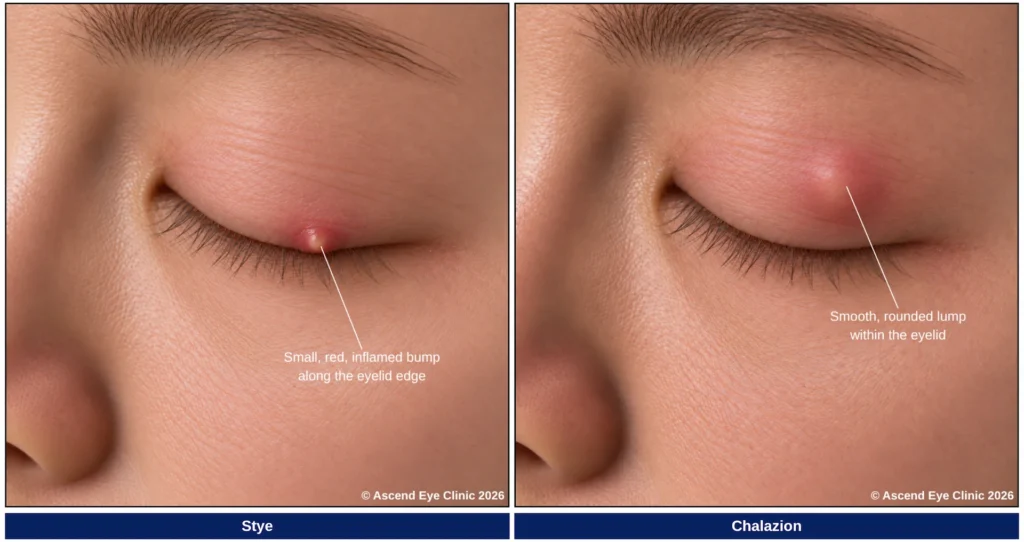
Depending on the type and location of the lump, you may notice:
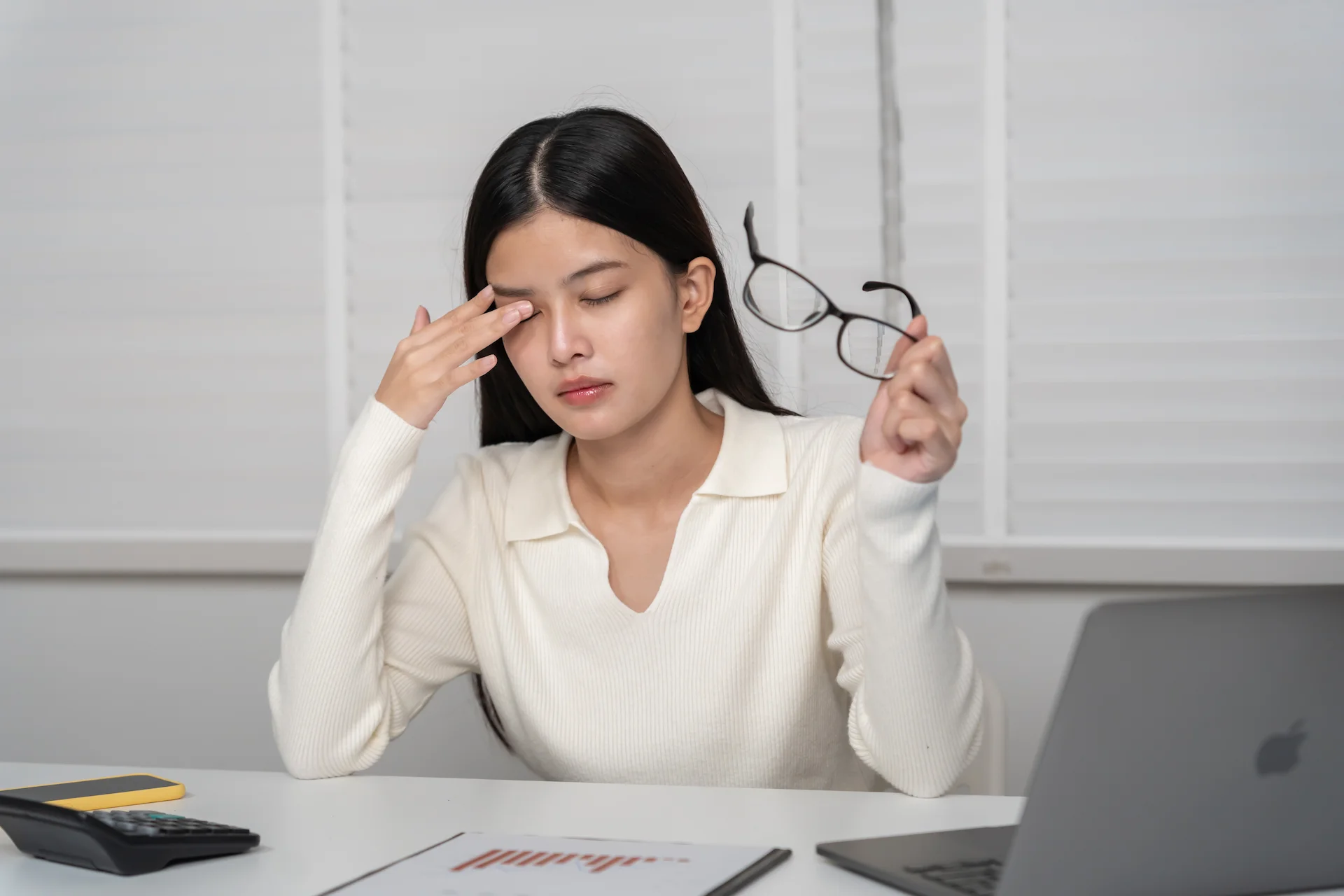
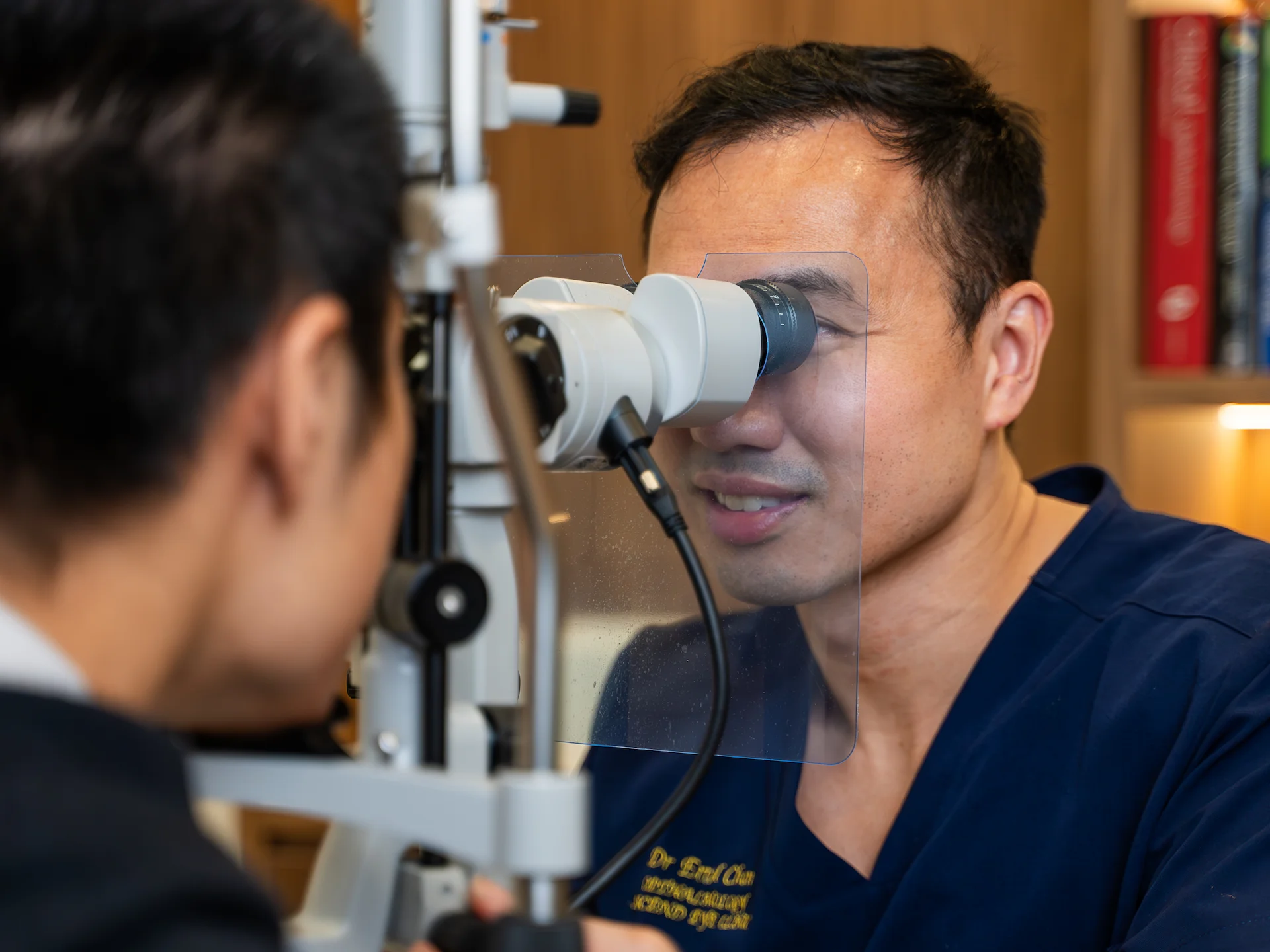
Diagnosis begins with a careful assessment of the eyelids, eyelashes and surrounding eye structures. We look at the position and movement of the eyelids, the condition of the lid margins and lashes, and any changes affecting the surface of the eye to determine the nature and extent of the problem.
Measures how clearly you can see and helps identify any reduction in vision.
Provides a magnified view of the eyelid and eyelashes to assess the location, appearance and degree of inflammation of the lump. This helps distinguish a stye from a chalazion and allows treatment to be targeted more appropriately to the underlying condition.
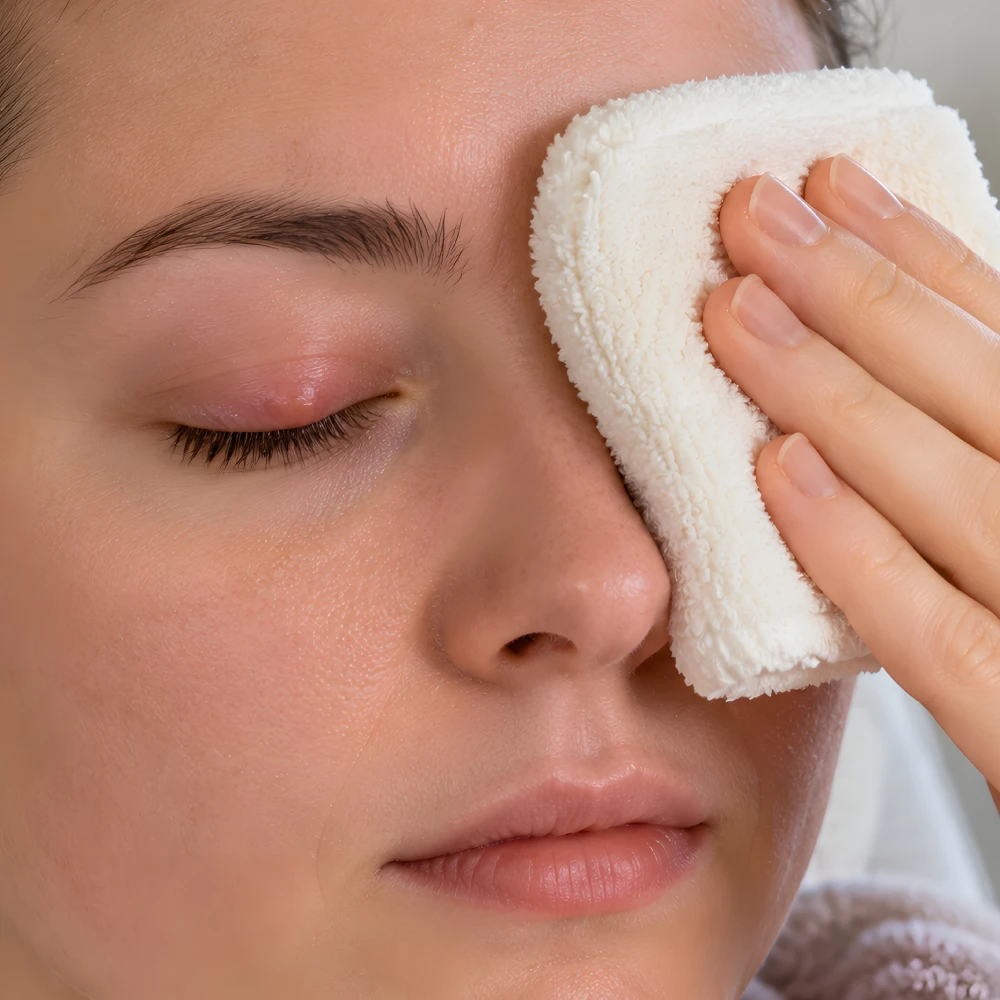
Most eyelid lumps can be managed effectively, starting with measures to relieve the blockage and inflammation. We offer various treatment options including eyelid care measures, anti-inflammatory and antibiotic medications, non-invasive Low Level Light Therapy to improve meibomian gland function, and incision and drainage for more persistent eyelid lumps.
For chalazia, particularly smaller or recently developed ones, warm compresses, gentle eyelid massage and regular eyelid cleansing can help soften the thickened oil and encourage the blocked gland to drain naturally.
For styes, antibiotic eye drops or ointments may be prescribed to treat the associated infection and inflammation. We will also advise on an appropriate eyelid wash or cleanser to keep the eyelid margins clean and remove excess oil, crusting and debris along the lash line.
We will examine the eyelids for contributing conditions such as blepharitis or meibomian gland dysfunction. Maintaining good eyelid hygiene can help reduce blockage of the oil glands and lower the risk of recurrent styes.
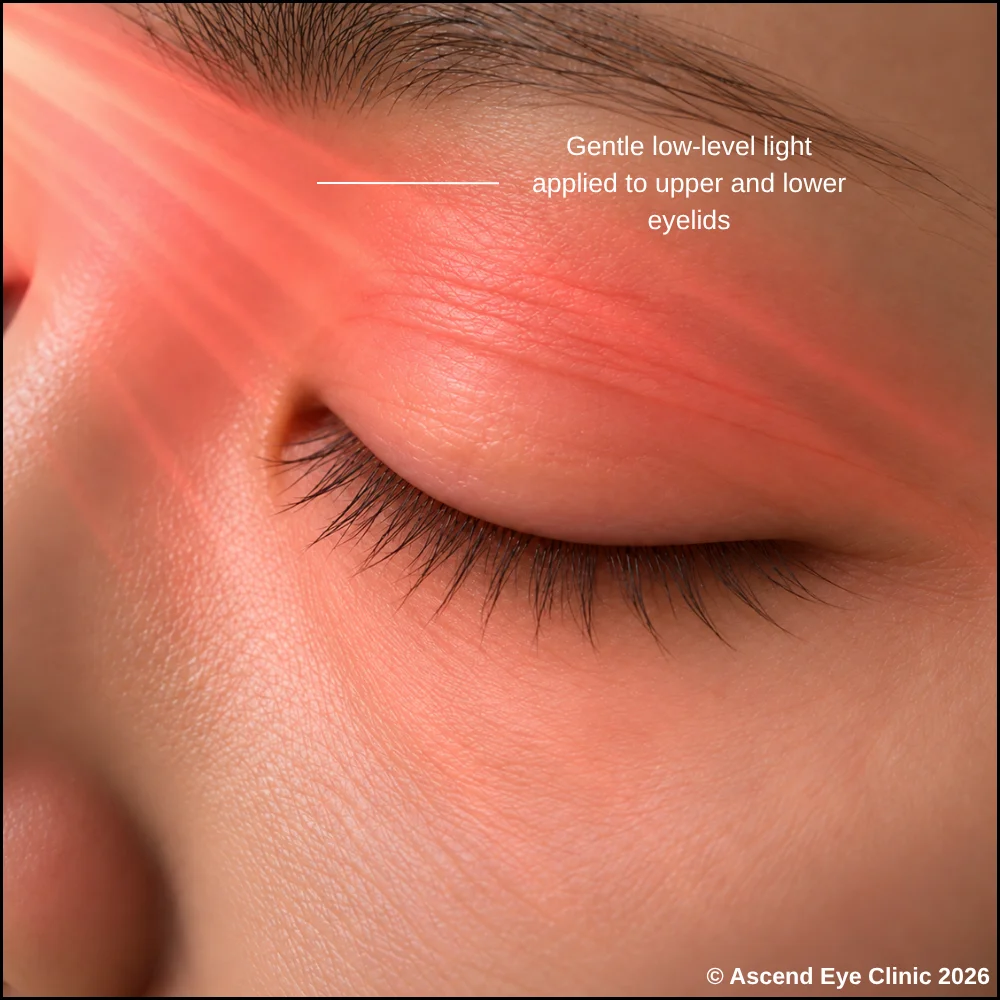
Low-Level Light Therapy (LLLT) uses controlled light and gentle heat to treat blockage and inflammation of the meibomian glands, which commonly contribute to recurrent styes and chalazia. By softening thickened oils and encouraging healthier gland function, treatment helps improve oil flow from the eyelids and addresses the underlying tendency for the glands to become blocked.
Treatment is non-invasive and performed with the eyes comfortably closed. Light therapy is directed around the eyelids to warm and stimulate the meibomian glands without the need for needles or incisions. Each session takes approximately 20 minutes, and a course of treatments over several weeks will be recommended depending on the severity and recurrence of the condition.
After treatment, the glands can drain more effectively and eyelid inflammation gradually settles. This can help existing styes or chalazia resolve while improving overall eyelid health and reducing the tendency for recurrent blockages. For suitable patients, LLLT provides a non-surgical option for managing persistent or recurrent eyelid lumps.
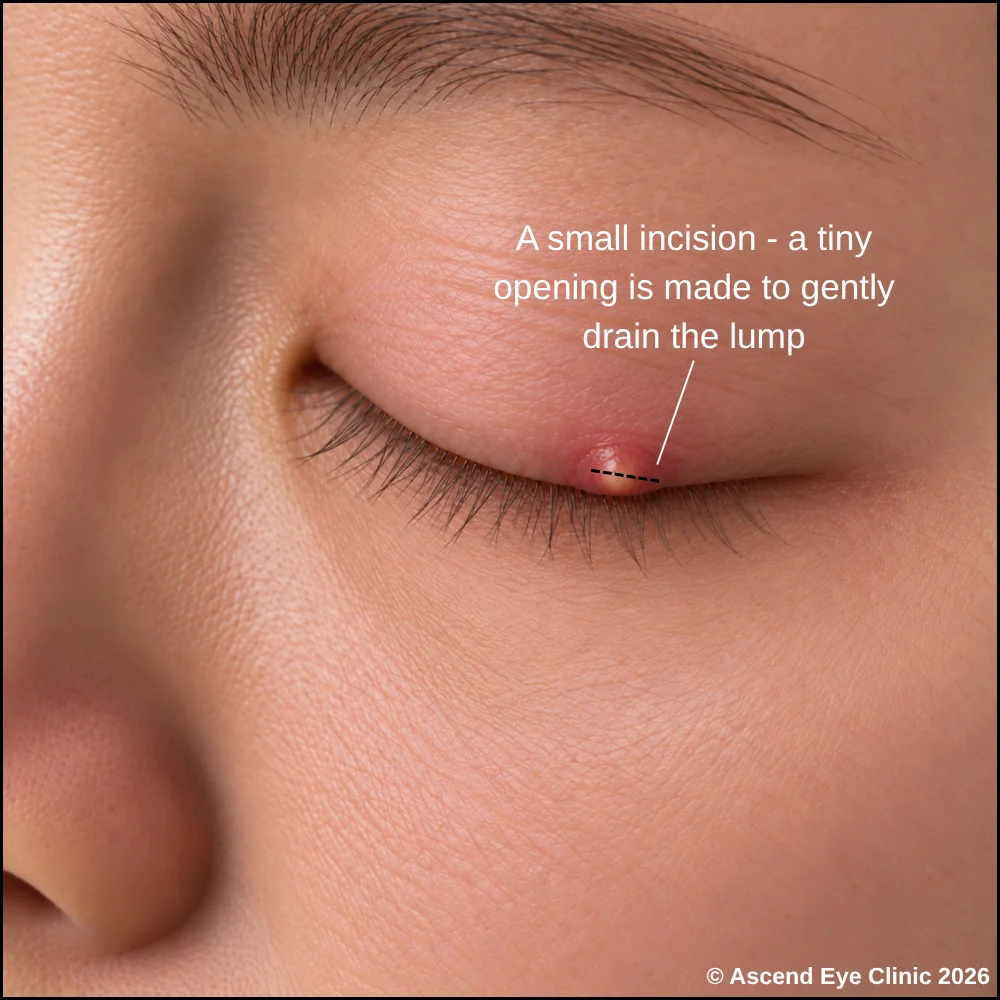
For eyelid lumps that have become firm, persistent or have not improved with other treatments, incision and drainage allows the blocked material within the gland to be removed directly. Clearing the trapped contents helps reduce the lump and allows the eyelid to settle and heal.
The procedure is performed in the clinic after the eyelid has been numbed for comfort. A small incision is made and the accumulated material is gently drained and cleared. The procedure is relatively quick, and patients can usually return home shortly afterwards. As the opening is small and often made from inside the eyelid, visible scarring is usually minimal.
After treatment, the swelling and tenderness will immediately reduce. However, there might be slight mild swelling that will take a few days to clear up. Anti-inflammatory eye drops or ointment is prescribed to support recovery, and most patients return to their usual activities soon after the procedure.
From your initial consultation to treatment and follow-up care, our team will guide you through every stage of your journey. We will take the time to explain your condition, answer your questions and help you feel informed and supported throughout your care.

Your consultation begins with a detailed assessment of your vision and eye health. Depending on your condition, this may include measurements of your vision and eye pressure, examination of the front and back of the eye, and advanced diagnostic imaging.
Our team will guide you through each test and explain what is being assessed. Your results will then be carefully reviewed to understand your individual needs and determine whether monitoring or treatment may be recommended.
Every eye and every patient is different. Your treatment plan will be tailored according to your examination findings, visual needs, general health and lifestyle.
We will explain the recommended treatment, its expected benefits, possible risks and any suitable alternatives in a clear and straightforward manner. You will have time to ask questions and consider your options before deciding how you would like to proceed.
If an in-clinic procedure is recommended, our team will explain how to prepare and provide any instructions you may need beforehand.
Depending on the procedure, this may include information about medications, eye drops or activities to avoid. We will also explain what to expect during and after the treatment so that you feel prepared and comfortable.
Your procedure will be carried out in the clinic. Depending on the treatment, anaesthetic eye drops or local anaesthesia may be used to help keep you comfortable.
Most in-clinic eye procedures are relatively quick, although the duration will depend on the type of treatment being performed. We will guide you through the process and explain what is happening at each stage.
Your vision may be temporarily blurred following certain procedures. Where appropriate, we will advise you about driving, work and other activities after treatment.
We will provide clear instructions on how to care for your eyes, use any prescribed medication and manage your activities following the procedure. We will also explain which symptoms may be expected and when you should contact the clinic for further advice.
Follow-up appointments, where required, allow us to monitor your vision, assess your response to treatment and identify any concerns at an early stage. Our team remains available should you have any questions or concerns following your procedure.
If your stye or chalazion is painful, persistent or keeps returning, a proper assessment can help determine the cause and most appropriate treatment.
Book a consultation at Ascend Eye Clinic today.
Eyelid lumps can develop for many reasons, including blocked oil glands, inflammation, infection, cysts or other eyelid growths. Because several conditions can look similar, an eye examination may be needed to determine the exact cause.
Some eyelid lumps settle on their own, especially if they are small and not causing symptoms. Treatment may be needed if the lump persists, becomes painful, increases in size, keeps recurring or starts to affect your vision.
You should arrange an assessment if the lump does not improve, repeatedly returns, becomes increasingly painful or swollen, or affects your vision. Bleeding, loss of eyelashes or a noticeable change in appearance should also be examined.
The initial inflammation may have settled while blocked oil or other material remains trapped within the eyelid gland. This can leave behind a firm, painless lump that may take several weeks or longer to gradually resolve.
Yes. A larger lump can sometimes press against the surface of the eye and temporarily alter the shape of the cornea, causing blurred or distorted vision. Significant eyelid swelling may also obstruct part of the visual field.
No. Squeezing, puncturing or attempting to drain an eyelid lump yourself can worsen inflammation, introduce infection or damage the surrounding eyelid tissue. If drainage is required, it should be performed safely by a healthcare professional.
The same oil gland may repeatedly become blocked, particularly in people who are prone to eyelid inflammation or blocked glands. However, a lump that keeps returning in exactly the same location should be examined to exclude other causes.
Yes. Multiple eyelid glands can become blocked or inflamed at the same time, so several lumps may develop on one or both eyelids. This can be more common in people with underlying eyelid inflammation or oil-gland dysfunction.
A stye is usually red, tender and painful and is associated with inflammation or infection of an eyelid gland. A chalazion is generally a firmer, less painful lump caused by a blocked oil gland, although the appearance of the two can sometimes overlap.
An eyelid lump may enlarge as inflammation, oil, fluid or other material builds up within the affected gland or surrounding tissue. A lump that continues to grow, becomes more painful or changes noticeably should be examined.
Redness and swelling usually occur when the surrounding eyelid tissue becomes inflamed. If the swelling is worsening, very painful, spreading beyond the lump or making it difficult to open the eye, an assessment is recommended.
Not necessarily. Some lumps improve with simple measures such as warm compresses and eyelid hygiene, while others may require medication. Persistent or larger lumps may sometimes benefit from an injection or a minor procedure.
Recurrent lumps can sometimes be associated with underlying eyelid inflammation or poorly functioning oil glands. Regular eyelid hygiene and treatment of these underlying conditions may help reduce the likelihood of further episodes.
Yes. Most eyelid lumps are benign, but several other eyelid conditions can have a similar appearance. Persistent, unusual, repeatedly recurring or progressively enlarging lumps should therefore be properly examined.
Yes. Styes and chalazia are common in children as well as adults. Large or persistent lumps should be assessed, particularly if they cause discomfort, interfere with vision or do not improve over time.
Hi, I would like to book a consultation with Dr Errol Chan from Ascend Eye Clinic
