
We plan your vitrectomy using detailed retinal imaging and microsurgical techniques to treat conditions such as an epiretinal membrane or a macular hole. We approach each case with careful surgical planning and regular follow-up to support healing and recovery after the procedure.
Conditions affecting the vitreous and retina can cause bleeding, scar tissue, retinal detachment or macular changes. These problems interfere with the way light reaches the retina or affect the structure of the retina itself, leading to blurred or distorted vision, floaters, flashes or missing areas of vision.
Common indications for vitrectomy include:
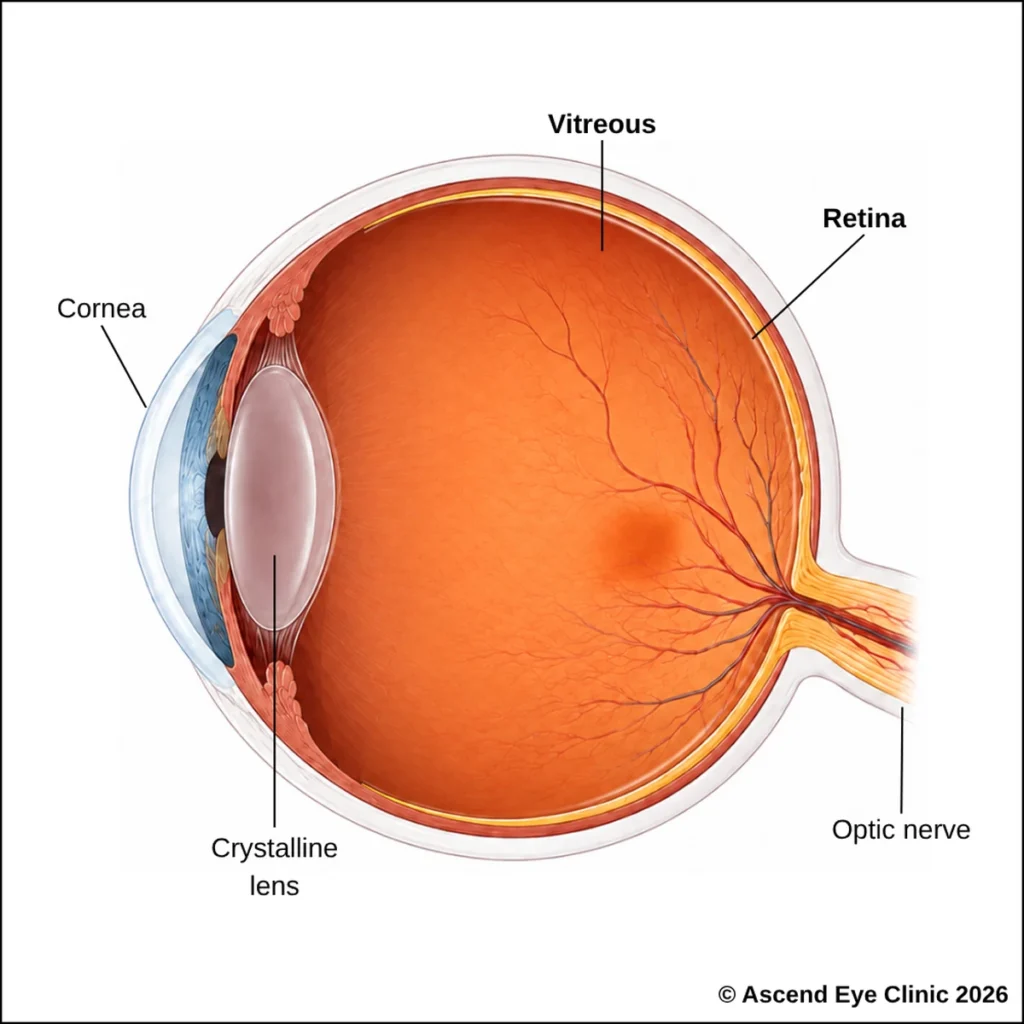
Vitrectomy is performed in an operating theatre under local anaesthesia with sedation or general anaesthesia, depending on the patient’s individual needs.
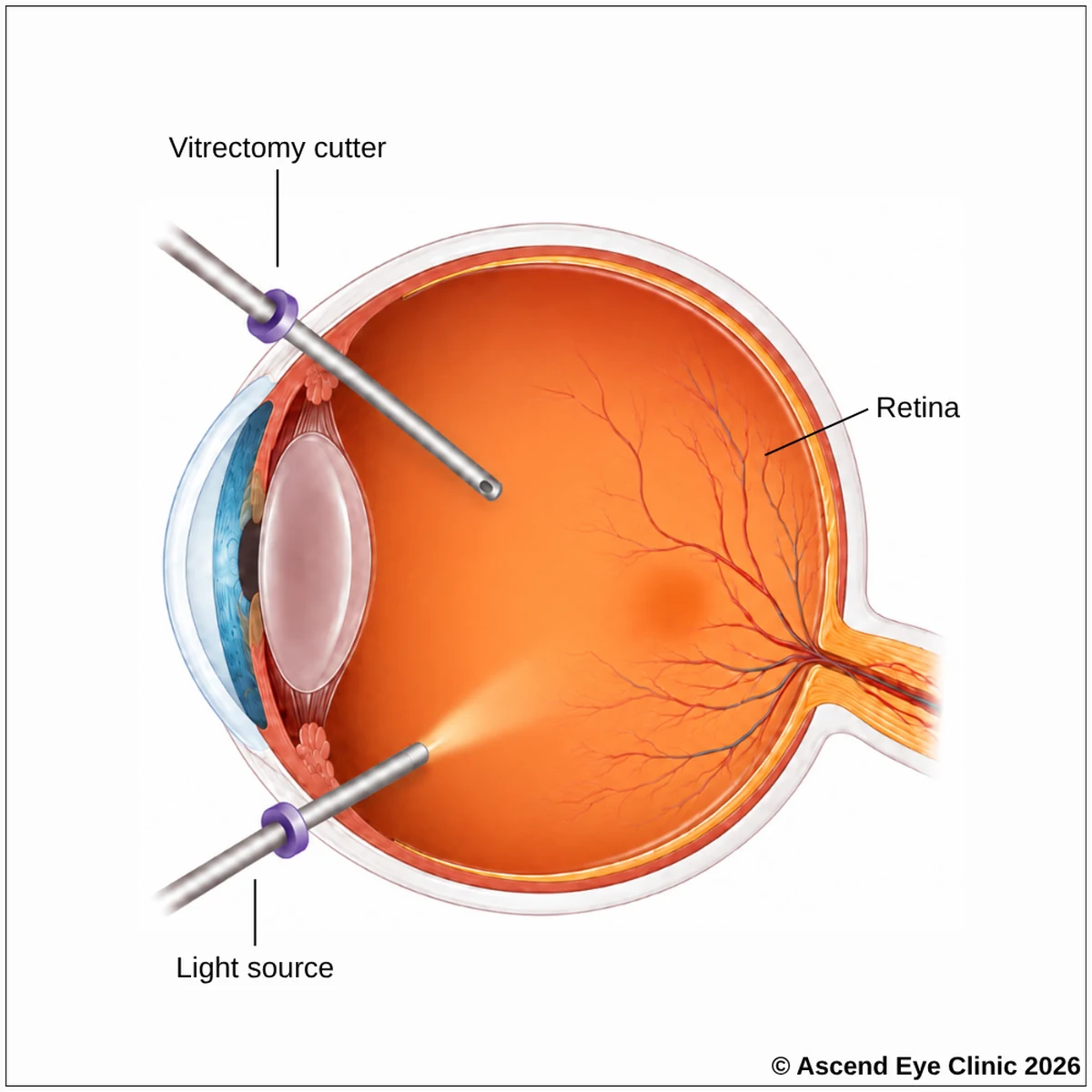
Small openings are created in the white part of the eye and fine microsurgical instruments are used to illuminate the inside of the eye and gently remove the vitreous gel.
Once access has been created, treatment can then be carried out for the underlying condition. This may include:
At the end of the surgery, the eye is filled with clear fluid, air, gas, or silicone oil. This would act as an internal support to help hold the treated retina in position while it heals.
The expected benefits and risks depend greatly on the condition being treated and the health of the retina before surgery. We will explain what the operation is intended to achieve and the outcome that can reasonably be expected in your individual case.
From your initial consultation to treatment and follow-up care, our team will guide you through every stage of your journey. We will take the time to explain your condition, answer your questions and help you feel informed and supported throughout your care.
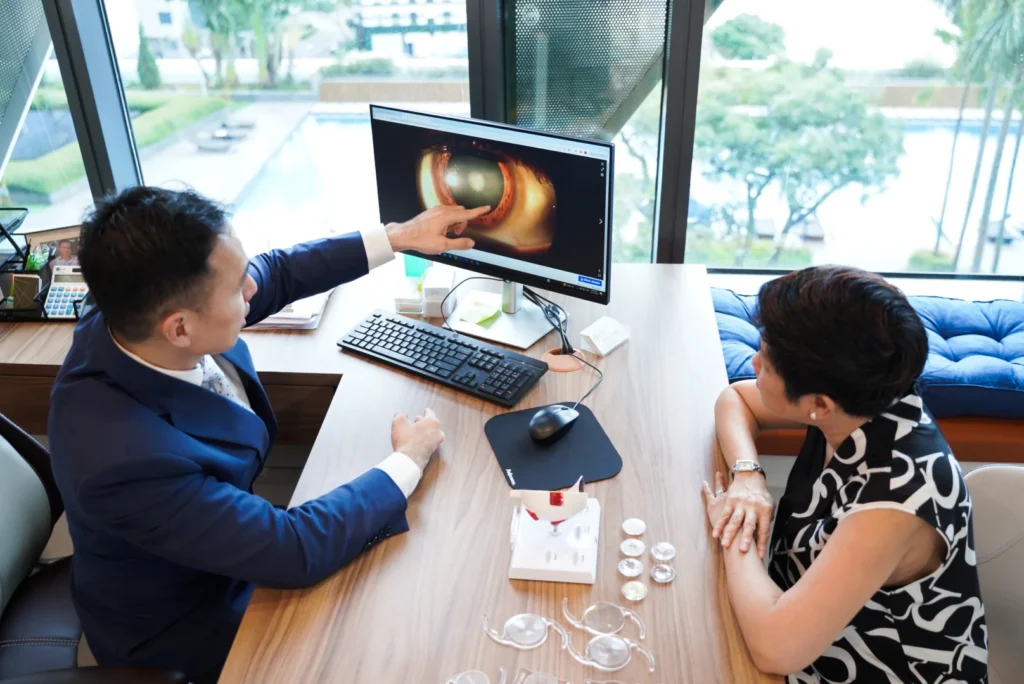
Your consultation begins with a detailed assessment of your vision and eye health. Depending on your condition, this may include measurements of your vision and eye pressure, examination of the front and back of the eye, and advanced diagnostic imaging.
Our team will guide you through each test and explain what is being assessed. Your results will then be carefully reviewed to understand your individual needs and determine whether monitoring or treatment may be recommended.
Every eye and every patient is different. Your treatment plan will be tailored according to your examination findings, visual needs, general health and lifestyle.
We will explain the recommended treatment, its expected benefits, possible risks and any suitable alternatives in a clear and straightforward manner. You will have time to ask questions and consider your options before deciding how you would like to proceed.
Before your treatment, our team will guide you through the necessary preparations, paperwork and medication instructions. Where applicable, we will explain how to use your prescribed eye drops and how to care for your eyes afterwards.
We understand that undergoing a procedure can feel unfamiliar or worrying. Our team will be available to answer your questions and ensure that you know what to expect before the day of your treatment.
On the day of your procedure, you will arrive at the hospital or surgical centre where your operation has been scheduled. The surgical team will help you prepare and explain what will happen at each stage.
Anaesthetic eye drops or other forms of anaesthesia may be used, depending on the procedure, to keep you comfortable. Your doctor and the surgical team will support and reassure you throughout the operation.
Most eye surgeries are performed as day procedures, although the duration and recovery process will depend on the treatment you receive. Your vision may be temporarily blurred afterwards, so you should arrange for someone to accompany you home and should not drive unless your doctor has advised that it is safe to do so.
We will provide clear instructions on how to care for your eyes, use any prescribed medication and manage your activities during recovery. We will also explain which symptoms are expected and when you should contact the clinic for further advice.
Follow-up appointments allow us to monitor your vision, assess your recovery and identify any concerns at an early stage. Our team remains accessible should you have any questions or concerns throughout your recovery.
If you have been diagnosed with a retinal or vitreous condition, a detailed assessment can help determine whether vitrectomy is required and what the procedure may achieve for your vision.
Book a consultation with us for a comprehensive retinal examination and a personalised discussion of your treatment options.
Vitrectomy is performed when a problem involving the vitreous or retina requires surgery. It can be used for conditions such as retinal detachment, vitreous haemorrhage, macular holes, epiretinal membranes and certain complications of diabetic eye disease. We will explain what the surgery is intended to achieve based on your individual condition.
During surgery, very fine instruments are introduced through small openings in the white part of the eye. The vitreous gel is carefully removed so that we can access and treat the retina. Depending on the condition, additional steps such as membrane peeling, laser treatment or retinal repair can be performed during the same procedure.
Anaesthesia is used to keep you comfortable throughout the operation. Most vitrectomies are performed under local anaesthesia with sedation, so you should not feel the surgery itself. Mild soreness, irritation or a gritty sensation can occur during the early recovery period.
Vitrectomy is commonly performed under local anaesthesia with sedation, allowing you to remain awake but relaxed and comfortable. General anaesthesia can also be used when appropriate. We will discuss the anaesthetic plan with you before surgery.
The duration depends on the condition being treated and the amount of retinal work required. Some procedures are relatively straightforward, while more complex retinal repairs can take longer. We will give you a clearer idea of what to expect once the surgery has been planned.
Most vitrectomy operations are performed as day surgery, so you can usually return home after a period of observation. An overnight stay is generally not required unless there is a specific medical reason.
Vision is normally blurred immediately after vitrectomy and improves gradually as the eye heals. If a gas bubble has been placed inside the eye, vision can remain very blurred until the bubble becomes smaller and is gradually absorbed.
The eye generally settles over several weeks, although visual recovery can continue for considerably longer depending on the retinal condition. The final level of vision also depends on how much the retina was affected before surgery.
The amount of visual recovery varies between patients. Surgery can improve vision in some conditions, while in others the main aim is to preserve existing vision or prevent further deterioration. We will discuss what can reasonably be expected based on the condition of your retina.
A gas bubble can be placed inside the eye to support the retina while it heals. It gradually becomes smaller and is naturally absorbed over time. You may notice a moving line across your vision as the bubble gets smaller.
Some vitrectomy procedures require a specific head position so that a gas bubble rests against the area of retina that needs support. If positioning is required, we will explain exactly how to position yourself and how long it needs to be maintained.
You should avoid rubbing the eye, swimming, strenuous exercise and heavy lifting during the early recovery period. If a gas bubble has been placed inside the eye, you must also avoid flying and travelling to high altitudes until the bubble has completely disappeared. We will provide specific instructions before you go home.
This depends on the type of surgery, how the eye is healing and the nature of your work. Light daily activities can generally be resumed earlier, while strenuous exercise, heavy physical work and swimming require a longer recovery period. We will advise you according to your progress.
As with any eye surgery, complications can occur. These include infection, bleeding, raised or reduced eye pressure, retinal tears or detachment, cataract formation and the need for further surgery. We take careful precautions to reduce these risks and will discuss those most relevant to your eye before surgery.
Contact us promptly if you develop increasing or severe eye pain, worsening redness, a sudden drop in vision, a new dark shadow or curtain in your vision, increasing discharge or any other significant change that concerns you. We would rather assess an unexpected symptom early and make sure the eye is recovering appropriately.
Hi, I would like to book a consultation with Dr Errol Chan from Ascend Eye Clinic
