
Trabeculectomy is a glaucoma surgery that creates a new drainage pathway for aqueous humour to leave the eye. This allows excess fluid to drain beneath the conjunctiva, helping to lower eye pressure. We provide attentive care throughout the surgical journey, with personalised treatment planning and ongoing monitoring to support ongoing eye pressure control.
Glaucoma is a condition that causes progressive damage to the optic nerve, often associated with increased pressure inside the eye. In many cases, glaucoma develops without noticeable symptoms, which is why regular eye examinations are important for early detection. Some patients experience mild eye discomfort or a sensation of pressure around the eyes, while more advanced disease can lead to gradual peripheral vision loss.
Acute glaucoma presents differently and causes a sudden rise in eye pressure, requiring urgent and immediate treatment. Symptoms include:
Learn more about glaucoma, including its types and causes here.
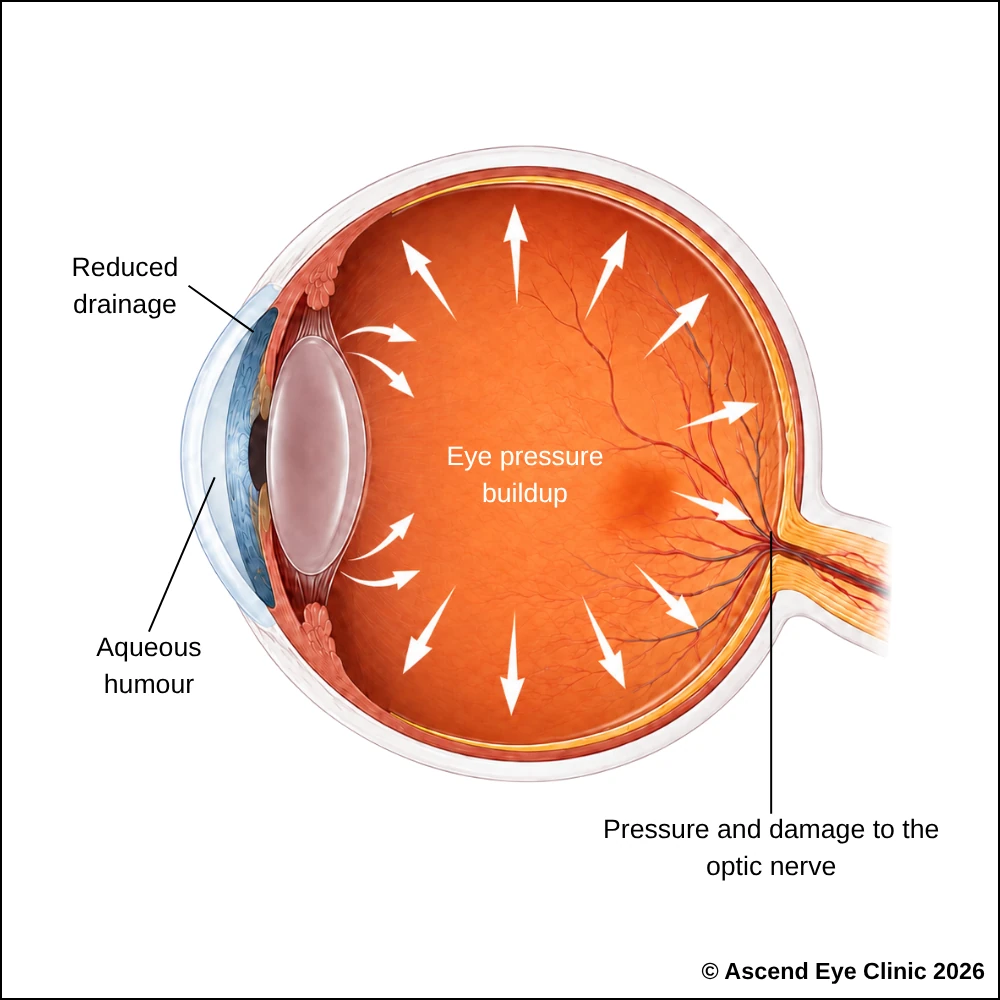
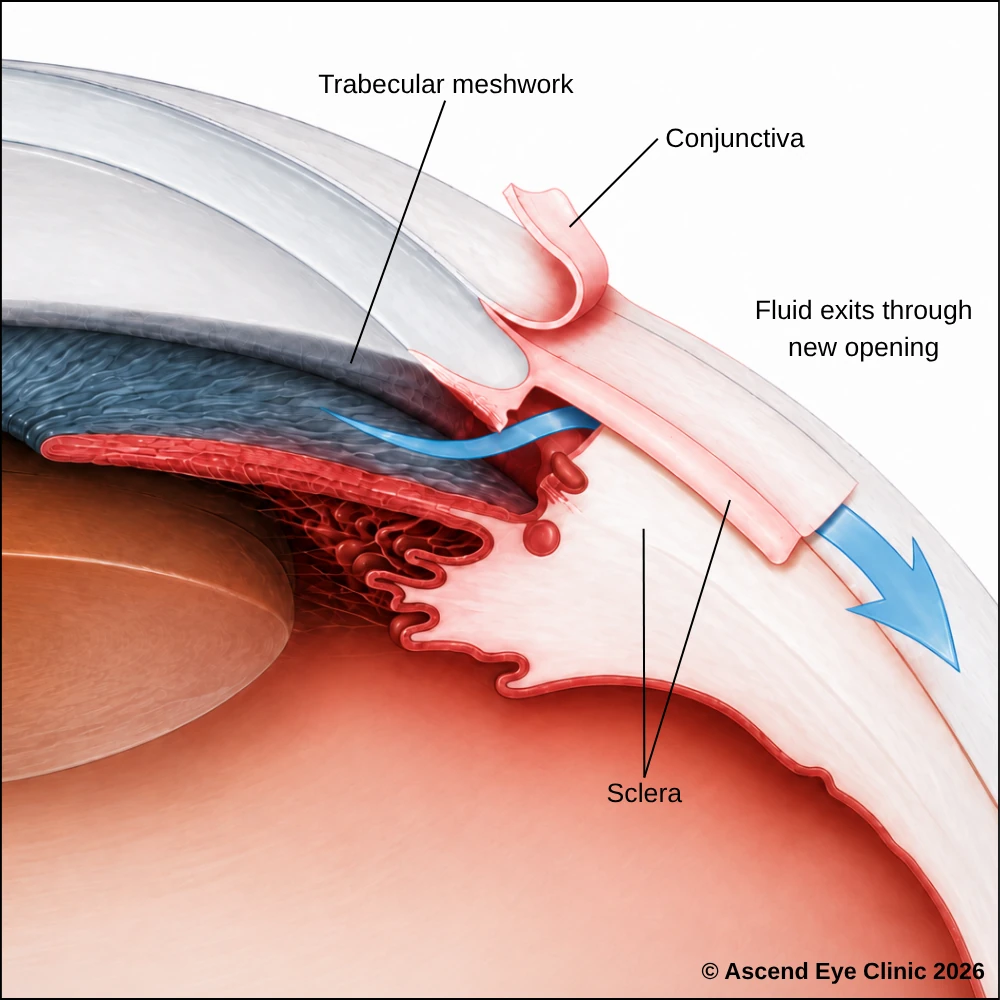
Trabeculectomy lowers eye pressure by creating a new drainage pathway for aqueous humour to leave the eye. This new pathway allows fluid to pass through a small opening beneath the upper eyelid and collect in a reservoir under the conjunctiva called a filtration bleb, where it is gradually absorbed by the surrounding tissues. Fine sutures placed during the surgery help regulate the amount of fluid draining, while anti-scarring medication is applied during surgery to help keep the pathway open.
The procedure is performed under local anaesthesia with sedation. A small opening is created in the white part of the eye beneath the upper eyelid, and a thin tissue flap is formed over it. Fine sutures are placed to control the flow of aqueous humour before the conjunctiva is closed over the area to form a filtration bleb. Antibiotic and anti-inflammatory medication is then applied at the end of the procedure, and the eye is protected with a shield.
After surgery, vision is temporarily blurred, and the eye might feel mildly sore, watery or gritty. Regular follow-up is an important part of recovery, as the eye pressure and filtration bleb need to be monitored while the eye heals. Sutures can be adjusted or additional treatment to the bleb performed when required to maintain the desired level of drainage.
From your initial consultation to treatment and follow-up care, our team will guide you through every stage of your journey. We will take the time to explain your condition, answer your questions and help you feel informed and supported throughout your care.
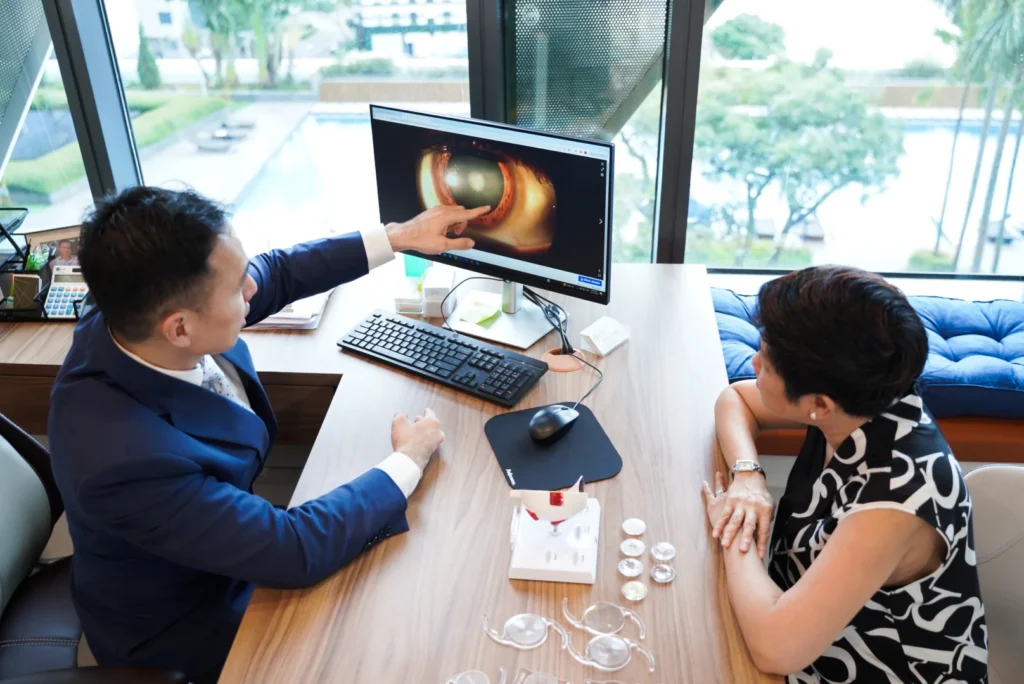
Your consultation begins with a detailed assessment of your vision and eye health. Depending on your condition, this may include measurements of your vision and eye pressure, examination of the front and back of the eye, and advanced diagnostic imaging.
Our team will guide you through each test and explain what is being assessed. Your results will then be carefully reviewed to understand your individual needs and determine whether monitoring or treatment may be recommended.
Every eye and every patient is different. Your treatment plan will be tailored according to your examination findings, visual needs, general health and lifestyle.
We will explain the recommended treatment, its expected benefits, possible risks and any suitable alternatives in a clear and straightforward manner. You will have time to ask questions and consider your options before deciding how you would like to proceed.
Before your treatment, our team will guide you through the necessary preparations, paperwork and medication instructions. Where applicable, we will explain how to use your prescribed eye drops and how to care for your eyes afterwards.
We understand that undergoing a procedure can feel unfamiliar or worrying. Our team will be available to answer your questions and ensure that you know what to expect before the day of your treatment.
On the day of your procedure, you will arrive at the hospital or surgical centre where your operation has been scheduled. The surgical team will help you prepare and explain what will happen at each stage.
Anaesthetic eye drops or other forms of anaesthesia may be used, depending on the procedure, to keep you comfortable. Your doctor and the surgical team will support and reassure you throughout the operation.
Most eye surgeries are performed as day procedures, although the duration and recovery process will depend on the treatment you receive. Your vision may be temporarily blurred afterwards, so you should arrange for someone to accompany you home and should not drive unless your doctor has advised that it is safe to do so.
We will provide clear instructions on how to care for your eyes, use any prescribed medication and manage your activities during recovery. We will also explain which symptoms are expected and when you should contact the clinic for further advice.
Follow-up appointments allow us to monitor your vision, assess your recovery and identify any concerns at an early stage. Our team remains accessible should you have any questions or concerns throughout your recovery.
Every glaucoma journey is different. At Ascend Eye Clinic, we take the time to understand how your condition has responded to treatment, assess your eye health and discuss whether trabeculectomy, a glaucoma drainage tube or other glaucoma treatments are suitable for achieving better pressure control.
Book a consultation to explore a surgical plan tailored to your eyes and long-term vision needs.
Trabeculectomy is recommended when the eye pressure needs to be lowered further to protect the optic nerve. This is often considered when glaucoma is progressing despite other treatment or when a lower target pressure is needed.
Trabeculectomy creates a new drainage pathway that allows fluid inside the eye to leave more easily. The fluid collects in a small area beneath the upper eyelid, helping to lower the pressure inside the eye.
Anaesthesia is used to keep the eye comfortable throughout the operation. Mild soreness, irritation or a gritty sensation is expected during the early recovery period, and pain relief is provided when needed.
Yes. Trabeculectomy is generally performed under local anaesthesia with sedation, so you remain awake but relaxed and comfortable during the procedure.
The operation usually takes less than an hour, although the exact duration depends on the condition of the eye and whether any additional treatment is required.
Trabeculectomy is generally performed as day surgery. You will be monitored after the procedure before returning home.
Vision is blurred during the early recovery period because of inflammation, eye drops and changes in eye pressure. It gradually clears as the eye settles.
The eye heals over several weeks. Close follow-up is especially important during the early recovery period so that we can monitor the pressure and make sure the new drainage pathway is healing properly.
The purpose of trabeculectomy is to lower eye pressure and protect the vision you still have. It does not restore vision that has already been lost from glaucoma.
Many patients require fewer pressure-lowering drops after trabeculectomy, and some are able to stop them. We base this on the eye pressure achieved after surgery and adjust treatment accordingly.
The healing process directly affects how well the new drainage pathway works. Frequent early reviews allow us to check the eye pressure, monitor healing and make adjustments when needed to maintain good drainage.
Avoid rubbing the eye, swimming, strenuous exercise and heavy lifting while the eye heals. Keep water, dust and other contaminants away from the eye during the early recovery period. We will let you know when these activities can be resumed.
Risks include infection, bleeding, inflammation, eye pressure becoming too high or too low, scarring of the drainage pathway and changes in vision. Further treatment is sometimes required if the drainage pathway does not function as intended.
Yes. Scar tissue can gradually reduce drainage and cause the pressure to rise again. Regular follow-up allows us to identify this early and provide additional treatment where needed.
Yes. Glaucoma remains a lifelong condition even after successful surgery. We continue monitoring the eye pressure, optic nerve and visual field to make sure the glaucoma remains stable.
Hi, I would like to book a consultation with Dr Errol Chan from Ascend Eye Clinic
