
Blepharitis can cause persistent redness, irritation, crusting and discomfort around the eyelids. A detailed assessment helps identify the underlying cause and guide treatment to improve eyelid health and reduce recurring symptoms.
Blepharitis is inflammation of the eyelid margins, particularly around the eyelashes and the openings of the oil-producing meibomian glands. It can affect one or both eyes and often causes recurring symptoms.
Blepharitis can affect different parts of the eyelid:
Blepharitis is often a long-term condition, but regular eyelid care and appropriate treatment can help control inflammation and reduce flare-ups.
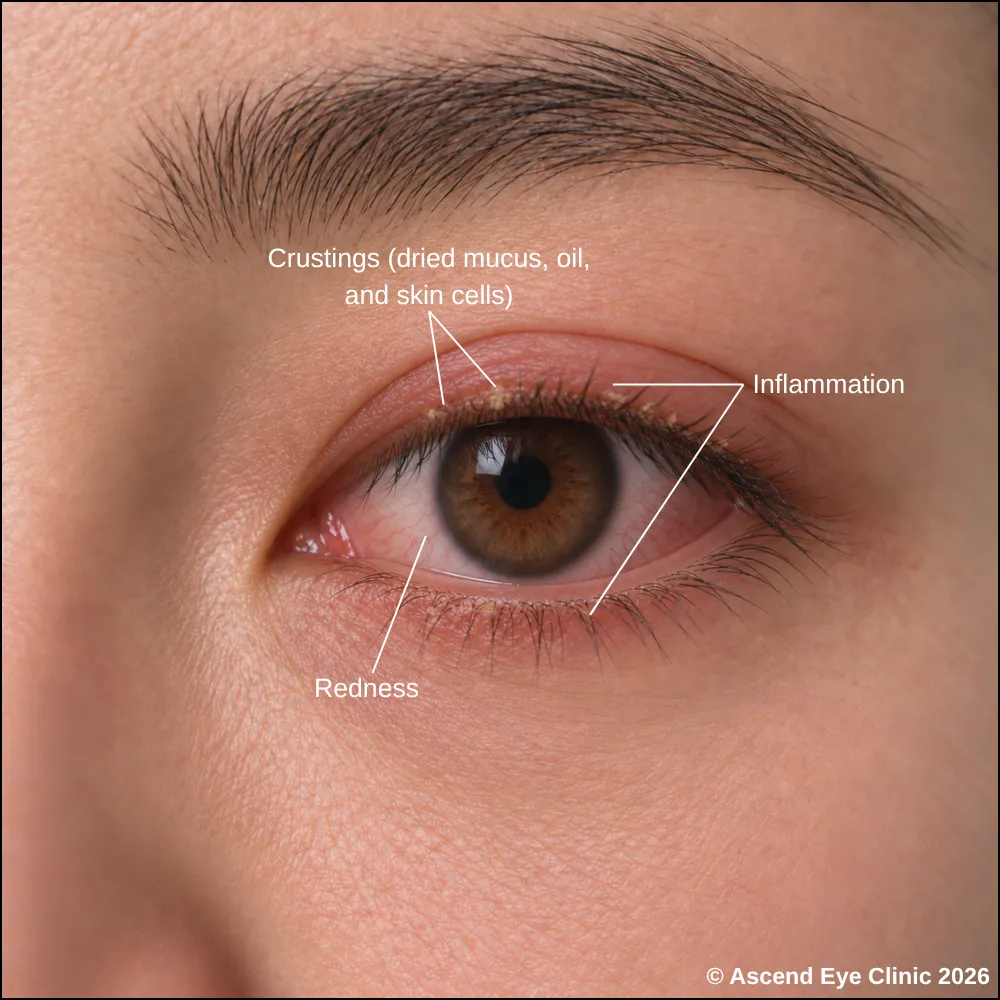
Blepharitis commonly causes ongoing irritation around the eyelid margins and eyelashes. Symptoms often fluctuate over time and become more noticeable when the eyelid glands are blocked or inflamed. Common symptoms include:

Diagnosis begins with a careful assessment of the eyelids, eyelashes and surrounding eye structures. We look at the position and movement of the eyelids, the condition of the lid margins and lashes, and any changes affecting the surface of the eye to determine the nature and extent of the problem.
Measures how clearly you can see and helps identify any reduction or fluctuation in vision.
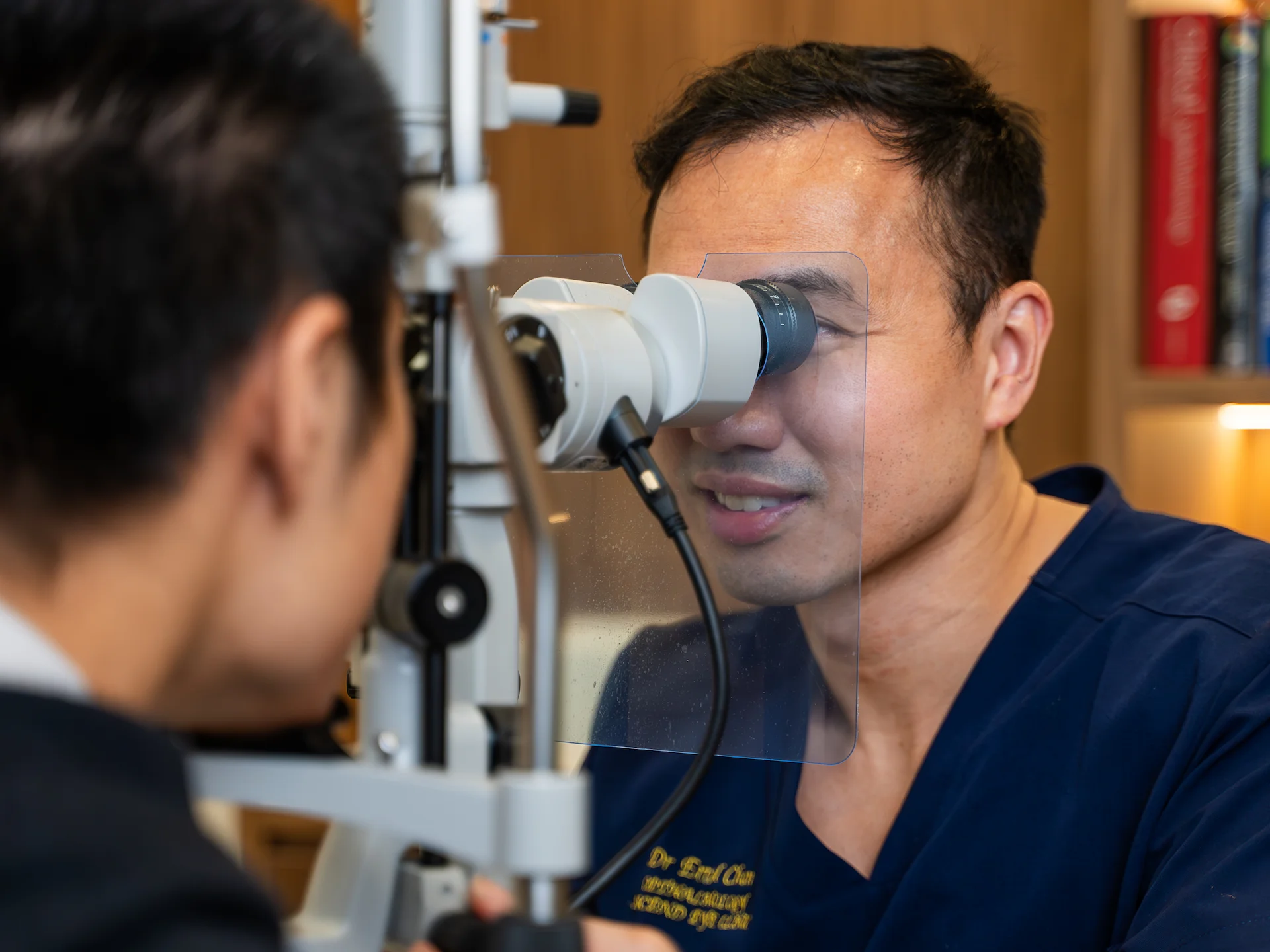
Provides a magnified view of the eyelid margins, eyelashes, meibomian glands and eye surface. This allows us to identify redness, crusting, blocked oil glands, abnormal secretions or signs of Demodex and assess whether the cornea or conjunctiva has been affected.
Provides detailed images of the meibomian glands within the eyelids to assess gland structure, blockage and gland loss associated with blepharitis and meibomian gland dysfunction.
Treatment depends on the underlying cause of blepharitis and the structures affected. As blepharitis often recurs, ongoing eyelid hygiene is an important part of keeping symptoms under control.
Blepharitis involves inflammation of the eyelid margins and, in some cases, bacterial overgrowth. Antibiotic or anti-inflammatory eye ointments are prescribed to address these underlying factors, with treatment selected according to the type and severity of blepharitis.
Daily eyelid care is also an important part of treatment. Regular cleansing helps remove excess oil, crusting, debris and bacteria along the lash line that can contribute to ongoing irritation and inflammation. At Ascend Eye Clinic, we prescribe a dedicated eyelid wash formulated specifically for cleansing the eyelid margins, providing a convenient way to incorporate effective eyelid hygiene into your daily routine.
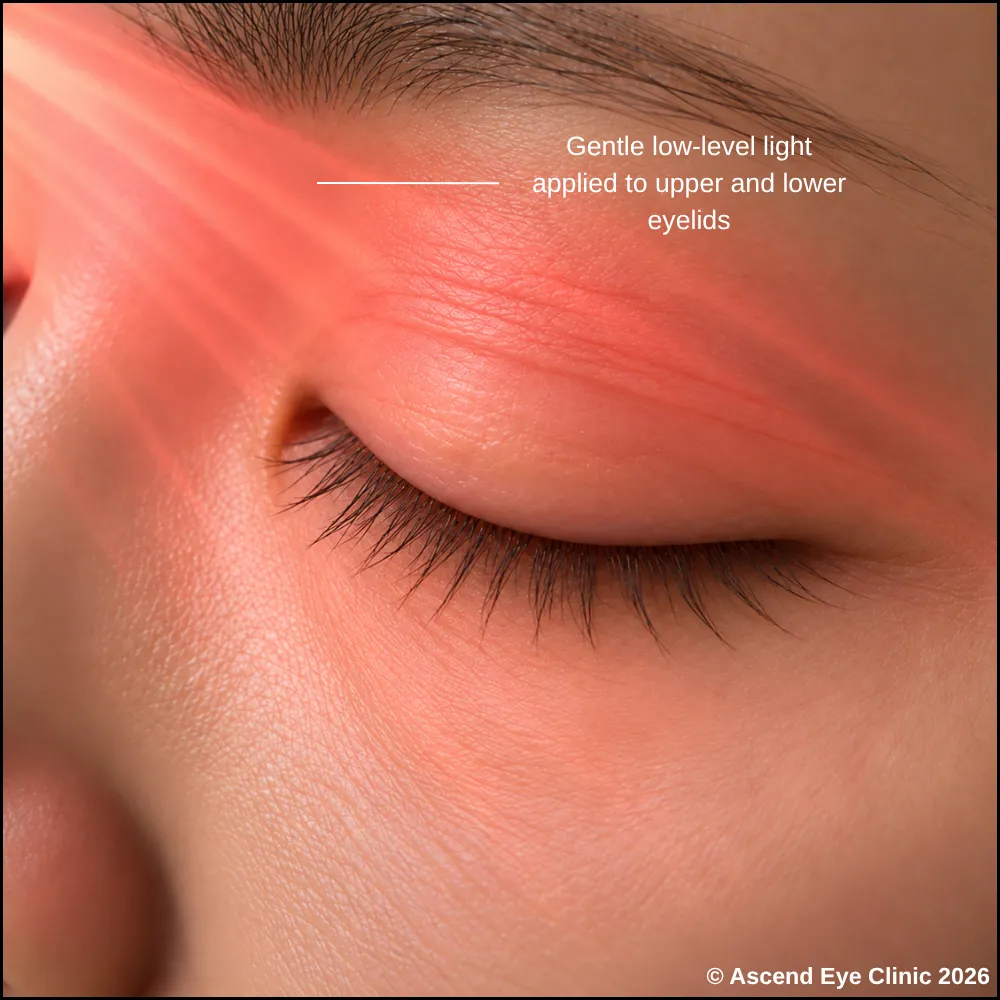
Low-Level Light Therapy uses controlled light energy and gentle warmth to treat meibomian gland dysfunction, an important contributor to blepharitis. The treatment helps soften thickened oils within the glands, improve their natural flow and reduce inflammation along the eyelid margins, supporting a healthier and more comfortable ocular surface.
Treatment is non-invasive and performed with the eyes comfortably closed. Light is applied around the eyelids to gently warm and stimulate the meibomian glands without needles or incisions. Each session takes approximately 20 minutes, with the number and frequency of treatments tailored according to the severity of gland dysfunction and eyelid inflammation.
With continued treatment, the meibomian glands are able to drain more effectively, helping improve the quality of the tear film and reduce dryness, irritation, redness and grittiness. Maintaining healthier gland function also helps reduce the tendency for recurrent eyelid inflammation and flare-ups.
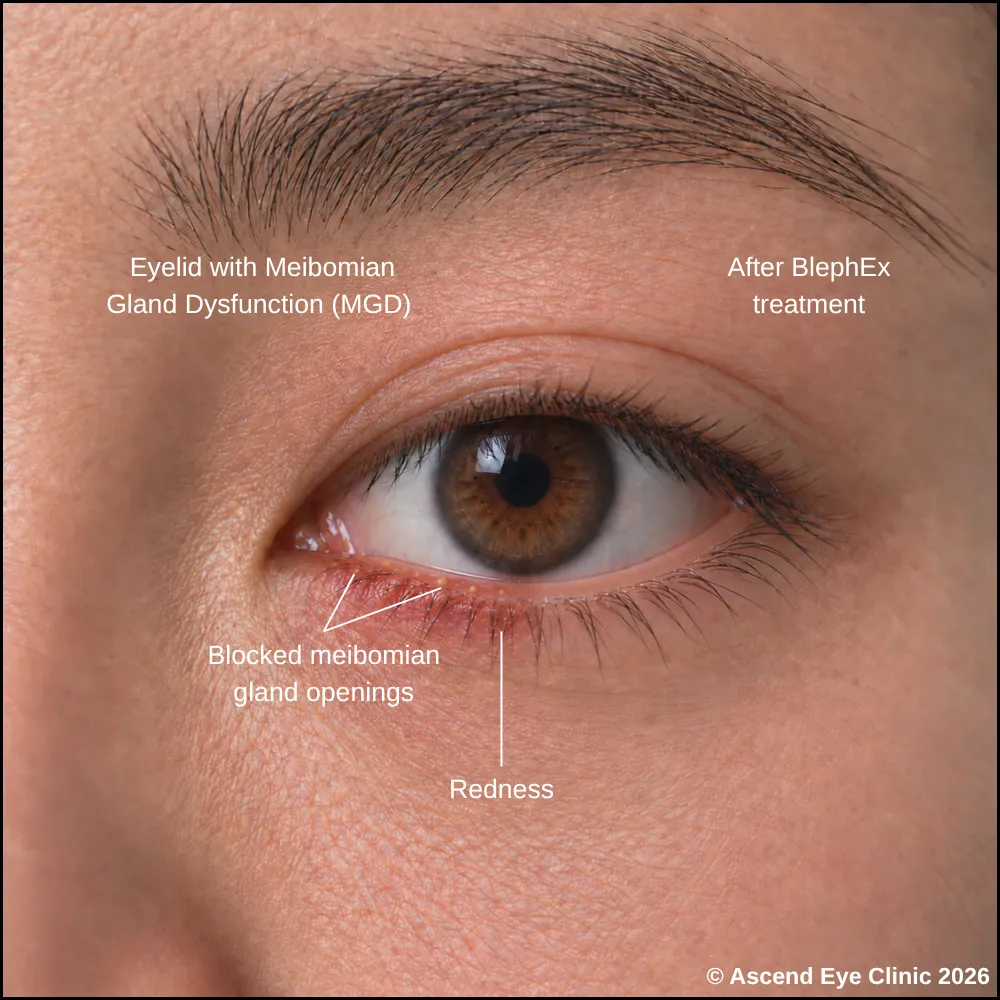
BlephEx is used to treat blepharitis and remove build-up along the eyelid margins. Removing this accumulated crusting, debris, and biofilm around the eyelashes helps keep the eyelid margins cleaner and the openings of the meibomian glands clearer, supporting healthier oil flow into the tear film.
During treatment, a specialised rotating medical-grade tip is gently passed along the eyelid margins and around the base of the eyelashes to clean away accumulated material. You may feel gentle pressure or a light tickling sensation as the eyelids are cleaned. The treatment is performed in the clinic and is completed within a short time.
The eyelids may feel slightly sensitive immediately afterwards, but you can generally return to your usual activities straight away. Regular eyelid hygiene is recommended to help maintain the improvement, and treatment can be repeated if crusting, debris or eyelid inflammation builds up again over time.
From your initial consultation to treatment and follow-up care, our team will guide you through every stage of your journey. We will take the time to explain your condition, answer your questions and help you feel informed and supported throughout your care.

Your consultation begins with a detailed assessment of your vision and eye health. Depending on your condition, this may include measurements of your vision and eye pressure, examination of the front and back of the eye, and advanced diagnostic imaging.
Our team will guide you through each test and explain what is being assessed. Your results will then be carefully reviewed to understand your individual needs and determine whether monitoring or treatment may be recommended.
Every eye and every patient is different. Your treatment plan will be tailored according to your examination findings, visual needs, general health and lifestyle.
We will explain the recommended treatment, its expected benefits, possible risks and any suitable alternatives in a clear and straightforward manner. You will have time to ask questions and consider your options before deciding how you would like to proceed.
If an in-clinic procedure is recommended, our team will explain how to prepare and provide any instructions you may need beforehand.
Depending on the procedure, this may include information about medications, eye drops or activities to avoid. We will also explain what to expect during and after the treatment so that you feel prepared and comfortable.
Your procedure will be carried out in the clinic. Depending on the treatment, anaesthetic eye drops or local anaesthesia may be used to help keep you comfortable.
Most in-clinic eye procedures are relatively quick, although the duration will depend on the type of treatment being performed. We will guide you through the process and explain what is happening at each stage.
Your vision may be temporarily blurred following certain procedures. Where appropriate, we will advise you about driving, work and other activities after treatment.
We will provide clear instructions on how to care for your eyes, use any prescribed medication and manage your activities following the procedure. We will also explain which symptoms may be expected and when you should contact the clinic for further advice.
Follow-up appointments, where required, allow us to monitor your vision, assess your response to treatment and identify any concerns at an early stage. Our team remains available should you have any questions or concerns following your procedure.
Recurring redness, crusting, dryness or irritation around the eyelids may be caused by blepharitis or associated meibomian gland dysfunction. A detailed eyelid assessment can identify the underlying cause and guide treatment to improve eyelid comfort and reduce recurring inflammation.
Book a consultation for an assessment of persistent eyelid irritation and blepharitis.
Blepharitis develops when the eyelid margins become inflamed. Common causes include bacterial overgrowth, blocked or poorly functioning meibomian glands, Demodex mites and skin conditions such as rosacea or seborrhoeic dermatitis.
Inflammation along the eyelid margins can cause persistent redness, burning, itching and discomfort. Symptoms often become more noticeable when oil glands are blocked or debris accumulates around the eyelashes.
Blepharitis can cause oil, skin debris and inflammatory material to collect around the base of the eyelashes. This can appear as flakes, crusting or small deposits along the eyelid margin.
Yes. The meibomian glands produce oils that help prevent tears from evaporating too quickly. When these glands become blocked or inflamed, the tear film becomes less stable, leading to dryness, burning and irritation.
Blepharitis can irritate and dry the surface of the eye. The eyes can respond by producing excess watery tears, causing intermittent or persistent tearing.
Yes. An unstable tear film can cause temporary blurred or fluctuating vision, particularly between blinks. Persistent or significant changes in vision should be assessed to exclude other eye conditions.
Blepharitis itself is generally not contagious. It is usually related to inflammation of the eyelid margins, meibomian gland dysfunction, bacteria naturally present around the eyelids or Demodex mites.
Blepharitis is often a recurring condition because the underlying tendency for eyelid inflammation or meibomian gland blockage can persist. Regular eyelid care helps keep symptoms under control and reduce flare-ups.
Blepharitis can be controlled effectively, but it often requires ongoing eyelid care. Symptoms can settle for long periods, although flare-ups can occur again if inflammation or gland blockage returns.
Treatment depends on the underlying cause and severity. Options include eyelid cleansing, warm compresses, lubricating eye drops, antibiotic or anti-inflammatory medication and treatment for associated meibomian gland dysfunction.
Regular eyelid cleaning removes crusting, excess oil, debris and bacteria from around the eyelashes and eyelid margins. This helps reduce inflammation and keeps the openings of the meibomian glands clear.
Antibiotic treatment is used when bacterial involvement contributes to eyelid inflammation, while anti-inflammatory medication helps control more significant inflammation affecting the eyelids or eye surface. Treatment is selected according to the findings during examination.
Demodex are microscopic mites that live around eyelash follicles. Increased numbers can irritate the eyelid margins and cause inflammation, itching and characteristic debris around the base of the eyelashes.
The eyelids generally feel comfortable immediately after treatment, and normal activities can be resumed. As meibomian gland function improves over the treatment course, oil flow becomes healthier and symptoms such as dryness, redness and irritation gradually reduce.
Persistent blepharitis can lead to ongoing irritation, dry eye, recurrent styes or chalazia and inflammation of the eye surface. More significant inflammation can also affect the cornea, so persistent symptoms should be assessed.
Hi, I would like to book a consultation with Dr Errol Chan from Ascend Eye Clinic
