
Inturned eyelashes can rub against the eye surface, causing persistent irritation, redness, tearing and discomfort. Identifying and treating the misdirected lashes can help protect the eye surface and provide longer-lasting relief.
Inturned eyelashes, also known as trichiasis, occur when one or more eyelashes grow toward the eye instead of away from it. Unlike eyelid conditions such as entropion and ectropion, which involve the eyelid turning inward or outward, trichiasis affects the direction of the eyelashes while the eyelid itself remains in its normal position.
Trichiasis can develop when inflammation, scarring or changes in the eyelid affect the direction of eyelash growth. Common contributing factors include chronic eyelid inflammation, previous injury or surgery, inflammatory eye conditions, and age-related changes.
A related condition, distichiasis, occurs when an extra row of eyelashes develops along the eyelid margin. These additional lashes may also grow toward the eye and irritate the ocular surface.
Repeated rubbing can damage the surface of the cornea and increase the risk of infection or scarring. An eye examination can identify the affected lashes, assess the eye surface and determine the most appropriate treatment.
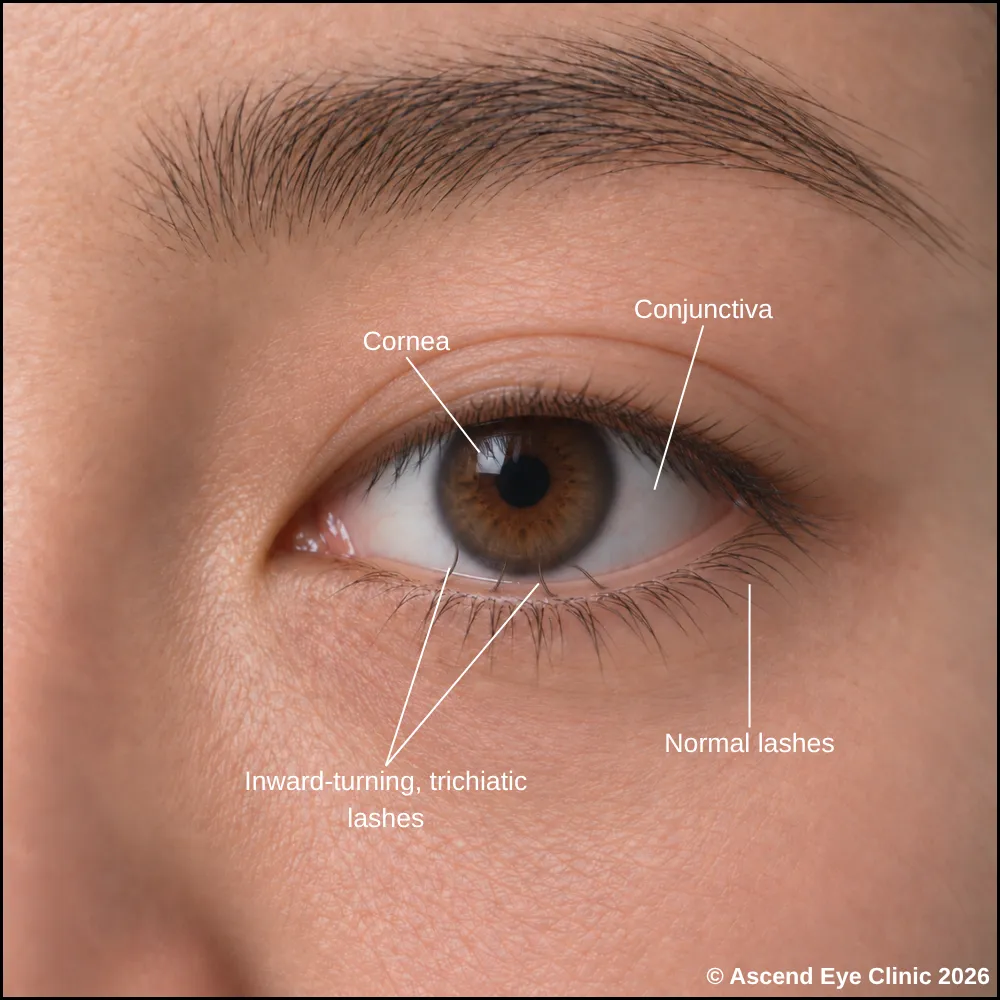
Symptoms depend on the number of lashes involved and how often they come into contact with the eye. Some people experience occasional irritation, while others develop persistent redness, tearing, a gritty sensation or fluctuating vision.
Some symptoms include:

Diagnosis begins with a careful assessment of the eyelids, eyelashes and surrounding eye structures. We look at the position and movement of the eyelids, the condition of the lid margins and lashes, and any changes affecting the surface of the eye to determine the nature and extent of the problem.
Measures how clearly you can see and helps identify any reduction in vision.
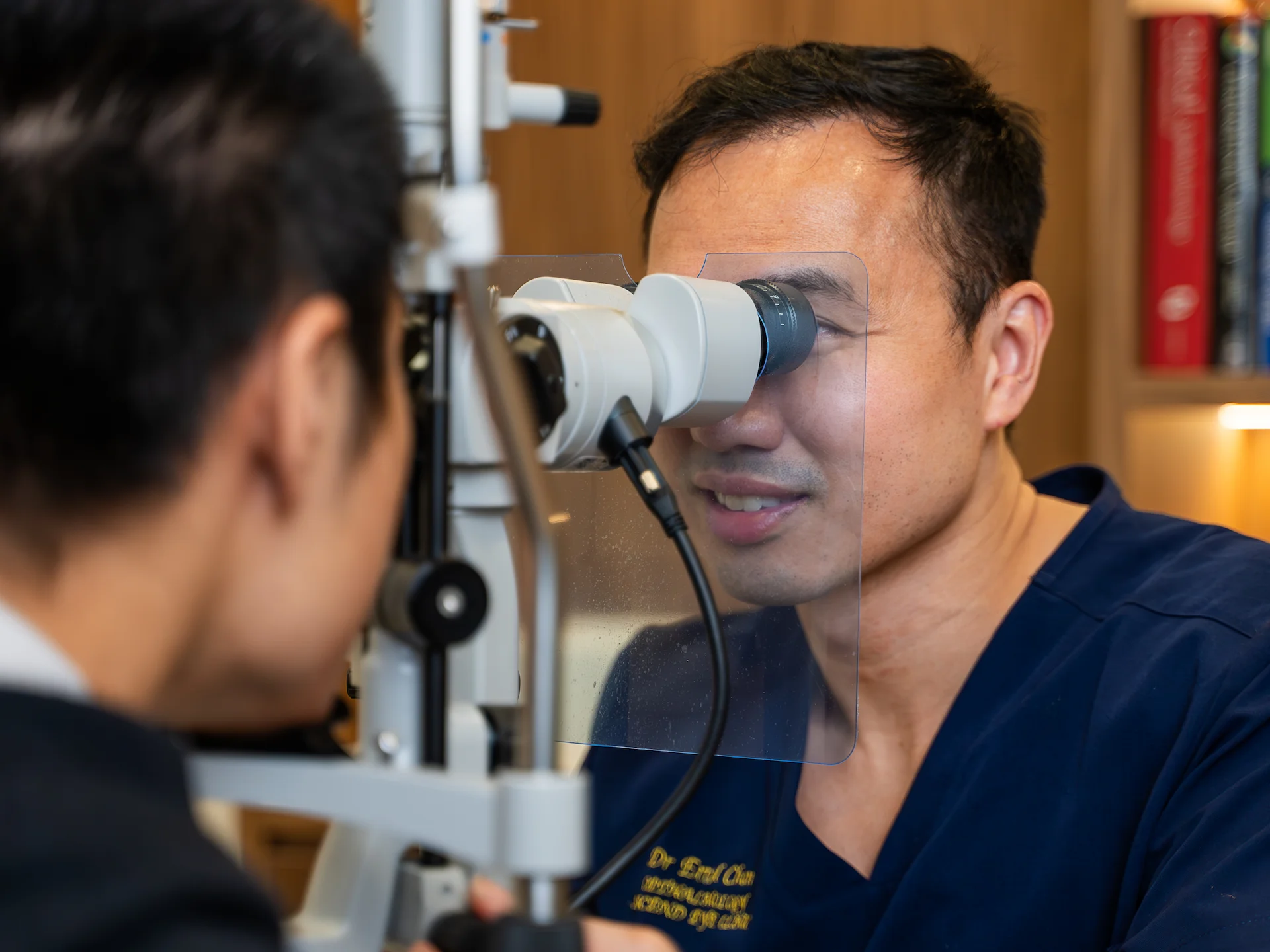
Provides a magnified view of the eyelids, eyelashes and eye surface to identify lashes that are directed towards the eye and assess for any associated irritation or damage to the cornea.
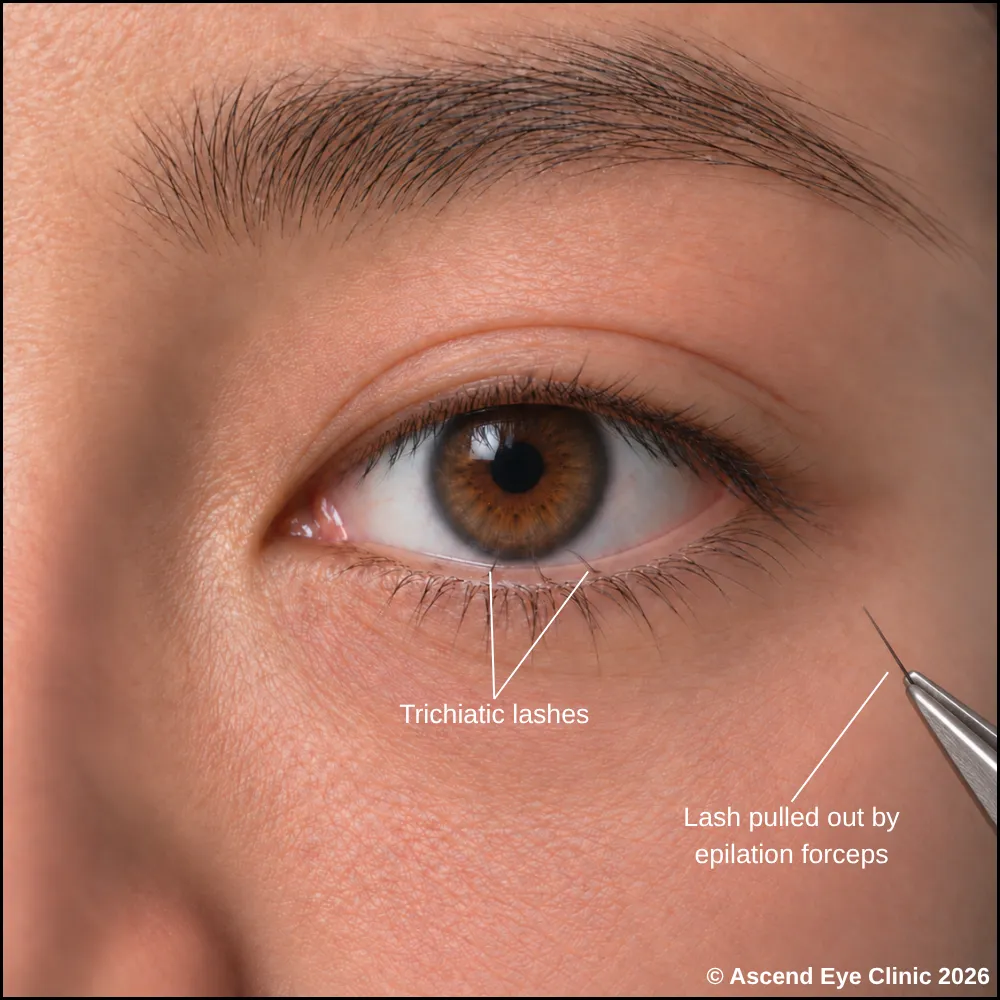
Eyelash epilation removes eyelashes that are rubbing against the surface of the eye. Using fine forceps, the affected lashes are grasped close to the eyelid margin and gently pulled out from the follicle. This stops the lash from continuing to scratch the cornea or conjunctiva and reduces the irritation caused by blinking.
The procedure is performed in the clinic during the consultation. Anaesthetic eye drops are first applied to numb the surface of the eye and improve comfort. The affected eyelashes are then carefully identified under magnification and removed individually using fine forceps. The entire procedure only takes a few minutes, and patients often feel only a brief pulling sensation.
Relief is immediate once the irritating lashes have been removed. The eye may feel slightly sensitive or mildly irritated for a short period afterwards, particularly if the surface of the eye was already inflamed or scratched by the lashes. As epilation removes the eyelash but does not destroy the follicle, the lash can grow back over the following weeks and repeat treatment may be required.
For recurrent trichiasis, electrolysis or laser treatment can be used to target the eyelash follicles and reduce regrowth of the abnormal lashes.
From your initial consultation to treatment and follow-up care, our team will guide you through every stage of your journey. We will take the time to explain your condition, answer your questions and help you feel informed and supported throughout your care.

Your consultation begins with a detailed assessment of your vision and eye health. Depending on your condition, this may include measurements of your vision and eye pressure, examination of the front and back of the eye, and advanced diagnostic imaging.
Our team will guide you through each test and explain what is being assessed. Your results will then be carefully reviewed to understand your individual needs and determine whether monitoring or treatment may be recommended.
Every eye and every patient is different. Your treatment plan will be tailored according to your examination findings, visual needs, general health and lifestyle.
We will explain the recommended treatment, its expected benefits, possible risks and any suitable alternatives in a clear and straightforward manner. You will have time to ask questions and consider your options before deciding how you would like to proceed.
If an in-clinic procedure is recommended, our team will explain how to prepare and provide any instructions you may need beforehand.
Depending on the procedure, this may include information about medications, eye drops or activities to avoid. We will also explain what to expect during and after the treatment so that you feel prepared and comfortable.
Your procedure will be carried out in the clinic. Depending on the treatment, anaesthetic eye drops or local anaesthesia may be used to help keep you comfortable.
Most in-clinic eye procedures are relatively quick, although the duration will depend on the type of treatment being performed. We will guide you through the process and explain what is happening at each stage.
Your vision may be temporarily blurred following certain procedures. Where appropriate, we will advise you about driving, work and other activities after treatment.
We will provide clear instructions on how to care for your eyes, use any prescribed medication and manage your activities following the procedure. We will also explain which symptoms may be expected and when you should contact the clinic for further advice.
Follow-up appointments, where required, allow us to monitor your vision, assess your response to treatment and identify any concerns at an early stage. Our team remains available should you have any questions or concerns following your procedure.
Persistent redness, tearing, or a gritty sensation may be caused by eyelashes rubbing against the eye surface. Without treatment, repeated friction can damage the cornea and affect your vision.
Book a consultation at Ascend Eye Clinic for a detailed eyelid and eye surface assessment. We will identify the affected lashes and recommend the most suitable treatment to relieve discomfort and protect your eyes.
With trichiasis, one or more eyelashes point towards the eye instead of away from it. Each time you blink or move your eye, the lash rubs against the cornea or conjunctiva, creating a persistent scratching, gritty or foreign-body sensation.
The direction of eyelash growth changes when the eyelid margin or eyelash follicles are altered. This is associated with ageing, long-term eyelid inflammation, previous injury or surgery around the eyelid, or scarring that changes the position of the lashes.
Trichiasis causes irritation, redness, excessive tearing, a gritty sensation and discomfort when blinking. When a lash repeatedly touches the cornea, the eye also becomes more sensitive to light and the discomfort becomes more noticeable.
Yes. Continuous rubbing against the cornea causes small scratches on its surface. If this continues, it increases the risk of inflammation, infection, corneal scarring and reduced vision, which is why persistent trichiasis should be treated.
The eyelid margin and eyelashes are examined closely to identify lashes that are pointing towards the eye. The cornea is also examined for areas of irritation or scratching caused by repeated contact with the lash.
Treatment depends on how many lashes are affected and whether they repeatedly grow back. A small number of lashes are removed individually with epilation, while recurrent lashes require treatment directed at the eyelash follicles to reduce further regrowth.
Epilation is a simple procedure in which the inward-turning eyelash is removed using fine forceps. The lash is grasped close to its base and gently pulled out, immediately removing the source of friction against the eye.
The procedure is performed in the clinic and takes only a short time. Anaesthetic eye drops are first applied for comfort, after which the affected lash is identified, grasped close to the eyelid margin with fine forceps and gently removed.
Most patients feel a brief pulling or plucking sensation as the lash is removed. The procedure is quick, and anaesthetic eye drops help keep the eye comfortable while the lash is being treated.
Removing the lash stops it from rubbing against the surface of the eye, so the scratching sensation often improves immediately. If the cornea has already become irritated or scratched, some redness, watering or sensitivity remains for a short period while the surface heals.
Yes. Epilation removes the eyelash itself but does not destroy the follicle that produces it. A new lash therefore grows from the same follicle and sometimes grows in the same inward direction again.
The lash grows back gradually over several weeks. The exact timing differs between individuals, so some patients require repeat epilation when the lash becomes long enough to touch the eye again.
If a lash repeatedly returns and continues rubbing against the eye, a longer-lasting treatment directed at the eyelash follicle is considered. Treating the follicle reduces the likelihood of that particular lash repeatedly growing back towards the eye.
Removing a fine inward-growing lash accurately is difficult without magnification. Pulling at the wrong lash, breaking the lash or accidentally touching the eye with tweezers risks further irritation or scratching of the cornea, so removal is better performed in the clinic.
Persistent scratching, watering, redness or the sensation of an eyelash touching the eye should be assessed, especially when the symptoms keep returning. Significant pain, increasing redness, light sensitivity or reduced vision requires prompt assessment because these symptoms suggest that the cornea has become more significantly irritated or damaged.
Hi, I would like to book a consultation with Dr Errol Chan from Ascend Eye Clinic
