
Early detection and timely myopia control help slow progression while the eyes are still developing. Low-dose atropine eye drops can be used to reduce myopia progression and lower the long-term risk of complications associated with high myopia.
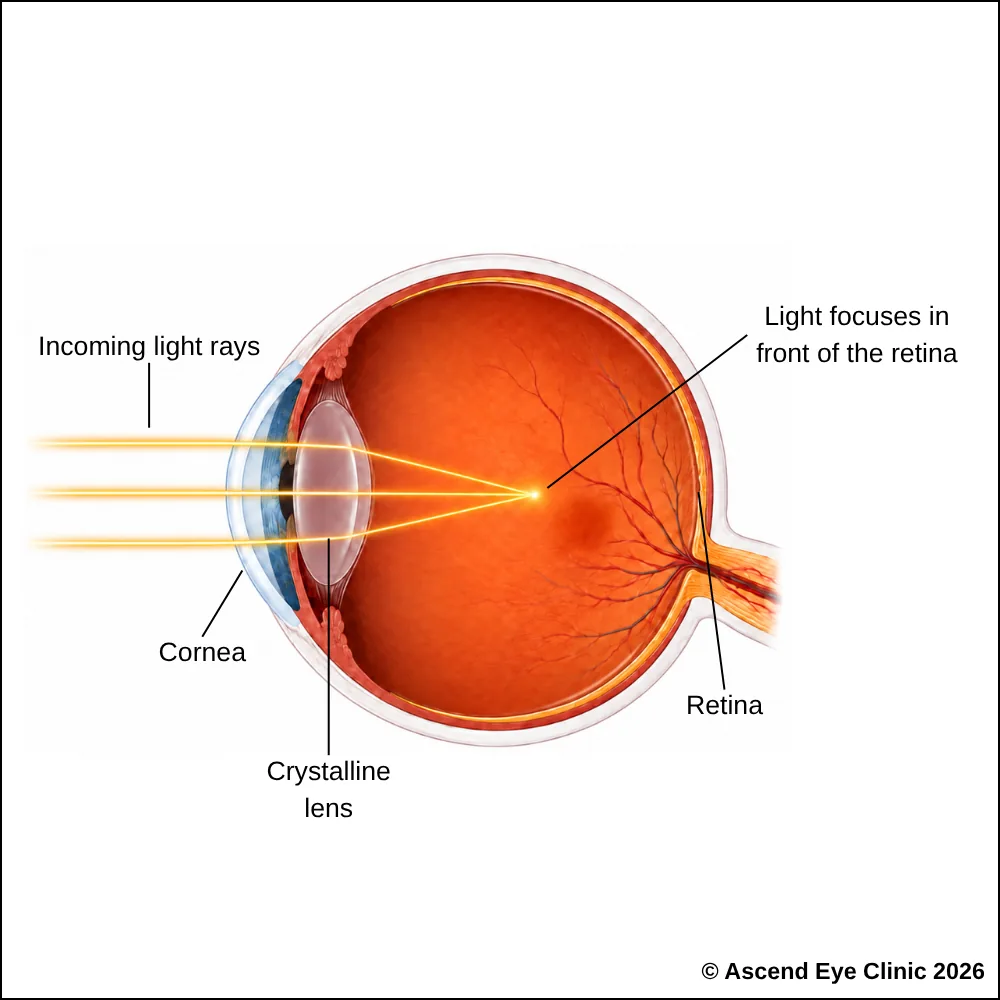
Myopia, or short-sightedness, happens when your child’s eye grows too long, causing light to focus in front of the retina instead of directly on it. This makes distant objects appear blurred.
Myopia commonly develops and progresses during childhood as the eyes continue to grow. The higher the degree of myopia, the greater the risk of developing certain eye conditions including:
Early detection and regular monitoring allow changes in your child’s myopia to be identified promptly. Starting myopia control while the eyes are still developing helps slow further progression and reduce the likelihood of reaching high levels of myopia.
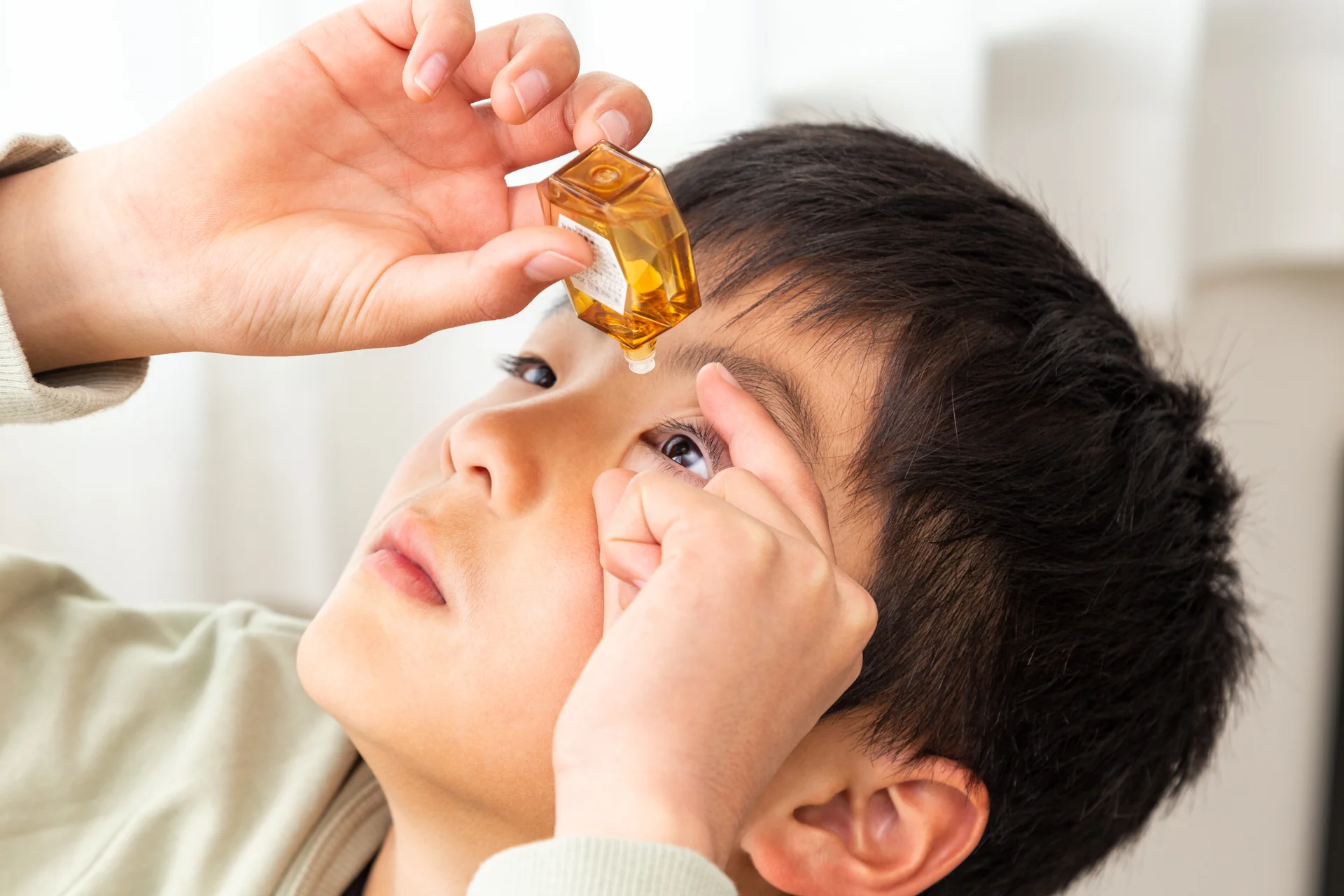
Low-dose atropine eye drops are a simple and effective option for slowing myopia progression in children. Used once daily, atropine helps reduce the signals that drive excessive eye growth, helping to keep your child’s myopia under better control as their eyes develop.
Atropine works alongside your child’s existing glasses or contact lenses, which continue to provide clear vision. Treatment is tailored to your child, with concentrations typically ranging from 0.01% to 0.05% depending on their age, prescription and rate of progression.

For children whose myopia is progressing more quickly, stronger concentrations may be considered. These can provide greater control, with some cases showing a reduction in spectacle prescription. However, higher doses of atropine are also associated with more side effects such as noticeable pupil dilation, glare, and difficulty focusing at near.
Regular reviews allow us to closely monitor your child’s vision, prescription and eye growth, and adjust treatment as they grow. Atropine can also be combined with myopia control glasses or contact lenses when additional control is needed, giving us greater flexibility to build a treatment plan around your child’s individual needs.
Low-dose atropine has been studied extensively for childhood myopia control. The Singapore-based ATOM2 study found that lower concentrations of atropine caused fewer side effects, such as light sensitivity and difficulty focusing at near. It also found less rebound progression with 0.01% atropine after treatment was stopped.
Another clinical trial, the LAMP study, compared atropine concentrations of 0.05%, 0.025% and 0.01%. All three concentrations helped slow myopia progression, although 0.05% atropine provided the greatest control of both prescription changes and eye growth.

The most suitable atropine concentration depends on your child’s age, current prescription, rate of myopia progression, eye growth and response to treatment. Lower concentrations are generally associated with fewer side effects, while higher concentrations may provide greater myopia control in some children. However, the response varies, and a higher concentration is not necessarily better for every child.
Our approach takes these factors into account when recommending treatment. Regular follow-up appointments help us monitor changes in your child’s prescription and eye growth, assess tolerance to the drops and adjust the concentration when necessary. This allows treatment to be tailored to your child’s needs as their eyes develop.
From your child’s first consultation to ongoing follow-up care, our team will guide you and your child through each stage of their eye care journey. We are experienced in examining children and will adapt the consultation according to your child’s age, level of comfort and individual needs.
We understand that eye examinations sometimes feel unfamiliar to children. Our team takes a calm, patient and reassuring approach, allowing time for your child to become comfortable while keeping parents informed throughout the consultation.
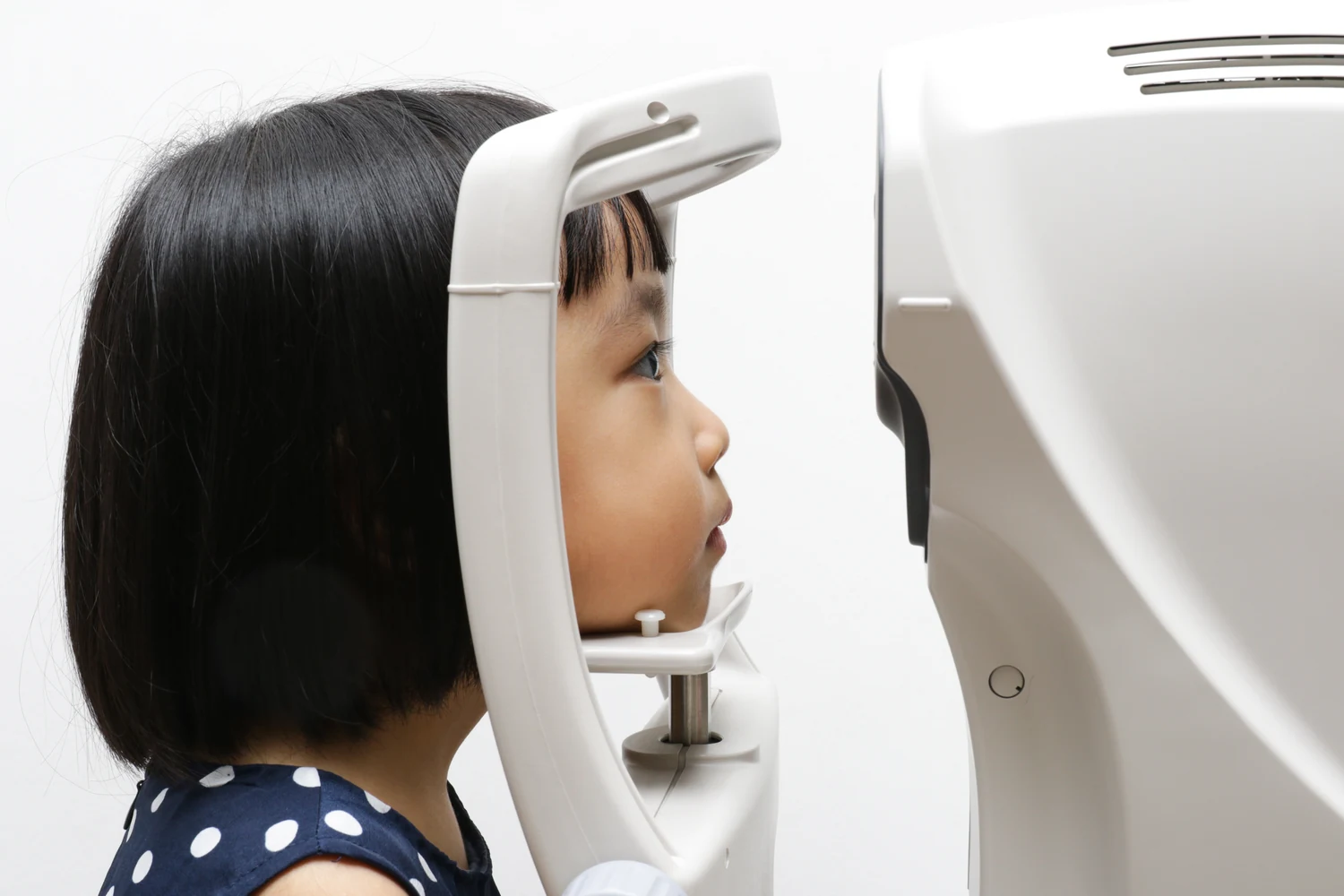
Your child’s consultation begins with an assessment of their vision, refractive error, visual development and overall eye health. For children with myopia, we will assess the degree of myopia, review how their prescription has changed over time, and identify factors associated with myopia progression.
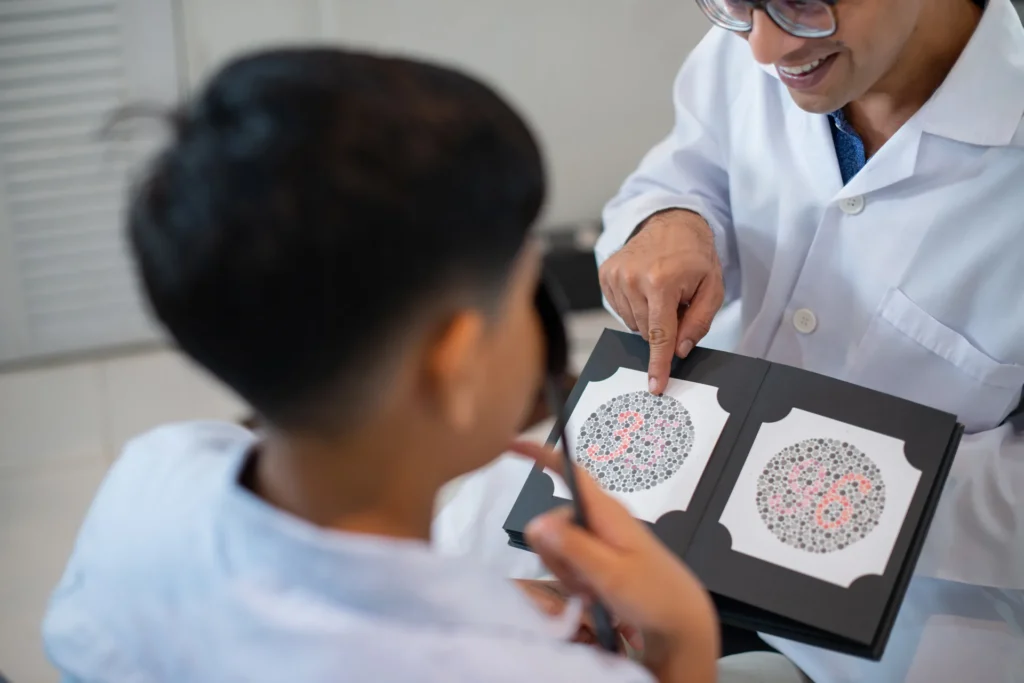
The examination includes measurements of vision and eye alignment, cycloplegic refraction, colour vision and stereopsis testing, examination of the front and back of the eyes, and diagnostic imaging where appropriate.
Children respond differently to eye examinations, so we will adapt the way each test is performed according to your child’s age and ability to cooperate.
Once the examination is complete, we will explain the findings and discuss whether myopia control treatment is appropriate for your child.
Treatment options include myopia-control glasses, contact lenses, orthokeratology and atropine eye drops. Atropine is used in different concentrations, and the concentration, dosing schedule and use alongside glasses or other myopia-control treatments will be assessed according to your child’s age, prescription, axial length and rate of myopia progression.
We will discuss the recommended treatment plan, how it is used and what to expect during treatment.
Regular follow-up is an important part of myopia management as your child’s eyes continue to grow and their prescription changes over time. Follow-up visits allow us to monitor vision, refractive error and axial length to assess how quickly the eye is growing and how the myopia is progressing.
We will also review how your child is responding to treatment. For children using atropine, the concentration, dosing and continued use alongside glasses or other myopia-control treatments will be reviewed and adjusted according to changes in their prescription, axial length and overall myopia progression.
The frequency of review will depend on your child’s age, treatment plan and how their myopia changes over time.
Myopia does more than blur distance vision. As it progresses, it can increase your child’s risk of retinal problems, glaucoma and earlier cataracts later in life. Our goal is to detect progression early and help slow it while the eyes are still developing.
Book a consultation to assess your child’s myopia and explore a treatment plan aimed at protecting their long-term eye health.
Low-dose atropine is used to slow the progression of myopia while the eyes are still growing. By reducing the rate at which myopia increases, treatment aims to limit the degree of short-sightedness your child develops over time.
No. Atropine is used to slow myopia progression rather than correct existing short-sightedness. Your child will still need their prescribed glasses or contact lenses to see clearly while using atropine.
Atropine is generally applied once daily, usually in the evening. Regular use is important because myopia control treatment works over an extended period while the eye is continuing to grow.
Atropine reduces the rate of myopia progression in many children. The response differs between individuals and also depends on the concentration used, which is why we monitor both the prescription and eye growth throughout treatment.
Low-dose atropine concentrations commonly range from 0.01% to 0.05%. We select the concentration according to factors such as your child’s age, current prescription, previous rate of progression and response to treatment.
Low-dose atropine is generally well tolerated. The main side effects are increased sensitivity to bright light and some difficulty focusing at near because atropine affects the pupil and focusing system of the eye. These effects become more noticeable at higher concentrations.
Atropine slightly enlarges the pupils and relaxes the eye’s focusing system. At low concentrations, these effects are generally mild, although some children notice increased sensitivity to bright light or slight difficulty focusing on close work. Higher concentrations produce a stronger effect on both pupil size and near focusing.
Most children using low-dose atropine continue reading and performing near tasks normally. Higher concentrations have a stronger effect on near focusing, and some children require additional support for comfortable near vision.
If a dose is missed occasionally, continue with the normal dosing schedule the following day. Do not use extra drops to make up for a missed dose. Consistent daily use over time remains the most important part of treatment.
Treatment generally continues while there is a meaningful risk of myopia progression. This often extends over several years while the eyes are growing. We review your child regularly and decide when treatment can be reduced or stopped based on how stable the myopia has become.
Yes. Myopia can continue progressing after treatment is stopped, particularly when treatment is stopped while the eyes are still actively growing. We therefore monitor progression carefully when reducing or stopping atropine.
Yes. Atropine can be combined with optical myopia control treatments when stronger control is needed. This includes myopia control glasses, soft myopia control contact lenses and orthokeratology. We recommend combination treatment according to your child’s progression and individual needs.
We monitor changes in your child’s prescription together with the growth of the eye over time. Comparing these measurements at regular reviews allows us to determine how well myopia progression is being controlled and whether the treatment needs to be adjusted.
Regular follow-up is important throughout atropine treatment. At each review, we assess vision, prescription and myopia progression and check how your child is tolerating the eye drops. The review schedule is adjusted according to how quickly the myopia is changing.
Not every child requires the same form of myopia control. We consider your child’s age, prescription, rate of progression, eye health, lifestyle and previous treatment before recommending atropine or another myopia control option.
Hi, I would like to book a consultation with Dr Errol Chan from Ascend Eye Clinic
