
Cataracts in children can interfere with the clear visual input needed for normal development. Early assessment helps determine whether the cataract can be safely monitored or whether treatment is needed to protect your child’s vision as their eyes continue to grow.
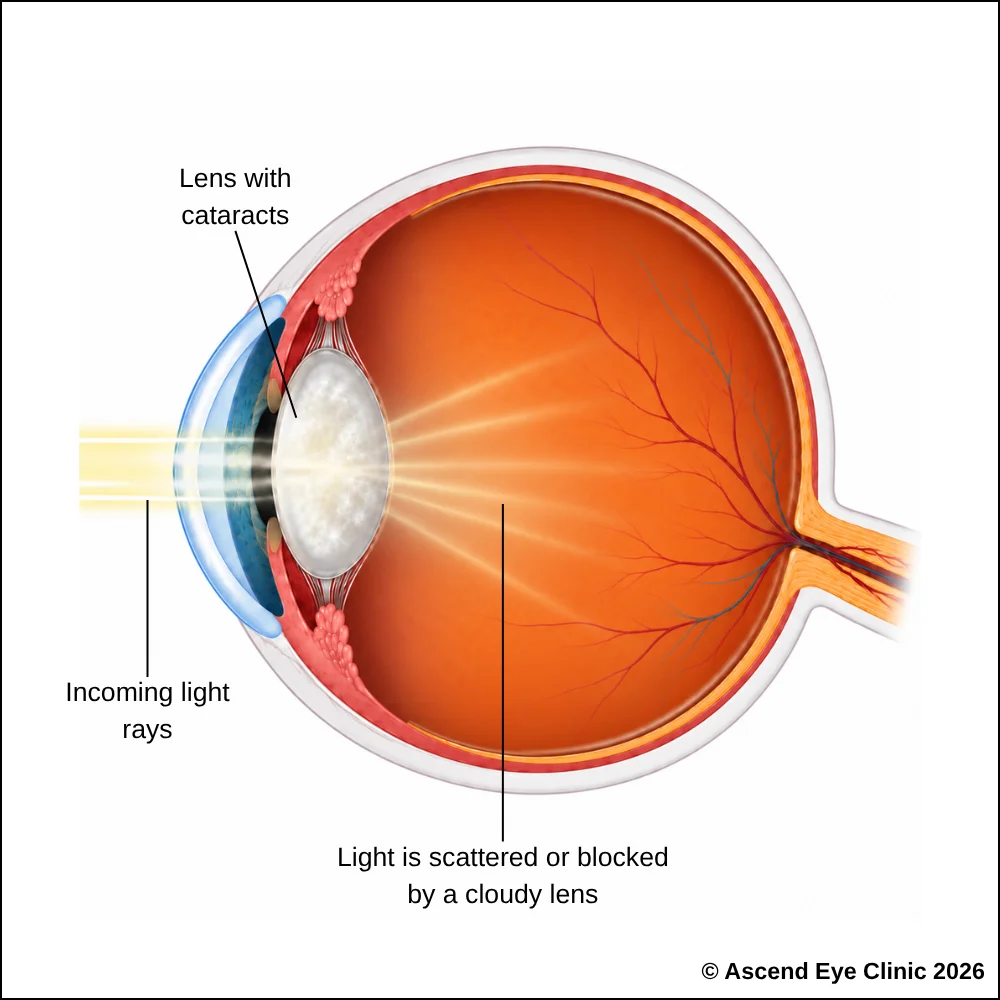
A cataract is a clouding of the natural lens inside the eye. The lens is normally clear and focuses light onto the retina, allowing the brain to receive a sharp image. When the lens becomes cloudy, light cannot pass through clearly, resulting in blurred or reduced vision.
Some paediatric cataracts are present from birth, while others develop during infancy, childhood or adolescence. Causes include:
In some children, no specific cause is identified.
Clear vision is especially important during childhood because the eyes and brain are still learning to work together. Early assessment and treatment support healthy visual development and reduce the risk of amblyopia, also known as lazy eye.
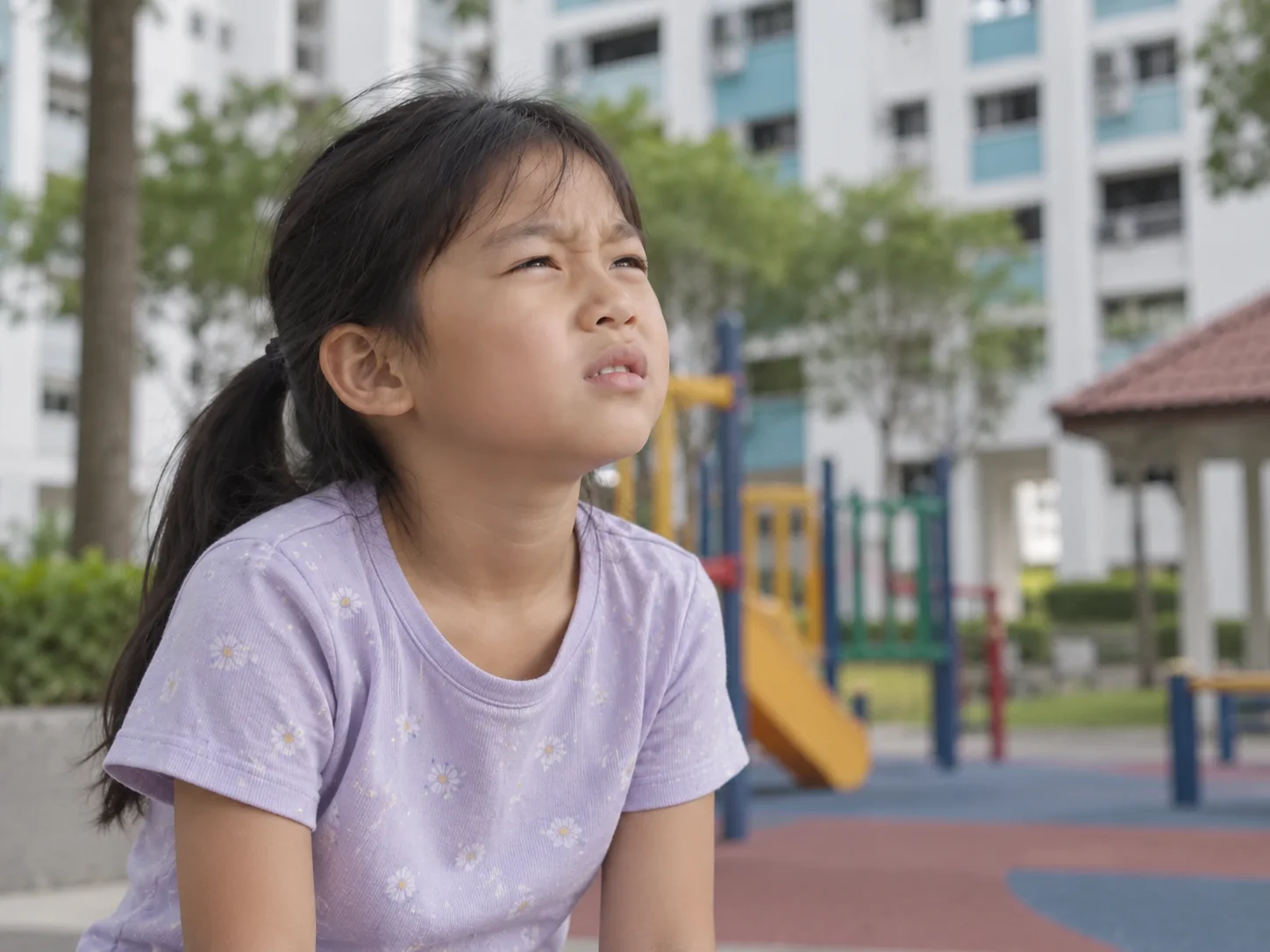
Cataracts in children are not always easy to detect, particularly in babies and younger children who cannot describe changes in their vision. Signs that you may notice include:
A cataract that interferes with vision during childhood can affect normal visual development and lead to amblyopia, also known as lazy eye. Early assessment is therefore important if any of these signs are noticed.
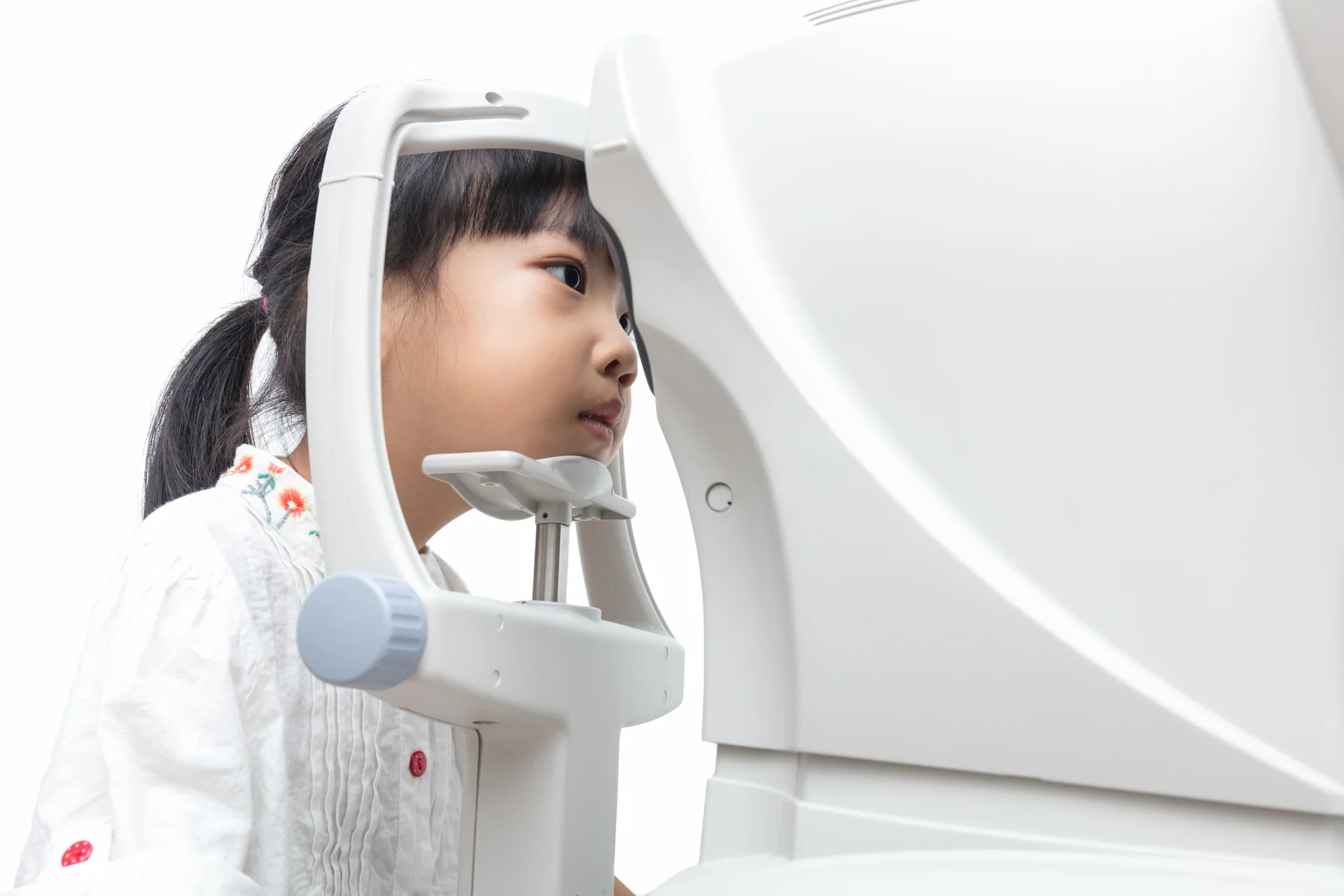
Our team will assess your child’s vision, prescription and the clarity of the natural lens, adapting each test according to their age, comfort and ability to cooperate.
Measures how clearly your child can see in each eye and helps identify any reduction in vision caused by the cataract.
Determines your child’s spectacle prescription and checks whether reduced vision is related to refractive error, the cataract or a combination of both.
Checks for squint and whether both eyes are properly aligned.
Assesses how well both eyes work together, including depth perception.
Provides a magnified view of the front of the eye and natural lens, allowing us to assess the location, type and severity of the cataract.
Measures the length and other dimensions of the eye to calculate the appropriate lens implant power when cataract surgery is required.
Arranged when an underlying cause of the cataract needs to be investigated, such as certain infections or metabolic disorders.
Paediatric cataract surgery is required when the cataract blocks clear vision or interferes with normal visual development. This is particularly important in infants and young children, as clear visual input is needed while the eyes and brain are developing.
If cataract surgery is recommended, we will first assess how the cataract is affecting your child’s vision and visual development. The timing and surgical plan depend on factors such as your child’s age, whether one or both eyes are affected, the size and location of the cataract, and the presence of associated conditions such as amblyopia or strabismus. The overall health and development of the eye are also assessed, and measurements are performed to plan the appropriate vision correction after the cataract is removed.
Paediatric cataract surgery is performed under general anaesthesia so that your child remains asleep and comfortable throughout the procedure. A small opening is made in the eye and the cloudy natural lens is carefully removed. Depending on your child’s age and eye development, an intraocular lens may be implanted to replace the focusing power of the natural lens.
After surgery, an eye shield is used to protect the operated eye and antibiotic and steroid eye drops are prescribed to support healing and control inflammation. Regular follow-up is important to monitor the eye, check the visual response and adjust glasses or contact lenses where required. Amblyopia treatment, including patching when appropriate, may also be needed to encourage visual development, while associated strabismus and other eye conditions will continue to be monitored as your child grows.
From your child’s first consultation to treatment and follow-up care, our team will guide you and your child through each stage of the journey. We are experienced in examining and caring for children and will adapt the consultation according to your child’s age, level of comfort and individual needs.
We understand that eye examinations can sometimes feel unfamiliar to children. Our team takes a calm, patient and reassuring approach, allowing time for your child to become comfortable while keeping parents informed throughout their care.
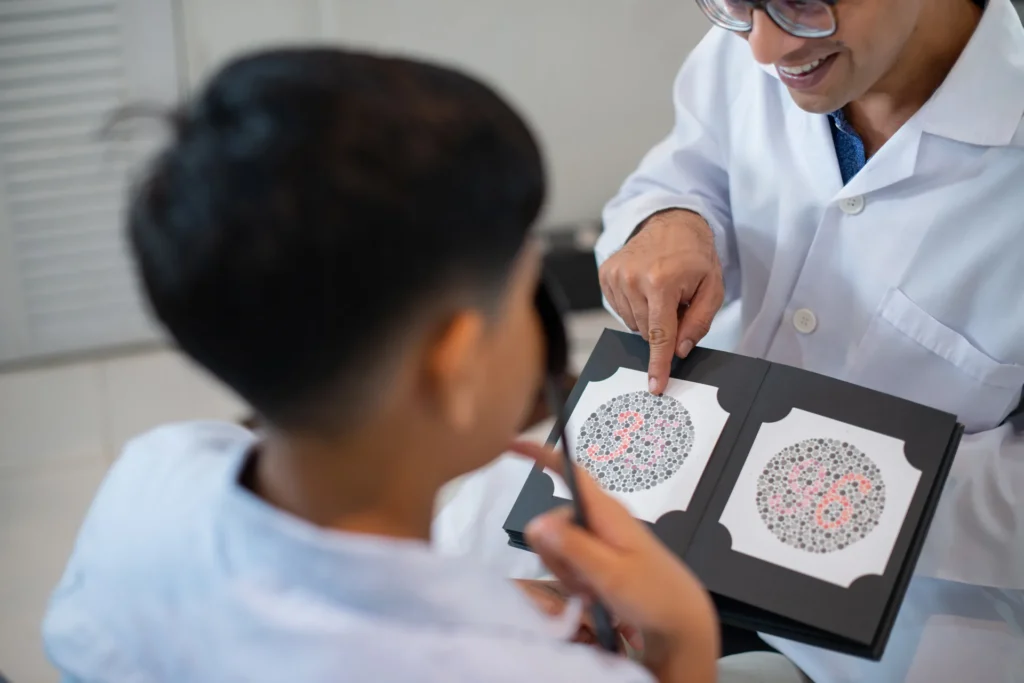
Your child’s consultation begins with an assessment of their vision, visual development and overall eye health. Depending on their age and condition, this may include measurements of vision and eye alignment, assessment of refractive error, examination of the front and back of the eyes, and diagnostic imaging where appropriate.
Children respond differently to eye examinations, so we will adapt the way each test is performed according to your child’s age and ability to cooperate. Our team will guide your child through each step patiently and carefully, while explaining the findings to you in a clear and understandable way.
Every child develops differently, and treatment is planned according to your child’s diagnosis, age, visual development and individual needs.
Depending on the condition, treatment may include glasses, amblyopia therapy, myopia control, eye drops, monitoring or other forms of treatment. We will explain the recommended approach, what it aims to achieve and what you can expect over time, while giving you the opportunity to discuss any questions or concerns.
Once treatment begins, our team will provide clear guidance on how it should be carried out at home and what to expect along the way. This may include advice on wearing glasses, using eye patches or eye drops, or following a myopia control programme.
We understand that children may need time to adjust to treatment. We will work closely with you to make the process as manageable and comfortable as possible, while adapting our approach according to your child’s needs and response.
Some paediatric eye conditions may require a procedure or surgery. If this is recommended, we will explain why it is needed, what the procedure involves and how your child will be cared for before, during and after treatment.
The type of anaesthesia and surgical setting will depend on your child’s age and the procedure being performed. Our team will guide you through the necessary preparations and work closely with the surgical team to help make the experience as smooth and reassuring as possible for your child.
Children’s eyes continue to grow and develop, so regular follow-up is an important part of paediatric eye care. Follow-up visits allow us to monitor your child’s vision, eye alignment, refractive changes and response to treatment over time.
We will adjust treatment where needed as your child grows and their visual needs change. Our team will continue to support both you and your child throughout their care, providing clear guidance and addressing any concerns along the way.
A cataract can prevent your child’s eye and brain from developing clear vision. Early assessment identifies whether close monitoring or prompt surgery is required.
Book a consultation at Ascend Eye Clinic for a detailed assessment of your child’s vision and personalised guidance on the next steps.
A cataract is a clouding of the natural lens inside the eye. When the lens becomes cloudy, light cannot pass through clearly, which can reduce vision and interfere with normal visual development.
Yes. Some cataracts are present at birth, while others develop during infancy or childhood.
Possible signs include a white or grey appearance in the pupil, poor visual attention, difficulty following objects, an eye turn, unusual eye movements, sensitivity to light or reduced vision in one or both eyes.
No. Small cataracts that do not affect vision or interfere with visual development can be monitored closely. Surgery is required when the cataract significantly blocks vision or places your child’s visual development at risk.
A child’s visual system is still developing during the early years of life. If a cataract prevents clear images from reaching the brain, normal visual development can be disrupted and amblyopia can develop.
The timing depends on how much the cataract is affecting vision and visual development. Cataracts that significantly obstruct vision in infants and young children generally require earlier treatment.
During surgery, the cloudy natural lens is removed to allow light to pass clearly through the eye again. Depending on your child’s age and eye development, an artificial intraocular lens may also be inserted.
Not always. In some infants and very young children, an intraocular lens may not be inserted during the initial operation. Contact lenses or high-powered glasses can then be used to replace the focusing power of the natural lens.
Yes, many children still require glasses after surgery. Glasses help fine-tune the remaining prescription and provide the clearest possible vision as the eyes continue to grow.
Patching may be prescribed when one eye has weaker vision than the other. Covering the stronger eye for a prescribed period encourages the brain to use the weaker eye and helps reduce the risk of amblyopia.
The surgeries are commonly performed separately. In young children, surgery on the second eye is often carried out soon after the first to minimise differences in visual development between the two eyes.
The cataract itself does not return because the cloudy natural lens has been removed. However, clouding can develop in tissues behind the lens implant, which may require further treatment.
The visual outcome depends on several factors, including the severity and duration of the cataract, your child’s age at treatment, whether one or both eyes are affected and whether amblyopia or other eye conditions are present.
Yes. Long-term follow-up is important because your child’s eyes continue to grow and their prescription can change. Regular examinations also allow us to monitor eye pressure, visual development and the position of the lens implant when one has been inserted.
A cataract that blocks clear vision during visual development can lead to amblyopia and permanent reduction in vision. Early assessment helps determine whether monitoring, vision support or surgery is required.
Hi, I would like to book a consultation with Dr Errol Chan from Ascend Eye Clinic
