
Refractive errors are common vision conditions that occur when the eye does not focus light accurately on the retina, resulting in blurred or distorted vision at different distances.
Clear vision depends on light being focused precisely on the retina, the light-sensitive tissue at the back of the eye. The cornea and the lens work together to bend incoming light and bring it into focus, allowing a clear image to form on the retina.
Refractive errors occur when the shape or focusing power of the eye causes light to focus in front of, behind, or unevenly across the retina, causing blurred vision.
The four main types of refractive errors are:

Myopia, or short-sightedness, causes distant objects to appear blurred while nearby objects remain clear. It usually occurs when the eye is longer than normal or the cornea is too curved, causing light to focus in front of the retina rather than directly on it.
Common symptoms include:
Myopia often begins during childhood and may continue to progress as the eye grows. Higher levels of myopia are associated with an increased risk of certain eye conditions later in life, making regular monitoring particularly important for children.
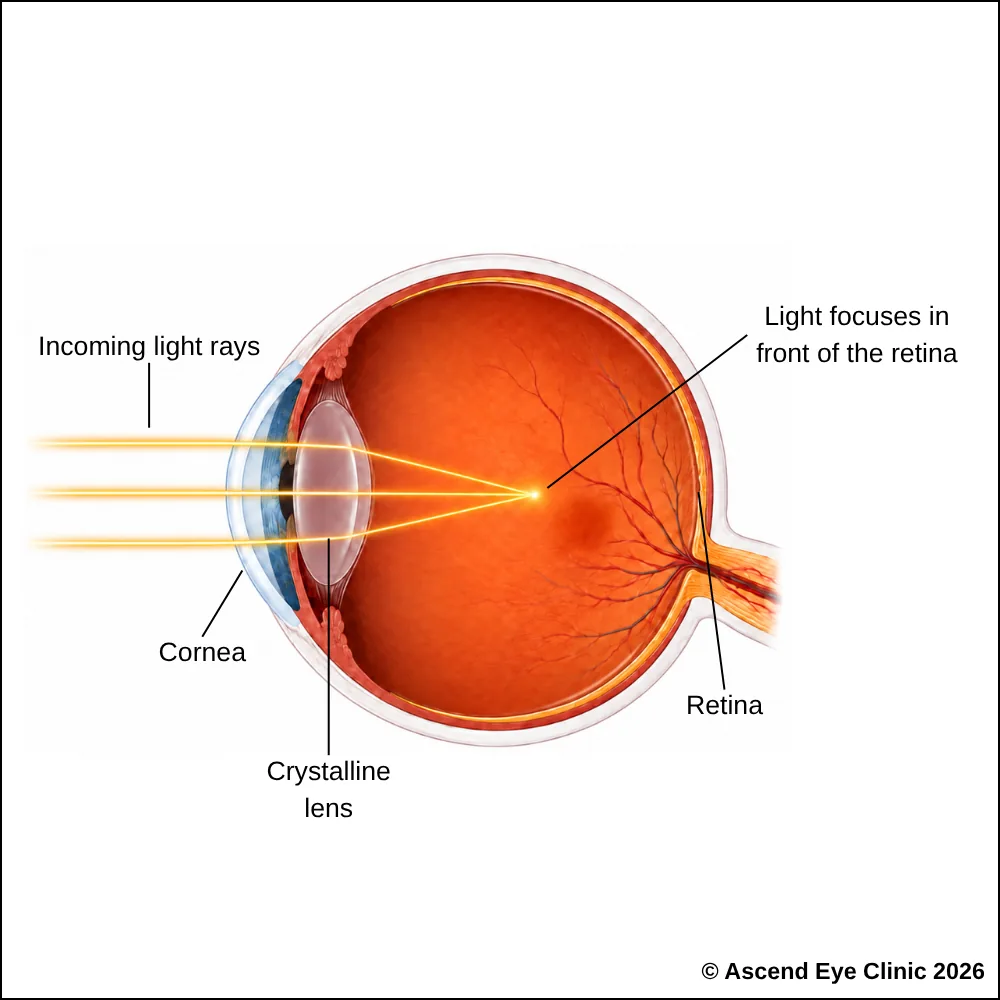
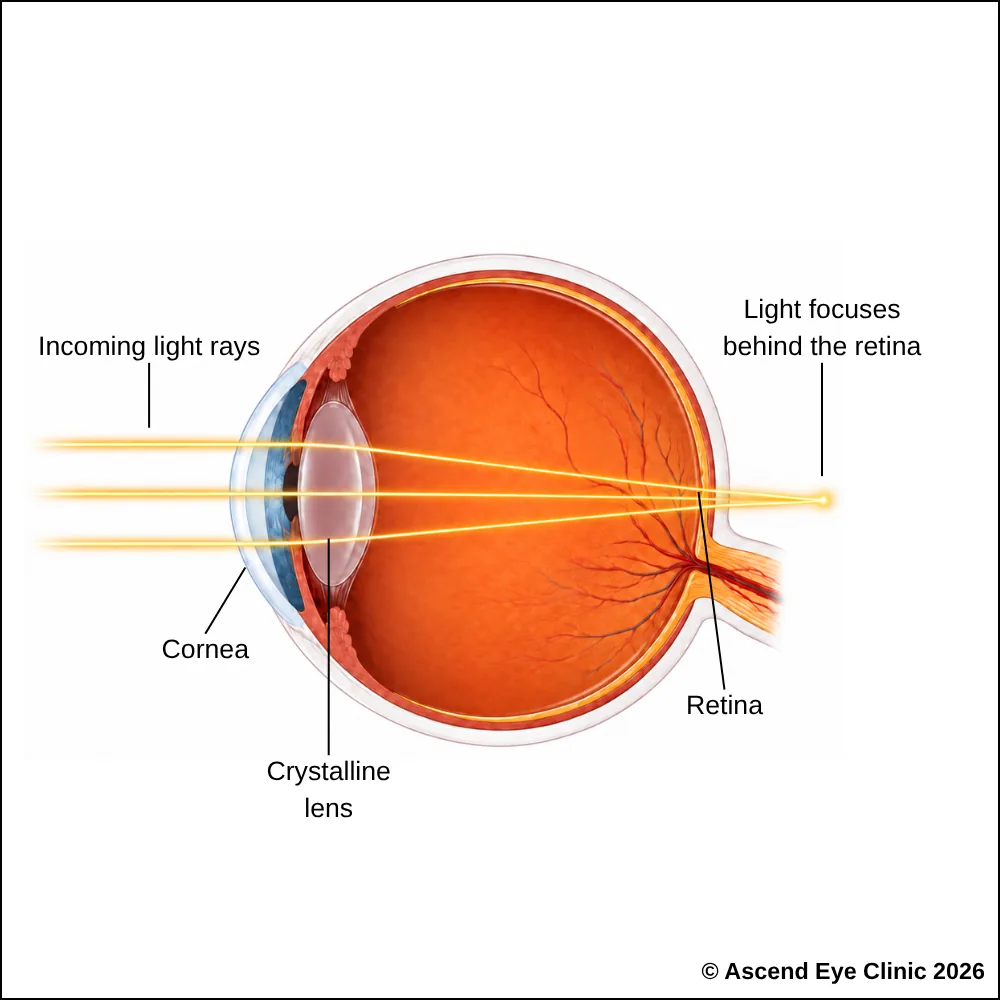
Hyperopia, or long-sightedness, is when near vision is blurred while distance vision is clear. However, in severe cases, both near and distance vision can be affected. It occurs when the eye is shorter than average or has insufficient focusing power, causing light to focus behind the retina.
Common symptoms include:
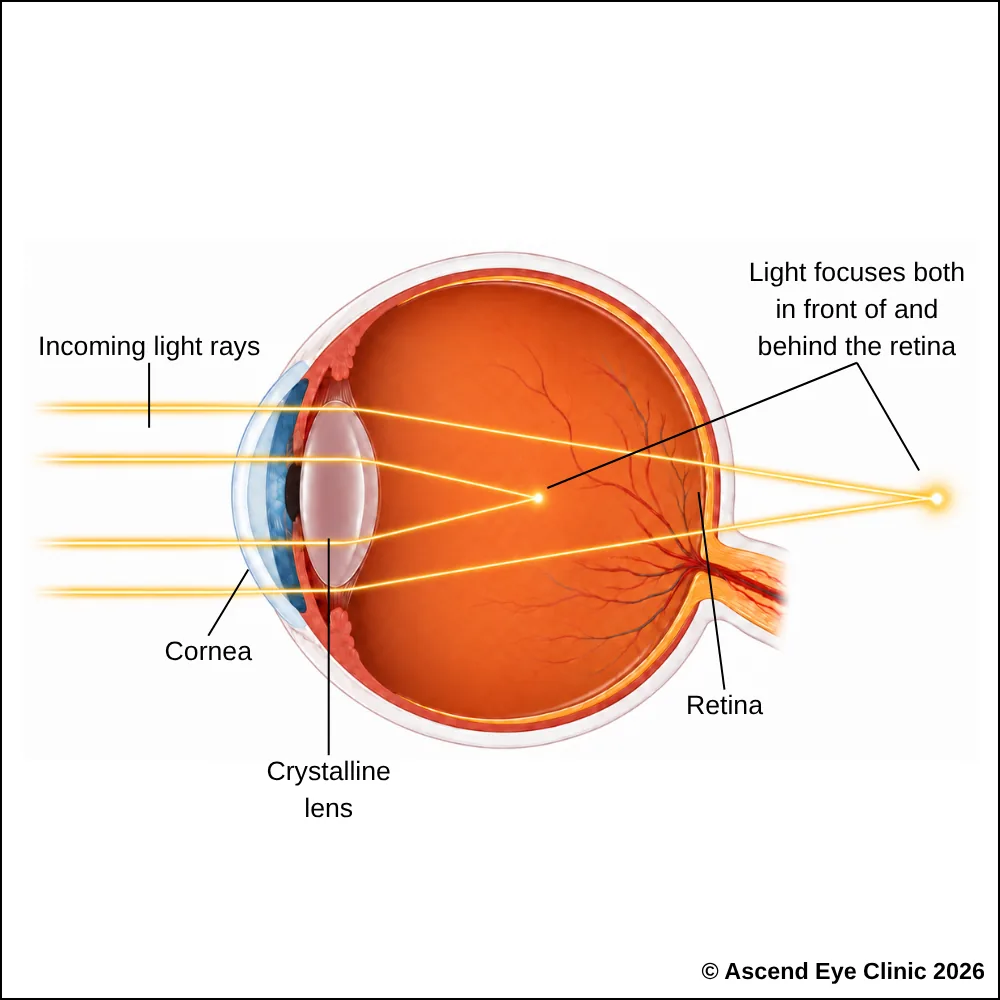
Astigmatism occurs when the cornea or natural lens has an uneven curvature. Instead of focusing light at a single point, the eye produces several focal points, resulting in blurred or distorted vision.
Common symptoms include:
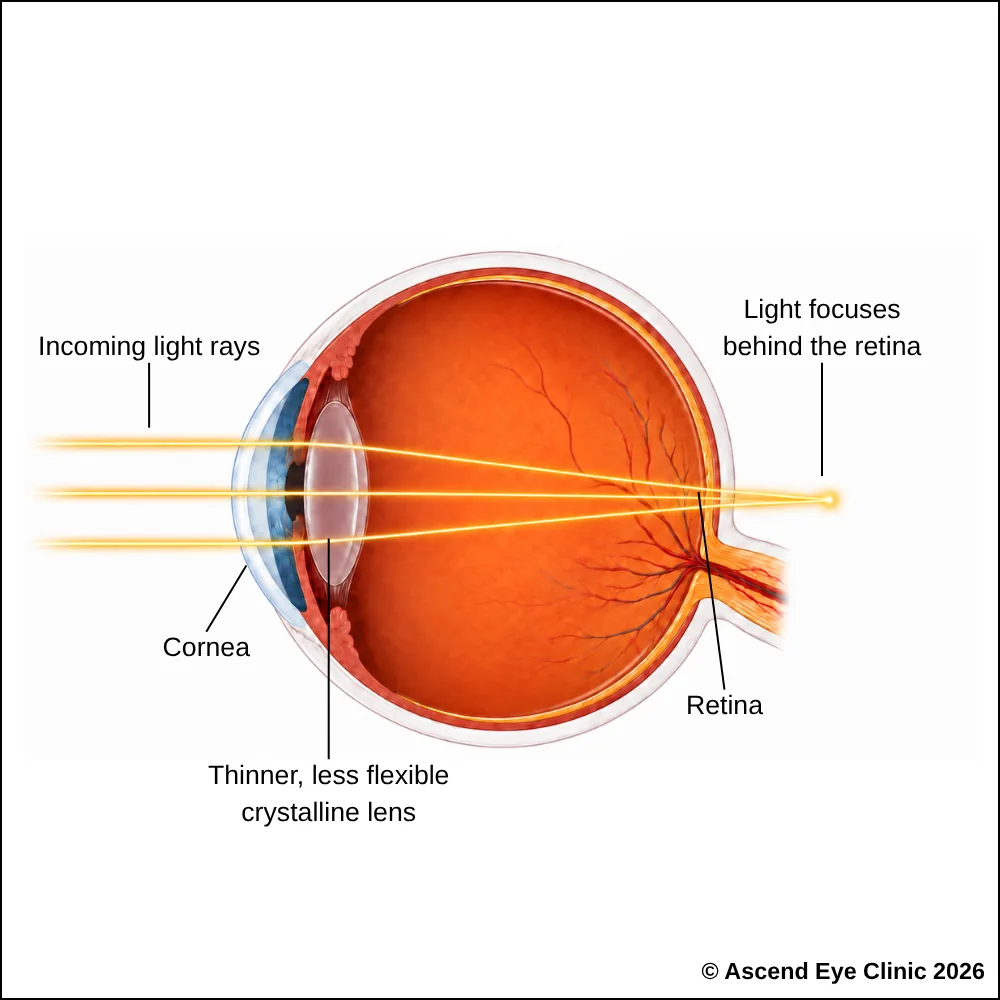
Presbyopia is an age-related change in near focusing that eventually affects everyone, often becoming noticeable from the early to mid-40s. This is caused by the natural lens gradually becoming less flexible and unable to change shape as easily to focus on close objects.
Common symptoms include:
As myopia progresses, the eye continues to elongate, increasing the long-term risk of conditions such as glaucoma and retinal detachments. Myopia control aims to slow this progression during childhood and reduce the likelihood of developing high myopia.
Treatment options include:
Learn more about myopia control options for children here.

We offer a broad range of vision correction procedures to correct refractive errors and reduce dependence on glasses and contact lenses. These include:
For suitable patients, monovision can also be incorporated into these treatment options, with one eye corrected for distance and the other for near. Learn more about monovision here.

Book a consultation to understand the cause of your blurred vision and the options for clearer sight. We will assess your vision and eye health, and discuss suitable management options, including myopia control for children and vision correction options for adults.
A refractive error occurs when light entering the eye does not focus correctly on the retina. This causes blurred vision and includes myopia, hyperopia, astigmatism and presbyopia.
The main types are myopia, hyperopia, astigmatism and presbyopia. Myopia mainly affects distance vision, hyperopia affects the eye’s ability to focus clearly, astigmatism causes blurred or distorted vision, and presbyopia affects near focusing with age.
Refractive errors result from differences in the length of the eye, the curvature of the cornea or the focusing power of the natural lens. These factors determine where light is focused in relation to the retina.
In myopia, light focuses in front of the retina, causing distant objects to appear blurred. In hyperopia, light focuses behind the retina, which can affect near and sometimes distance vision. In astigmatism, uneven curvature of the cornea or natural lens causes light to focus at more than one point, resulting in blurred or distorted vision.
Yes. Astigmatism commonly occurs together with myopia or hyperopia. Presbyopia also develops with age and can occur in someone who already has another refractive error.
Common signs include blurred vision at distance or near, difficulty focusing, eye strain and headaches. A vision assessment and refraction will determine whether a refractive error is present and measure the prescription required.
Yes. Prescriptions can change as the eye grows and ages. Myopia often changes during childhood and adolescence, while presbyopia develops later in adulthood as the natural lens becomes less flexible.
Genetics play an important role, particularly in myopia. Having one or both parents with myopia increases the likelihood of developing it, although environmental and lifestyle factors also influence its development and progression.
Yes. Children can develop myopia, hyperopia and astigmatism. Children do not always recognise that their vision is blurred, so regular eye examinations are important for detecting refractive errors and ensuring appropriate correction.
We measure visual acuity and perform refraction to determine the type and degree of refractive error. A detailed eye examination also helps identify whether reduced vision is caused by a refractive error or another eye condition.
This depends on the type and degree of your prescription and how much it affects your vision. Some people require correction throughout the day, while others use glasses mainly for specific activities such as distance viewing, reading or computer work.
Yes. An uncorrected or under-corrected prescription can place additional strain on the visual system, leading to eye strain, headaches or visual fatigue, particularly during prolonged visual tasks.
Vision correction procedures can reduce or eliminate the refractive error present at the time of treatment. However, the eyes continue to change naturally with age, so changes in prescription and the development of presbyopia can still occur later in life.
We provide laser-based vision correction procedures including FemtoLASIK, SMILE Pro 2.0 and SafeSight Transepithelial PRK, as well as lens-based procedures including EVO Implantable Collamer Lenses and Refractive Lens Exchange. The appropriate treatment depends on factors such as your prescription, age, corneal measurements, eye health and visual needs.
A detailed eye assessment is required to determine the most appropriate treatment. We will assess your prescription, corneal shape and thickness, eye health, age and visual requirements before recommending suitable options. Book a consultation with us for a comprehensive vision correction assessment and personalised treatment recommendation.
Hi, I would like to book a consultation with Dr Errol Chan from Ascend Eye Clinic
