
Myopia control focuses on slowing the progression of short-sightedness during childhood, when changes in eye growth are most active. By reducing the rate of progression, we aim to limit the degree of myopia your child develops and reduce the long-term eye health risks associated with higher myopia.
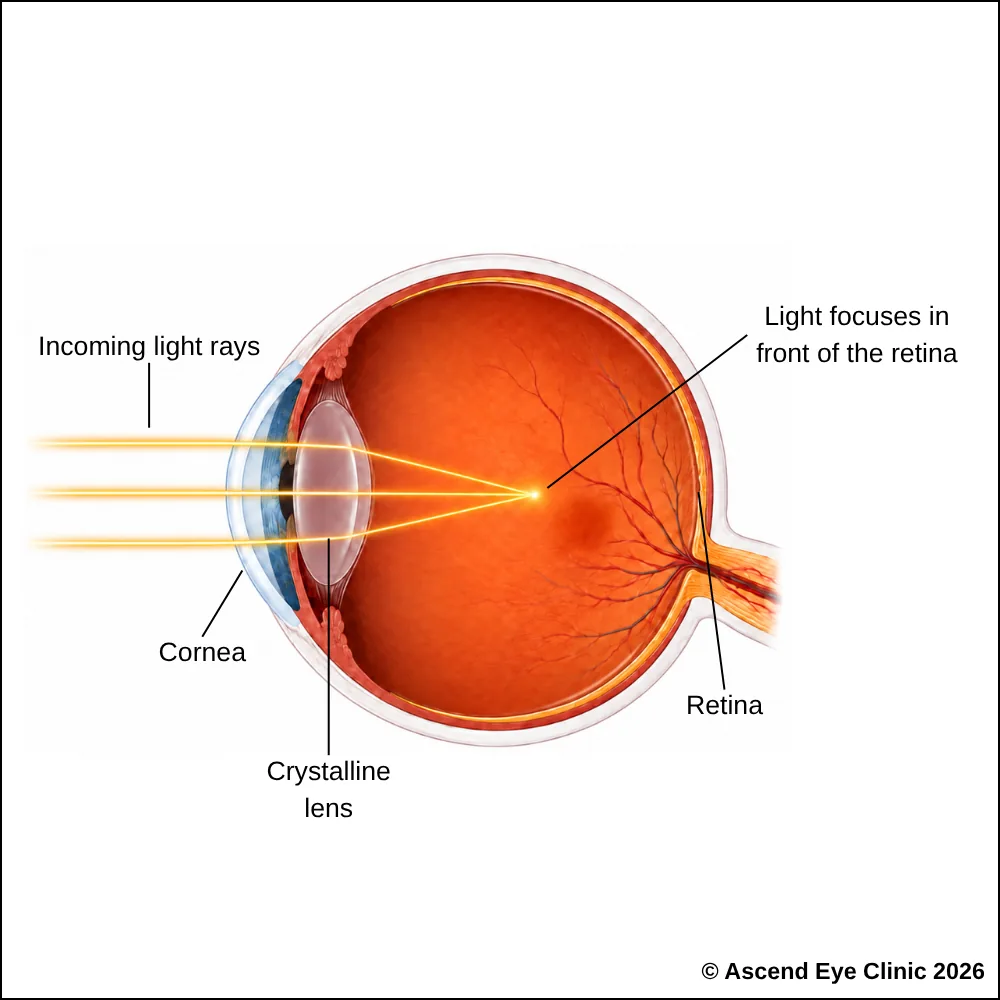
Myopia, or short-sightedness, occurs when the eye grows too long or focuses light in front of the retina rather than directly on it. This makes distant objects appear blurred while near vision often remains clear. Myopia commonly develops during childhood and can continue to progress as the eyes grow.
As myopia progresses, distance vision becomes increasingly blurred and a stronger spectacle prescription is needed. Higher levels of myopia are also associated with a greater lifetime risk of certain eye conditions, including:
Keeping myopia as low as possible therefore helps reduce these long-term risks. Myopia control treatments are designed to slow the progression of myopia while the eyes are still developing, helping to limit the final degree of myopia and reduce the risk of complications associated with high myopia later in life.
There are several daily and lifestyle habits that help reduce the risk of developing myopia in children including:
For children who already have myopia, lifestyle changes alone are usually not sufficient. Myopia control treatments may be recommended to help slow further progression.

Common symptoms of myopia in children include:
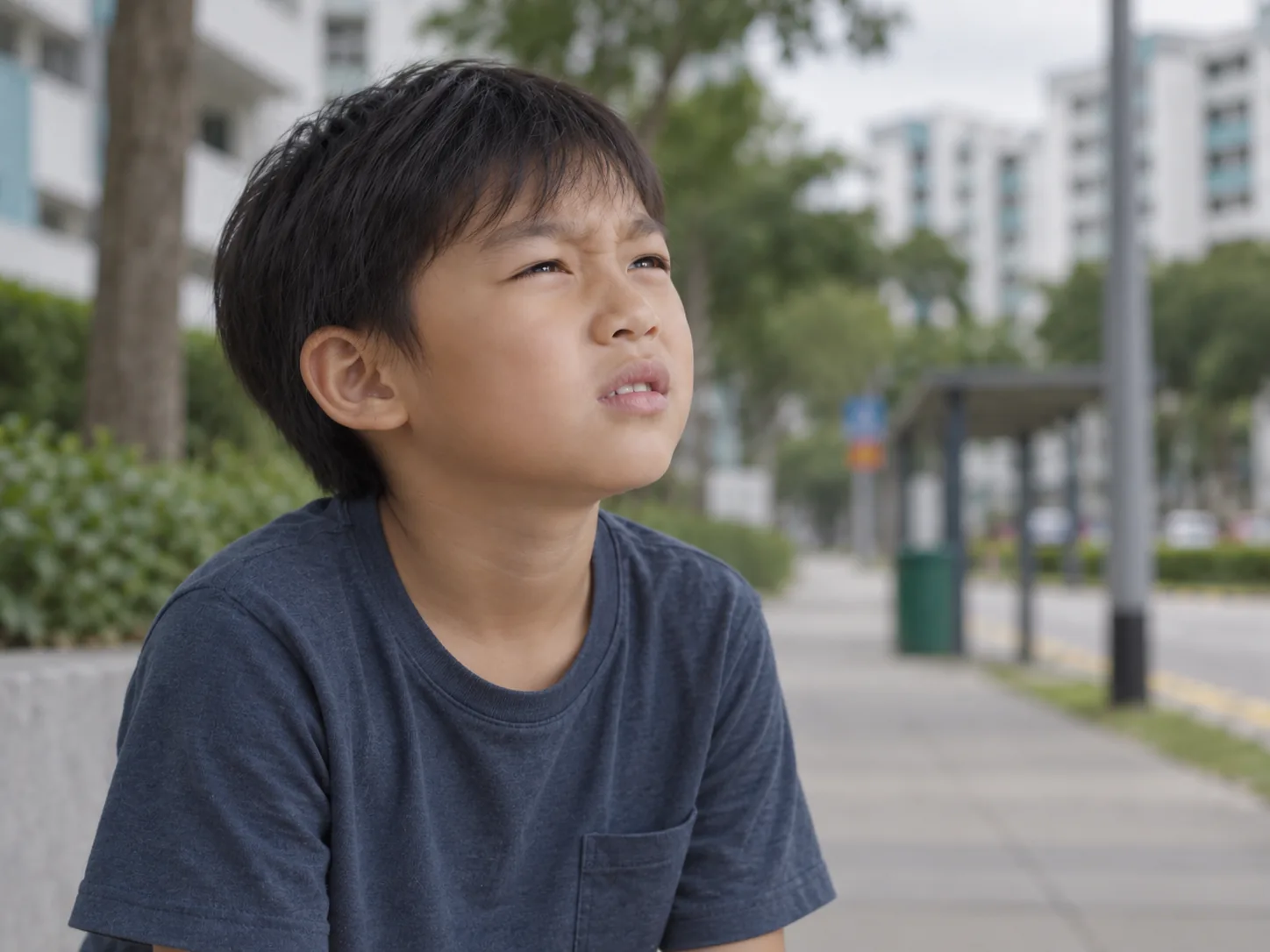
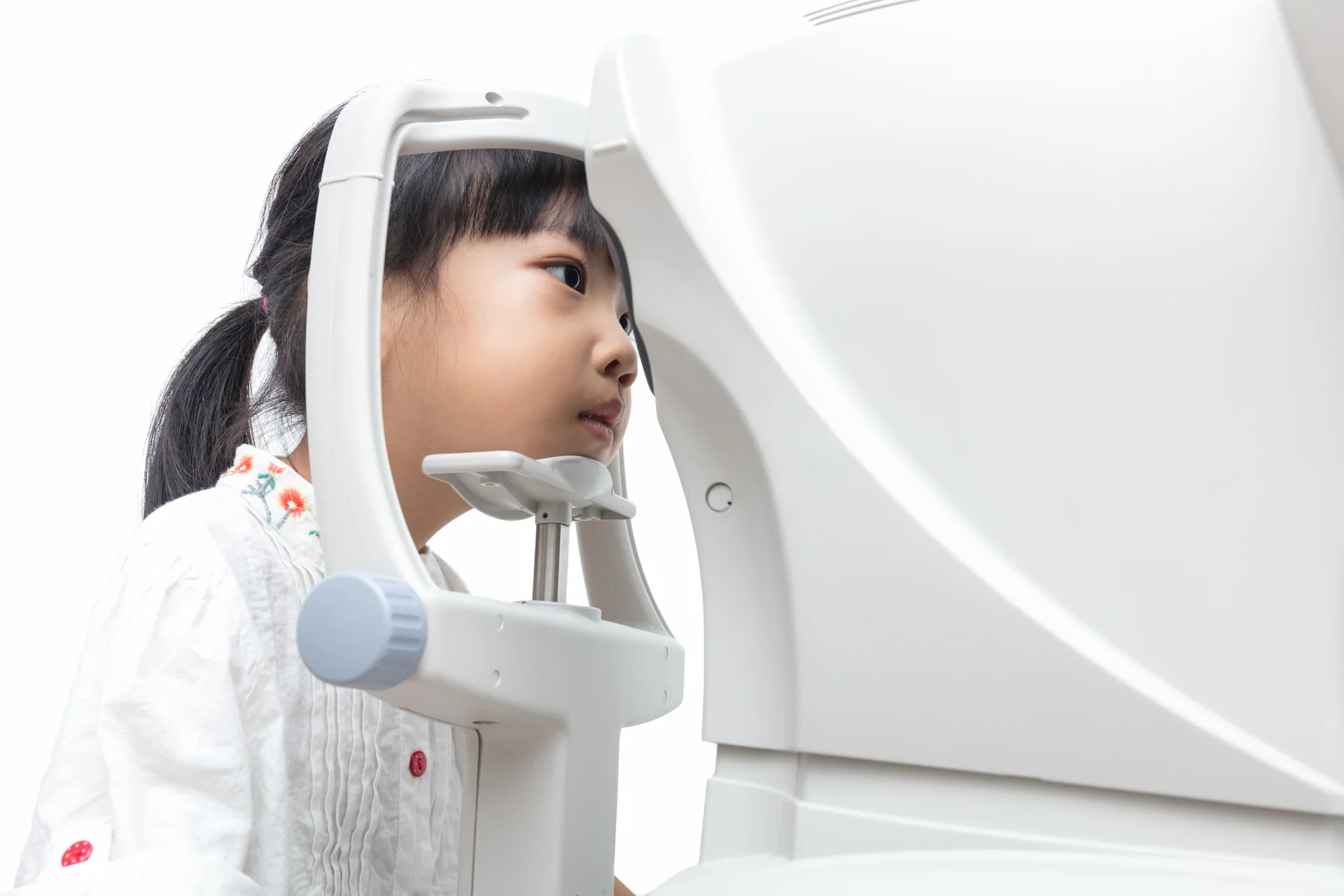
Our team will assess your child’s vision, prescription and how their eyes work together, adapting each test according to their age, comfort and ability to cooperate.
Measures how clearly your child can see in each eye and identifies any reduction in distance vision.
Determines the degree of short-sightedness and checks for any associated astigmatism. Cycloplegic eye drops are used to temporarily relax the focusing muscles and obtain an accurate prescription.
Checks that both eyes are properly aligned and move together normally.
Assesses how well both eyes work together, including focusing, coordination and depth perception.
Measures the axial length of the eye, which helps assess eye growth and monitor myopia progression over time.
Myopia control treatment aims to slow the progression of short-sightedness and reduce excessive eye growth while your child’s eyes are still developing. Treatment options include myopia control glasses, myopia control soft contact lenses, orthokeratology (Ortho-K) lenses and low-dose atropine eye drops. In some children, different myopia control treatments can be combined to provide stronger control of myopia progression. The most suitable approach depends on your child’s age, prescription, rate of progression, eye health and lifestyle.
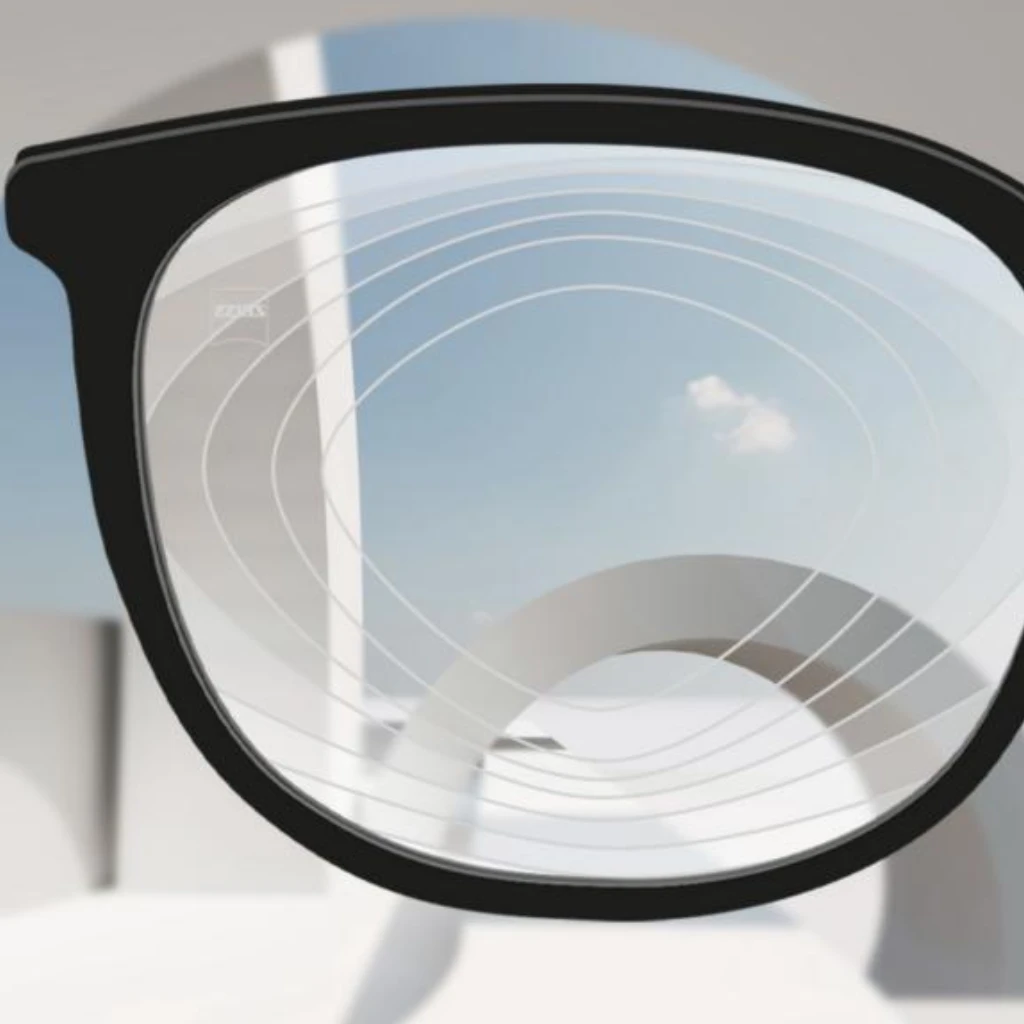
Myopia control glasses do more than simply correct blurred distance vision. They are specially designed to provide clear vision while also helping to slow the progression of myopia during childhood by reducing the visual signals that encourage the eye to continue growing longer.
Well-recognised options include ZEISS MyoCare, HOYA MiYOSMART and Essilor Stellest. Although their optical designs differ, they work on a similar principle: the central portion of the lens provides clear vision, while surrounding treatment zones create controlled myopic defocus across the peripheral retina. This helps reduce the stimulus for excessive eye growth and slow myopia progression.
They are worn like conventional glasses, making them a convenient and non-invasive option for many children, particularly those who are not ready to wear contact lenses. Consistent full-day wear is important so the treatment effect is maintained throughout the child’s waking hours, together with regular reviews to monitor prescription changes and eye growth.
Myopia control soft contact lenses provide clear vision while also helping to slow the progression of myopia. They use specialised optical zones that provide clear central vision while creating a treatment effect that helps reduce excessive eye growth.
One example is CooperVision MiSight 1 day, a daily disposable contact lens designed specifically for childhood myopia control. A fresh pair is worn each day and removed before sleeping, making them a convenient option for older children and teenagers who want greater freedom from glasses during school, sports and other activities.
Regular follow-up allows us to monitor your child’s vision, myopia progression, eye growth, corneal health and contact lens fit, while reinforcing proper lens hygiene and handling.
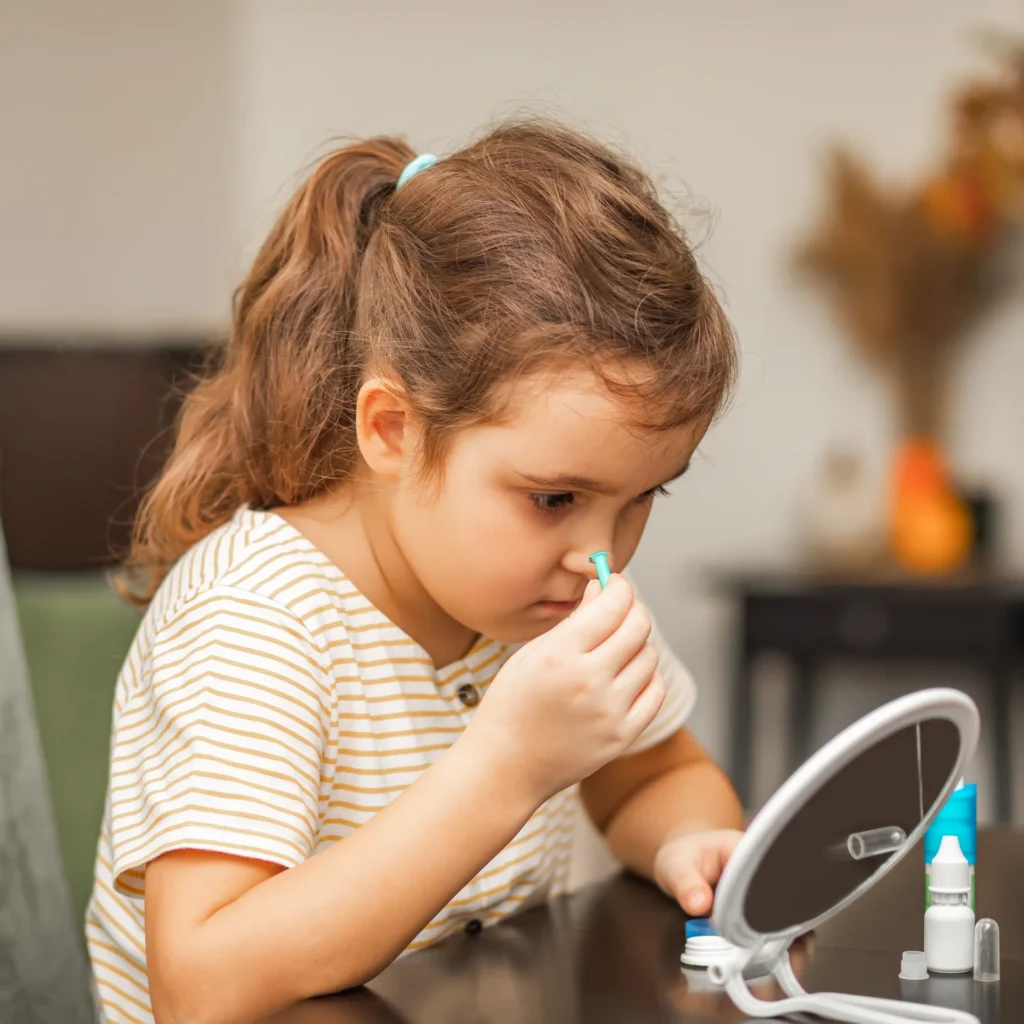
Orthokeratology, or Ortho-K, uses specially designed rigid contact lenses worn overnight. These lenses gently and temporarily reshape the front surface of the cornea while your child sleeps, allowing clearer vision during the day without glasses or daytime contact lenses while also helping to slow myopia progression.
Examples include Menicon Bloom Night™ and Paragon CRT® lenses, which are individually fitted according to the shape of your child’s cornea.
Regular follow-up is important to monitor your child’s vision, myopia progression, eye growth, corneal health and lens fit, while ensuring the lenses continue to be worn safely and effectively.

Low-dose atropine eye drops are used to help slow the progression of myopia in children. Applied once daily, they reduce the signals that encourage excessive eye growth, helping to limit the increase in myopia over time.
Unlike myopia control glasses or contact lenses, atropine does not correct blurred vision. Your child will therefore continue to wear their prescribed glasses or contact lenses for clear vision while using atropine as part of their myopia control treatment.
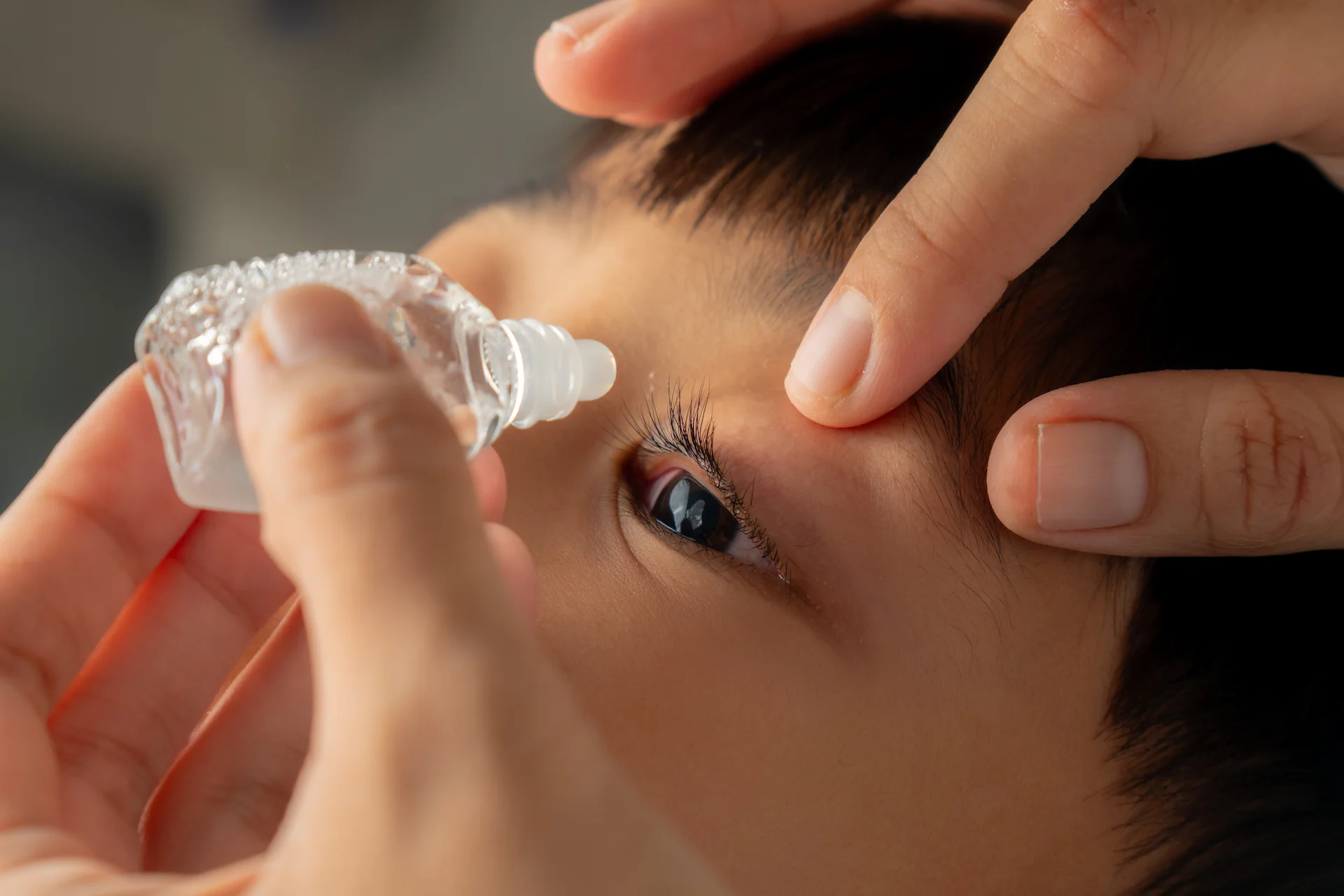

Low concentrations, typically between 0.01% and 0.05%, are generally well tolerated with relatively small effects on pupil size and near vision. The concentration prescribed will depend on your child’s age, degree of myopia and rate of progression. Higher concentrations can be prescribed for rapidly progressive myopia and in some children, reduction of the spectacle prescription can be achieved at these doses. They can however be associated with side effects including a greater effect on pupil size, causing glare, and a longer time with focusing for near.
Regular follow-up allows us to monitor your child’s vision, prescription and eye growth, and adjust treatment when needed. In some children, atropine may also be combined with myopia control glasses or contact lenses to provide additional control of myopia progression.
From your child’s first consultation to ongoing follow-up care, our team will guide you and your child through each stage of their eye care journey. We are experienced in examining children and will adapt the consultation according to your child’s age, level of comfort and individual needs.
We understand that eye examinations sometimes feel unfamiliar to children. Our team takes a calm, patient and reassuring approach, allowing time for your child to become comfortable while keeping parents informed throughout the consultation.
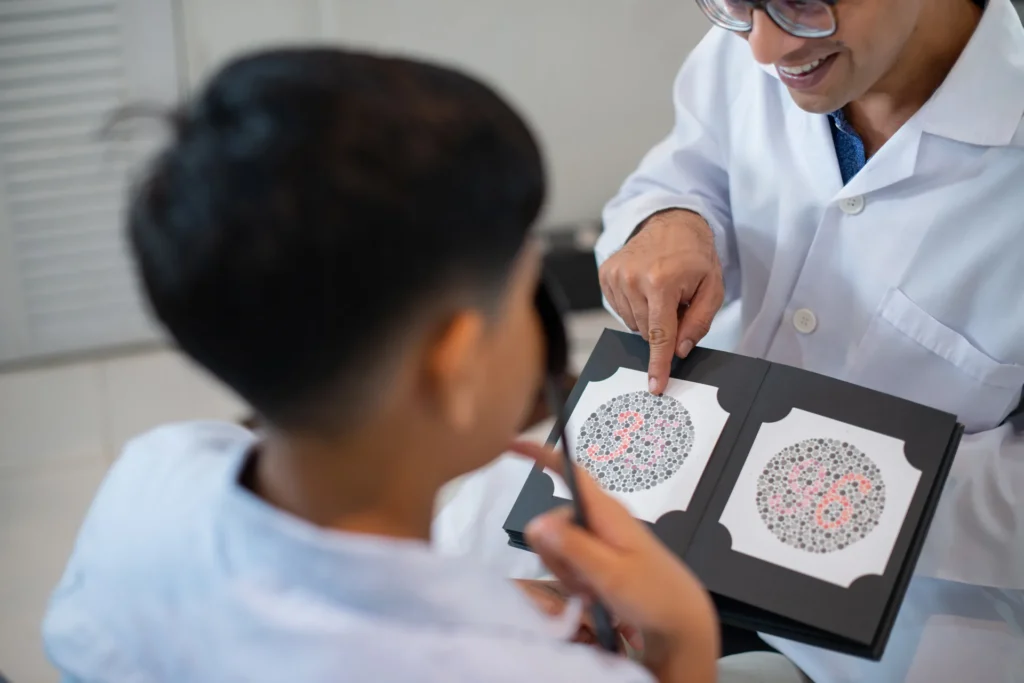
Your child’s consultation begins with an assessment of their vision, visual development and overall eye health. Depending on their age and the reason for their visit, the examination includes measurements of vision and eye alignment, assessment of refractive error, colour vision or stereopsis testing, examination of the front and back of the eyes, and diagnostic imaging where appropriate.
Children respond differently to eye examinations, so we will adapt the way each test is performed according to your child’s age and ability to cooperate. Our team will guide your child through each step patiently and carefully.
Once the examination is complete, we will explain the findings clearly and discuss what they mean for your child’s vision and visual development.
If any changes or concerns are identified, we will explain their significance and advise whether further assessment or monitoring is required. We will then advise you on the next steps for your child’s eye care based on their age, visual needs and examination findings. This includes what to look out for at home, whether further tests are required and when your child needs to return for review.
Children’s eyes continue to grow and change, so regular follow-up is an important part of monitoring their vision and visual development over time. Follow-up visits allow us to track changes in vision, refractive error, eye alignment and overall eye health, with repeat measurements or imaging performed where appropriate.
The frequency of review will depend on your child’s age, examination findings and how their vision changes over time. Our team will continue to keep you informed throughout your child’s care and advise when further review is required.
Our team will assess your child’s eyes and recommend a customised myopia control plan based on their age, prescription, eye growth and lifestyle needs.
Early myopia control helps slow progression while your child’s eyes are still developing. Book a consultation with us today to find out which option is most suitable for your child.
Myopia, or short-sightedness, is a condition where distant objects appear blurred while near objects remain clearer. It usually occurs because the eye has grown too long, causing light to focus in front of the retina instead of directly on it.
Myopia often begins during the primary school years and can continue to progress throughout childhood and adolescence while the eyes are still growing.
Common signs include squinting to see distant objects, sitting close to the television, holding books or devices very near, difficulty seeing the board at school, frequent eye rubbing and complaints of blurred distance vision.
As a child grows, the eye can continue to elongate. When the eye becomes longer, light focuses further in front of the retina, resulting in an increase in myopia and a stronger prescription.
Children with one or both parents who have myopia have a higher risk of developing it. Environmental factors, including prolonged near work and limited outdoor time, also influence the development and progression of myopia.
Higher levels of myopia are associated with an increased lifetime risk of eye conditions including retinal tears and detachment, glaucoma, early cataracts and myopic macular degeneration. Slowing progression helps keep the final degree of myopia as low as possible.
Myopia control refers to treatments designed to slow the progression of myopia and reduce excessive elongation of the eye during childhood. Options include myopia control glasses, soft contact lenses, orthokeratology lenses and atropine eye drops.
Myopia control is most effective when started while the eyes are still growing. Children who develop myopia at a younger age generally have more years for progression, making early assessment and treatment important.
Myopia control is designed to slow progression rather than completely stop it. The amount of progression differs between children, which is why regular monitoring is important throughout treatment.
The most suitable option depends on your child’s age, prescription, rate of progression, eye growth, lifestyle and ability to manage the treatment. We will assess these factors before recommending a customised myopia control plan.
Myopia control glasses look similar to conventional glasses and are worn throughout the day. Their lenses contain specialised optical zones that provide clear vision while creating a treatment effect to help slow excessive eye growth.
Yes. Soft myopia control contact lenses and orthokeratology lenses are options for suitable children. Proper lens handling, hygiene and regular follow-up are essential for safe contact lens wear.
Low-dose atropine eye drops are used once daily to help reduce the signals associated with excessive eye growth. They do not correct blurred vision, so children continue to wear their prescribed glasses or contact lenses alongside the drops.
Regular reviews allow us to monitor vision, prescription changes, eye growth and treatment response. The review interval depends on your child’s age, rate of progression and the type of myopia control treatment being used.
Myopia does not disappear once it has developed. Myopia control aims to slow further progression while the eyes are growing. We will monitor your child over time and advise when treatment can be reduced or stopped based on their age, eye growth and stability of their prescription.
Hi, I would like to book a consultation with Dr Errol Chan from Ascend Eye Clinic
