
Pterygium treatment can relieve persistent irritation, reduce redness and help protect the cornea when the growth begins to affect the eye.
A pterygium is a wing-shaped growth of tissue that extends from the conjunctiva, the clear membrane covering the white of the eye, onto the cornea. It is a degenerative condition commonly associated with prolonged exposure to sunlight and ultraviolet radiation.
Pterygia often develop on the inner side of the eye, although they can also occur on the outer side. They may gradually enlarge over time and, in some cases, extend towards the centre of the cornea, causing blurred vision.
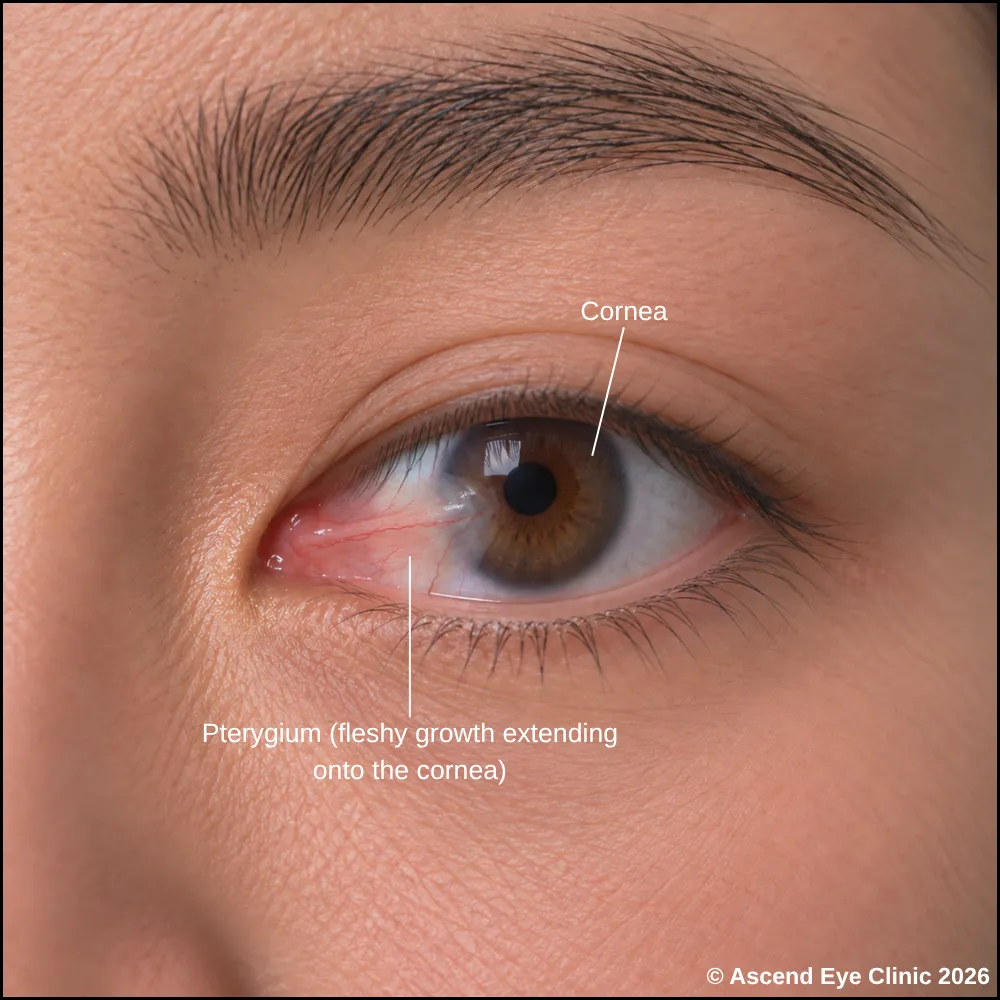
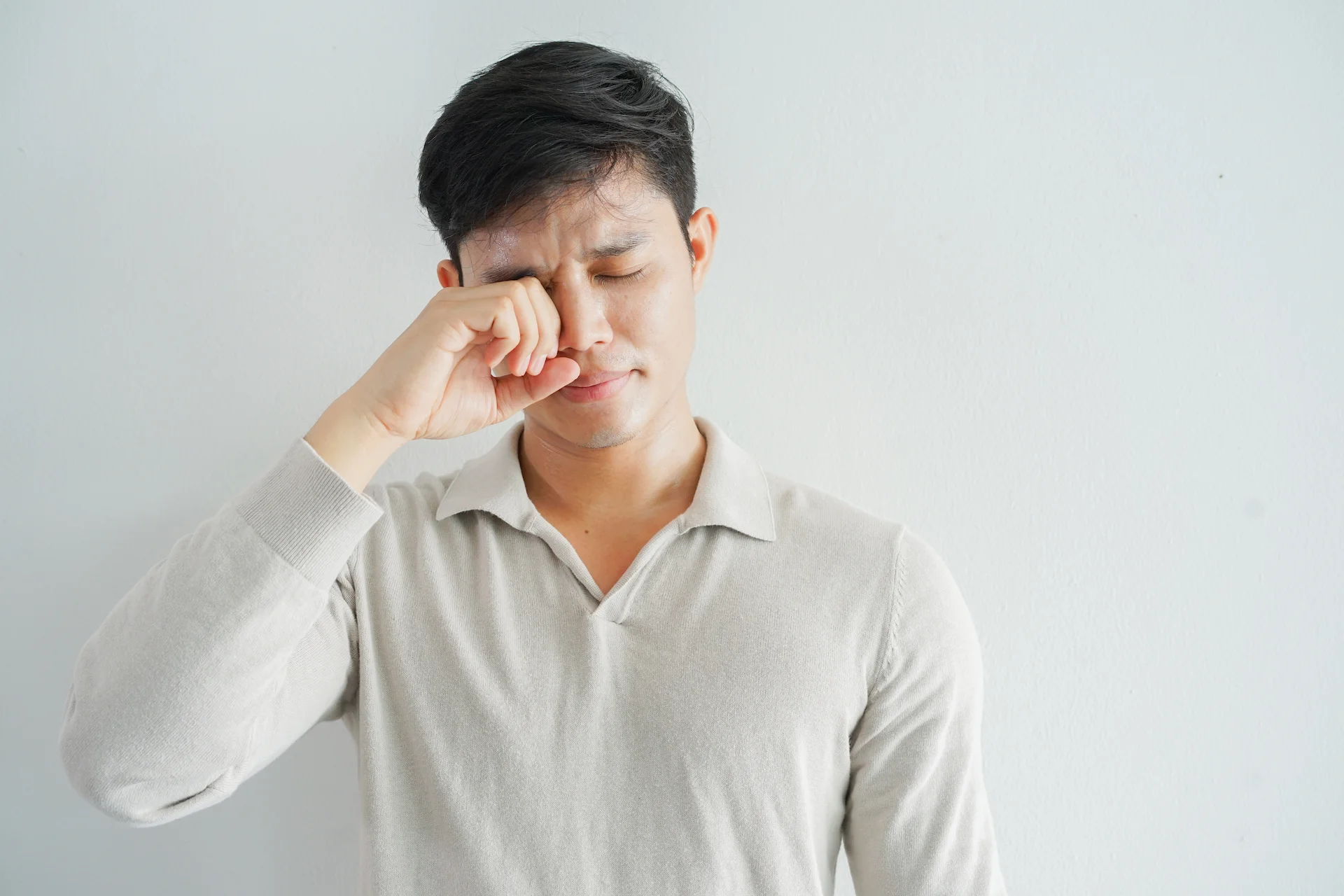
A small pterygium is often harmless. However, as it becomes larger or inflamed, it causes symptoms such as:
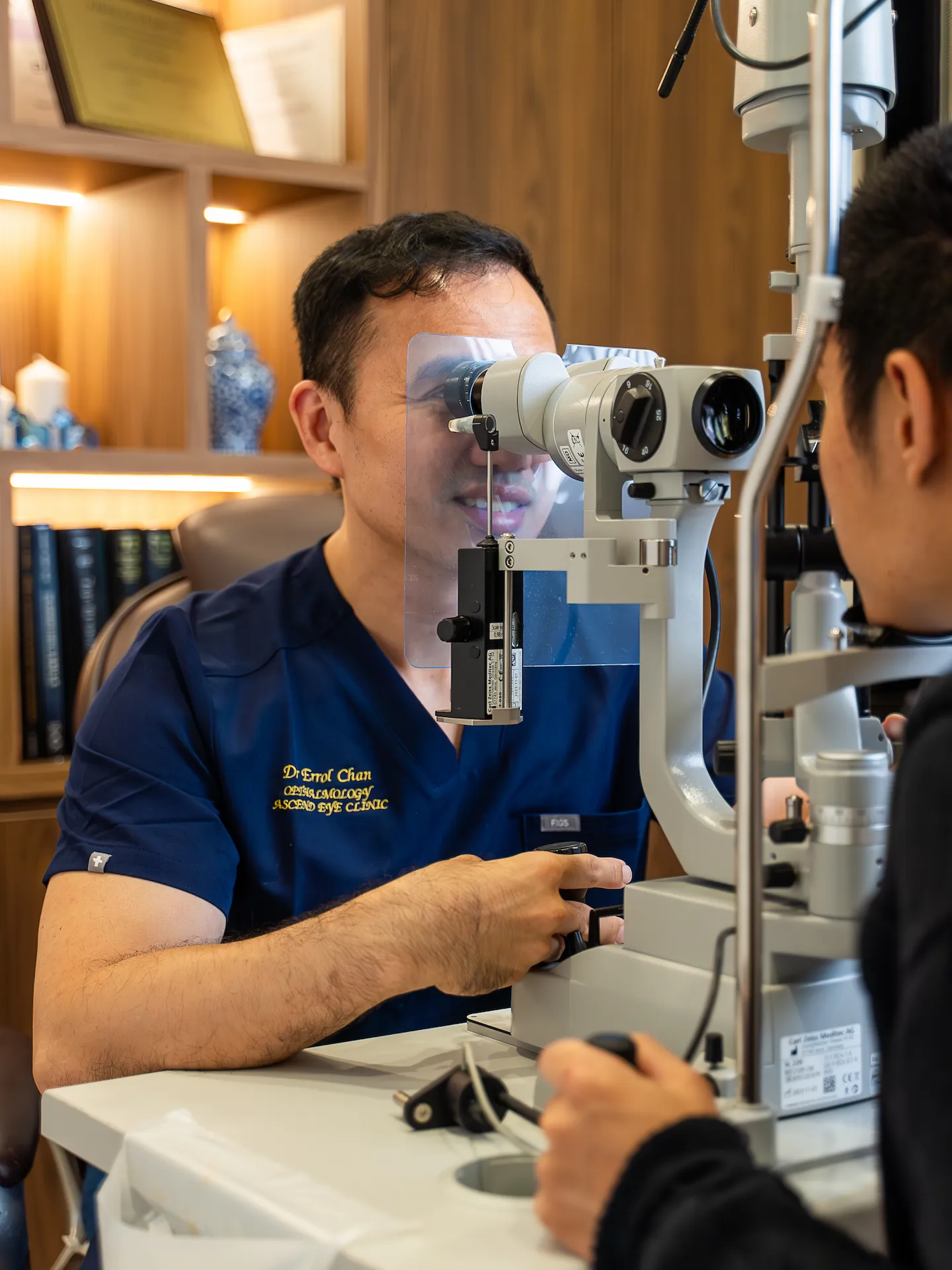
A careful eye examination helps assess the size and extent of the pterygium, determine whether it is affecting the cornea or vision, and guide the need for monitoring or treatment. We will assess the pterygium together with the shape of the cornea and overall eye health.
Measures how clearly you can see and helps identify any reduction in vision associated with the pterygium.
Measures the eye’s focusing power and helps identify changes in spectacle prescription or astigmatism caused by alteration of the corneal shape.
Provides a magnified view of the pterygium to assess its size, thickness, vascularity, degree of inflammation and how far it has extended onto the cornea.
Maps the shape and curvature of the cornea to identify any distortion or astigmatism caused by the pterygium and assess how it is affecting the corneal surface.
Treatment depends on the size of the pterygium, whether it is progressing and how much it is affecting the eye. Small, stable pterygia can be monitored with regular eye examinations. Lubricating eye drops can relieve dryness and irritation, while prescribed anti-inflammatory eye drops can reduce episodes of redness and inflammation. UV-protective sunglasses and a hat are also recommended to reduce ongoing ultraviolet exposure.
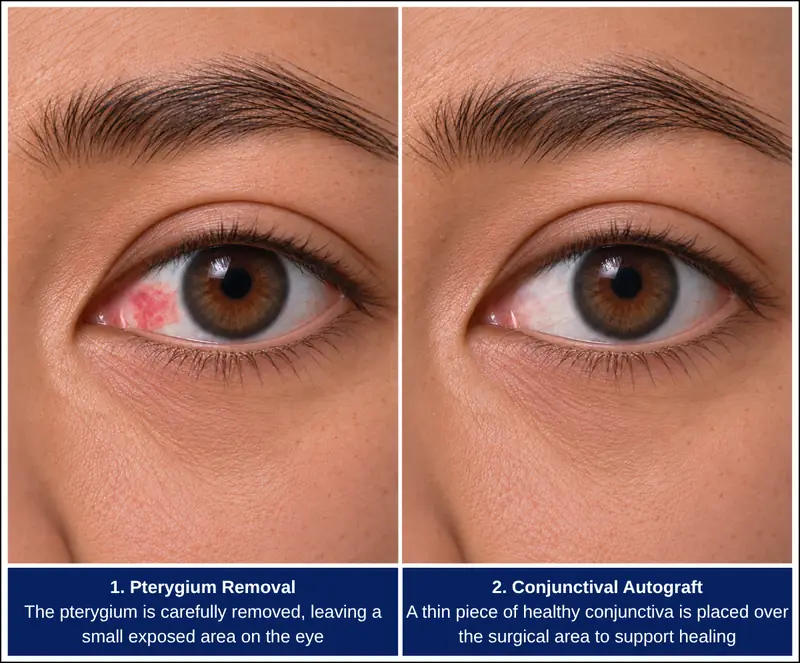
Pterygium surgery involves the careful removal of abnormal tissue that has grown from the conjunctiva onto the cornea. Removing the pterygium helps restore a smoother ocular surface and reduce the irritation, redness or visual disturbance caused by the growth.
Pterygium surgery is performed as a day surgery procedure under local anaesthesia with mild sedation to keep you comfortable throughout the process. The pterygium is carefully removed from the surface of the eye. Following removal, the exposed area is covered with a small conjunctival graft taken from another area of the same eye that is unaffected by the pterygium. The graft is secured in place to cover the exposed surface, promote healing and reduce the risk of recurrence.
After surgery, the eye can feel sore, gritty or sensitive for the first few days, with some redness and slight tearing as the surface heals. Eye drops are prescribed to control inflammation and support healing, while the appearance of the eye gradually settles over the following weeks. Regular follow-up appointments are arranged to monitor healing and check for any signs of recurrence.
From your initial consultation to treatment and follow-up care, our team will guide you through every stage of your journey. We will take the time to explain your condition, answer your questions and help you feel informed and supported throughout your care.

Your consultation begins with a detailed assessment of your vision and eye health. Depending on your condition, this may include measurements of your vision and eye pressure, examination of the front and back of the eye, and advanced diagnostic imaging.
Our team will guide you through each test and explain what is being assessed. Your results will then be carefully reviewed to understand your individual needs and determine whether monitoring or treatment may be recommended.
Every eye and every patient is different. Your treatment plan will be tailored according to your examination findings, visual needs, general health and lifestyle.
We will explain the recommended treatment, its expected benefits, possible risks and any suitable alternatives in a clear and straightforward manner. You will have time to ask questions and consider your options before deciding how you would like to proceed.
Before your treatment, our team will guide you through the necessary preparations, paperwork and medication instructions. Where applicable, we will explain how to use your prescribed eye drops and how to care for your eyes afterwards.
We understand that undergoing a procedure can feel unfamiliar or worrying. Our team will be available to answer your questions and ensure that you know what to expect before the day of your treatment.
On the day of your procedure, you will arrive at the hospital or surgical centre where your operation has been scheduled. The surgical team will help you prepare and explain what will happen at each stage.
Anaesthetic eye drops or other forms of anaesthesia may be used, depending on the procedure, to keep you comfortable. Your doctor and the surgical team will support and reassure you throughout the operation.
Most eye surgeries are performed as day procedures, although the duration and recovery process will depend on the treatment you receive. Your vision may be temporarily blurred afterwards, so you should arrange for someone to accompany you home and should not drive unless your doctor has advised that it is safe to do so.
We will provide clear instructions on how to care for your eyes, use any prescribed medication and manage your activities during recovery. We will also explain which symptoms are expected and when you should contact the clinic for further advice.
Follow-up appointments allow us to monitor your vision, assess your recovery and identify any concerns at an early stage. Our team remains accessible should you have any questions or concerns throughout your recovery.
If you have noticed a growth, persistent redness or changes in your vision, an eye examination can determine whether you have a pterygium and whether monitoring or treatment is recommended.
Book a consultation at Ascend Eye Clinic for a detailed assessment. We will evaluate the size and effect of the pterygium and discuss the most appropriate treatment options with you.
A pterygium is a benign growth of conjunctival tissue and is not cancerous. It becomes important when it grows further onto the cornea, repeatedly becomes inflamed or starts affecting vision.
No. Once a pterygium has developed, the tissue does not disappear by itself. Lubricating and anti-inflammatory eye drops control irritation and redness but do not remove the growth.
Long-term ultraviolet exposure is the main risk factor. Frequent exposure to wind, dust and dry environments also contributes to chronic irritation of the eye surface.
A pterygium contains blood vessels and sits on the exposed surface of the eye. Dryness, UV exposure, wind and other forms of surface irritation trigger inflammation, making it look redder and feel more uncomfortable.
As a pterygium grows onto the cornea, it changes the corneal shape and produces astigmatism or blurred vision. A larger growth extending towards the centre of the cornea has a greater effect on vision.
A small, stable pterygium is monitored without surgery. A growing pterygium progressively extends across the cornea and increases the risk of corneal distortion, persistent irritation and reduced vision.
Changes are assessed by examining how far the tissue extends onto the cornea and comparing its appearance over time. Clinical photographs also provide a useful record of progression.
Surgery is considered when the pterygium is progressively enlarging, affecting vision or corneal shape, causing persistent discomfort despite treatment, or creating a significant cosmetic concern.
Pterygium surgery is performed under local anaesthesia with moderate sedation. The eye is numbed during the procedure. Grittiness, irritation and soreness are expected during the early recovery period.
The pterygium is carefully separated from the cornea and removed together with the abnormal conjunctival tissue. Healthy conjunctiva is then placed over the exposed surgical area as a conjunctival autograft.
The exposed area is covered with a thin layer of healthy conjunctival tissue taken from another part of the same eye. This helps the surface heal and reduces the risk of the pterygium growing.
The eye is most red, watery and irritated during the early recovery period. Comfort improves progressively, while redness and the appearance of the surgical area continue to settle over several weeks.
Recurrence remains possible after pterygium removal. Using a conjunctival autograft significantly reduces the recurrence rate compared with leaving the excision site uncovered.
This depends on the type of work and how the eye is healing. Office-based work is resumed earlier than work involving dust, outdoor exposure, heavy physical activity or environments where the eye is more easily irritated.
Regular UV protection is important. Wearing sunglasses with UV protection, reducing prolonged exposure to wind and dust, and keeping the ocular surface well lubricated help reduce ongoing irritation.
Hi, I would like to book a consultation with Dr Errol Chan from Ascend Eye Clinic
