
Eyelid looseness can affect comfort, vision and the health of the eye surface. Assessment helps identify the underlying cause and determine the appropriate treatment to restore a more natural eyelid position.
Eyelid looseness, also known as eyelid laxity, occurs when the tissues supporting the eyelid become weak or stretched, causing the eyelid to move away from its normal position against the eye. This commonly develops with age and can affect the lower eyelid in two main ways:
Both conditions can affect the health of the eye surface if they become significant or are left untreated.
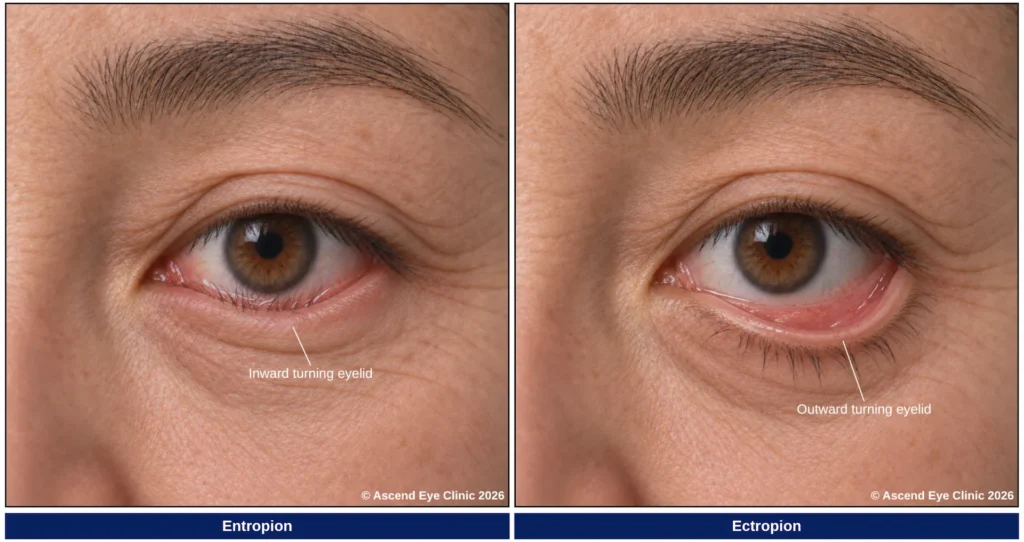
Symptoms of eyelid looseness vary depending on whether the eyelid turns inward or outward and includes:
Diagnosis begins with a careful assessment of the eyelids, eyelashes and surrounding eye structures. We look at the position and movement of the eyelids, the condition of the lid margins and lashes, and any changes affecting the surface of the eye to determine the nature and extent of the problem.
Measures how clearly you can see and helps identify any reduction in vision.
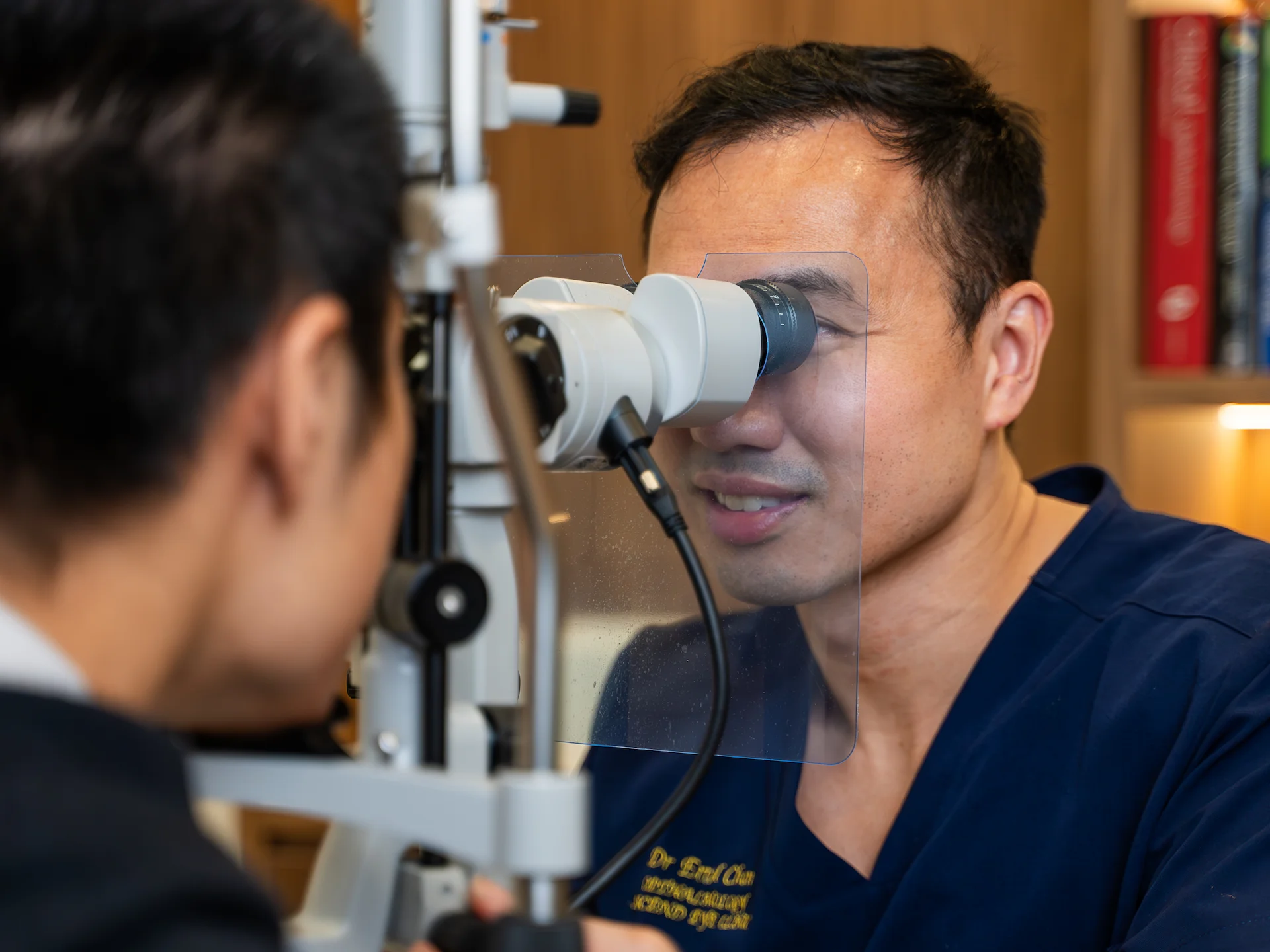
Provides a magnified view of the eyelids, eyelashes and eye surface to assess the position of the eyelid and determine whether it is turning inward or outward. It also allows us to check for irritation or inflammation to the cornea or eye surface caused by abnormal eyelid contact.
Mild eyelid looseness may be managed with lubricating eye drops or ointments to reduce dryness, irritation and discomfort. If the eyelid position is causing persistent tearing, exposure of the eye surface or recurrent irritation, surgical correction may be recommended.
Eyelid surgery aims to restore the eyelid to a more natural position against the eye, improving eyelid function and reducing symptoms such as irritation, tearing and exposure of the eye surface. It is usually performed under local anaesthesia with sedation although general anaesthesia may be used for selected patients.
The surgical approach depends on the type and degree of eyelid looseness:

After surgery, the eyelid may feel swollen, tight or mildly uncomfortable, with temporary bruising around the eye. These symptoms usually improve gradually as the eyelid heals.
From your initial consultation to treatment and follow-up care, our team will guide you through every stage of your journey. We will take the time to explain your condition, answer your questions and help you feel informed and supported throughout your care.

Your consultation begins with a detailed assessment of your vision and eye health. Depending on your condition, this may include measurements of your vision and eye pressure, examination of the front and back of the eye, and advanced diagnostic imaging.
Our team will guide you through each test and explain what is being assessed. Your results will then be carefully reviewed to understand your individual needs and determine whether monitoring or treatment may be recommended.
Every eye and every patient is different. Your treatment plan will be tailored according to your examination findings, visual needs, general health and lifestyle.
We will explain the recommended treatment, its expected benefits, possible risks and any suitable alternatives in a clear and straightforward manner. You will have time to ask questions and consider your options before deciding how you would like to proceed.
Before your treatment, our team will guide you through the necessary preparations, paperwork and medication instructions. Where applicable, we will explain how to use your prescribed eye drops and how to care for your eyes afterwards.
We understand that undergoing a procedure can feel unfamiliar or worrying. Our team will be available to answer your questions and ensure that you know what to expect before the day of your treatment.
On the day of your procedure, you will arrive at the hospital or surgical centre where your operation has been scheduled. The surgical team will help you prepare and explain what will happen at each stage.
Anaesthetic eye drops or other forms of anaesthesia may be used, depending on the procedure, to keep you comfortable. Your doctor and the surgical team will support and reassure you throughout the operation.
Most eye surgeries are performed as day procedures, although the duration and recovery process will depend on the treatment you receive. Your vision may be temporarily blurred afterwards, so you should arrange for someone to accompany you home and should not drive unless your doctor has advised that it is safe to do so.
We will provide clear instructions on how to care for your eyes, use any prescribed medication and manage your activities during recovery. We will also explain which symptoms are expected and when you should contact the clinic for further advice.
Follow-up appointments allow us to monitor your vision, assess your recovery and identify any concerns at an early stage. Our team remains accessible should you have any questions or concerns throughout your recovery.
Eyelid looseness can cause persistent tearing, irritation, dryness or discomfort when the eyelid no longer sits properly against the eye. Book a consultation to understand the cause of your symptoms and discuss the treatment options available.
The eyelid can gradually become looser as the tissues and muscles supporting it weaken with age. Previous surgery, scarring, facial nerve weakness or other eyelid conditions can also affect its position. When the eyelid turns inward, this is called entropion. When it turns outward, this is called ectropion.
Entropion occurs when the eyelid turns inward towards the eye, causing the eyelashes and skin to rub against the eye surface. Ectropion occurs when the eyelid turns outward and no longer rests closely against the eye. Both conditions most often affect the lower eyelid.
Symptoms can include persistent tearing, dryness, irritation, redness, a gritty sensation and discomfort. Entropion may also cause the eyelashes to rub against the eye, while ectropion can leave part of the eye surface exposed.
Yes. When the eyelid does not sit properly against the eye, tears may not spread evenly across the surface. This can lead to dryness, irritation, redness and a gritty or burning sensation.
This often occurs with entropion, where the eyelid turns inward and brings the eyelashes into contact with the cornea and conjunctiva. Repeated rubbing can cause ongoing irritation and discomfort.
Yes. Persistent rubbing from the eyelashes can cause small scratches on the cornea and, if left untreated, may lead to inflammation, infection or corneal scarring. Persistent symptoms should therefore be assessed.
This can occur with ectropion, where the supporting tissues of the lower eyelid become loose and allow the eyelid to turn outward. The inner surface of the eyelid may become more visible and exposed.
It can. The tissues, tendons and muscles supporting the eyelids naturally become less firm with age, which can gradually increase eyelid looseness and change the position of the eyelid.
Age-related eyelid looseness generally does not correct itself. Lubricating drops or ointments can help control symptoms, but they do not tighten or reposition the eyelid. Persistent or more pronounced eyelid malposition may require surgical correction.
Yes. Lubricating eye drops and ointments can reduce dryness, irritation and discomfort by protecting the eye surface. They are often useful for milder symptoms or while waiting for further treatment, but they do not correct the eyelid position itself.
Surgery may be recommended when eyelid looseness causes persistent irritation, tearing, exposure of the eye surface, eyelash rubbing or recurrent inflammation. It may also be considered when the eyelid position has become significantly altered.
The loose supporting tissues of the eyelid are shortened and tightened so that the eyelid sits more securely against the eye. Additional repositioning may be performed depending on whether the eyelid is turning inward or outward.
The procedure is usually performed under local anaesthesia, often with sedation, so the treatment area is numbed during surgery. Mild soreness, tightness or discomfort can occur afterwards and generally settles as the eyelid heals.
Swelling and bruising are expected during the first several days and gradually improve. Many patients notice significant improvement within one to two weeks, although the eyelid can continue to settle over the following weeks.
The aim of surgery is to restore the eyelid to a more natural position against the eye and improve its function. As swelling settles, the eyelid generally becomes more comfortable and stable, while symptoms such as irritation, tearing or eyelash rubbing should improve.
Hi, I would like to book a consultation with Dr Errol Chan from Ascend Eye Clinic
