
Recurrent corneal erosions can cause repeated episodes of sudden eye pain, tearing and light sensitivity, often on waking. At Ascend Eye Clinic, we assess the corneal surface and underlying cause, then provide treatment to promote stable healing and reduce the risk of repeated erosions.
Recurrent corneal erosion is a condition where the outermost layer of the cornea repeatedly breaks down because it does not attach firmly to the layer beneath it. It often begins after a corneal abrasion or injury. Although the surface initially heals, the new epithelial cells may attach irregularly or weakly, allowing the same area to lift or break down again later.
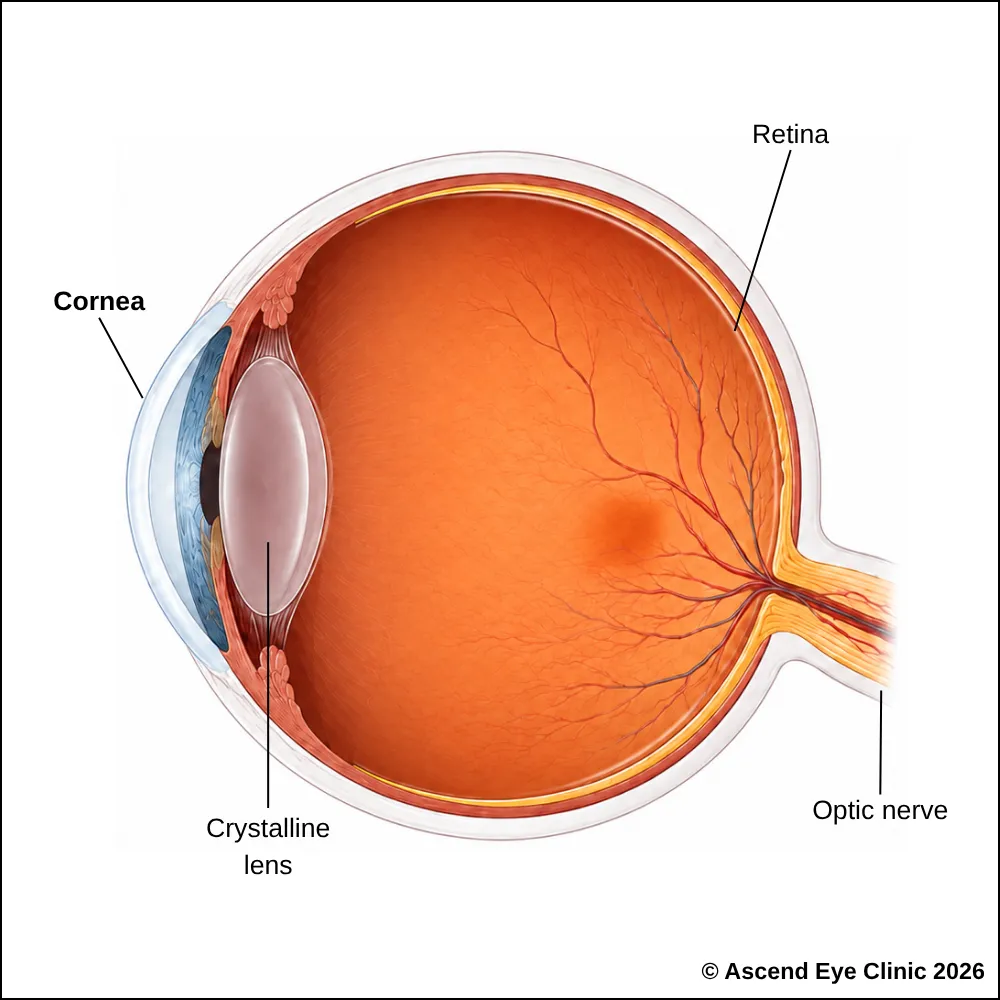
Factors that increase the risk of recurrent corneal erosions include:

Symptoms frequently occur on waking or when opening the eyes after sleep and range from mild irritation to significant eye pain. Associated symptoms include:

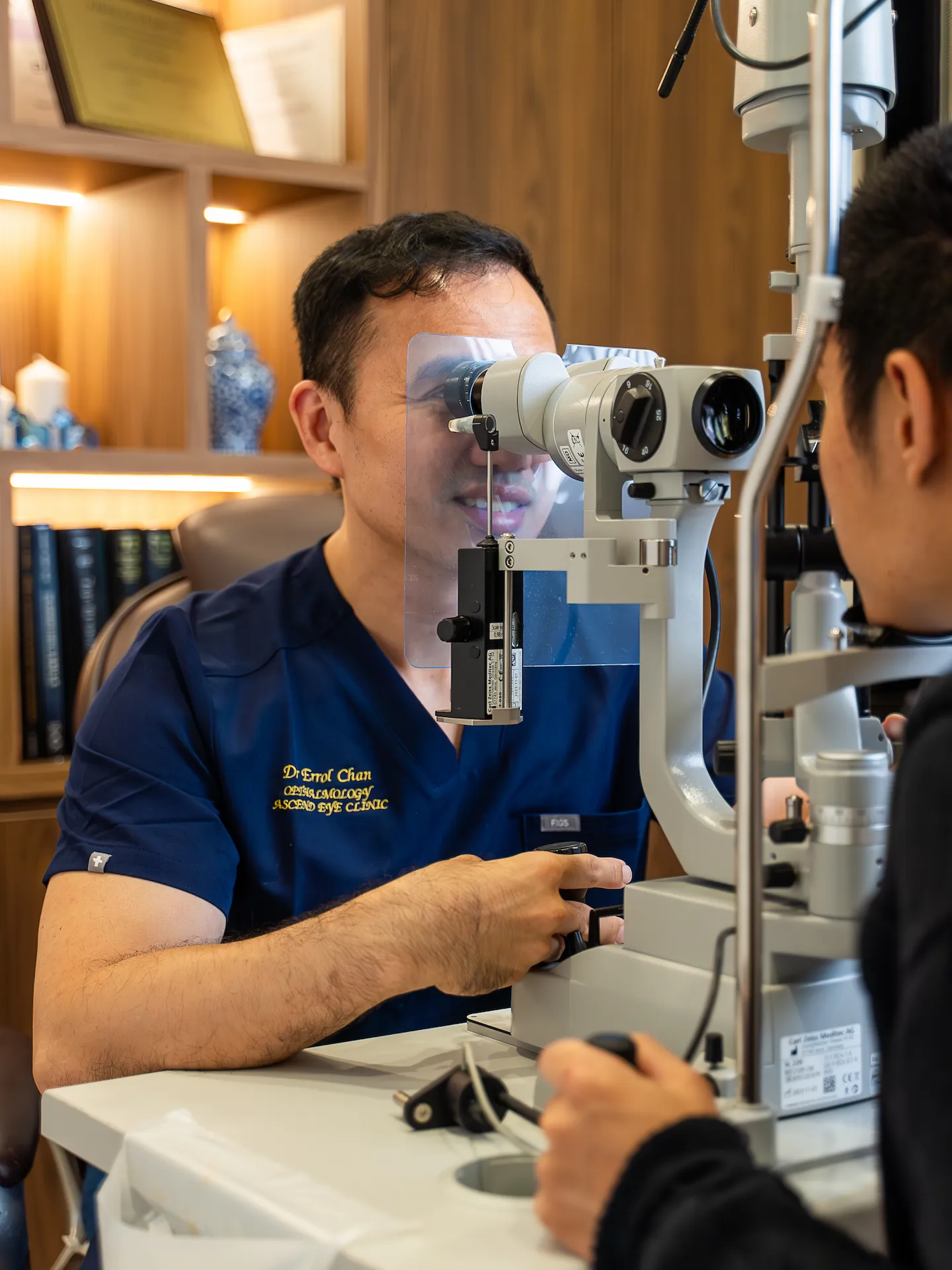
A careful eye examination helps assess the corneal surface, identify areas where the epithelium is loose or irregular, and look for underlying changes that contribute to repeated erosions. We will assess the cornea together with the tear film and overall eye health to guide treatment.
Measures how clearly you can see and helps identify any reduction in vision during or between episodes.
Provides a magnified view of the corneal surface to identify epithelial defects, loose or irregular epithelium, scarring and other changes associated with recurrent erosions.
Uses a temporary dye to highlight areas where the corneal surface has broken down or is healing abnormally.
Maps the shape of the cornea and helps identify surface irregularities or underlying corneal conditions contributing to recurrent erosions.
For milder recurrent corneal erosions, treatment begins with preservative-free lubricating eye drops during the day and lubricating ointment at night to keep the corneal surface well lubricated and support healing. A soft bandage contact lens is also placed over the cornea when additional protection is needed during healing. Antibiotic eye drops are prescribed when there is an open epithelial defect or concern about infection.
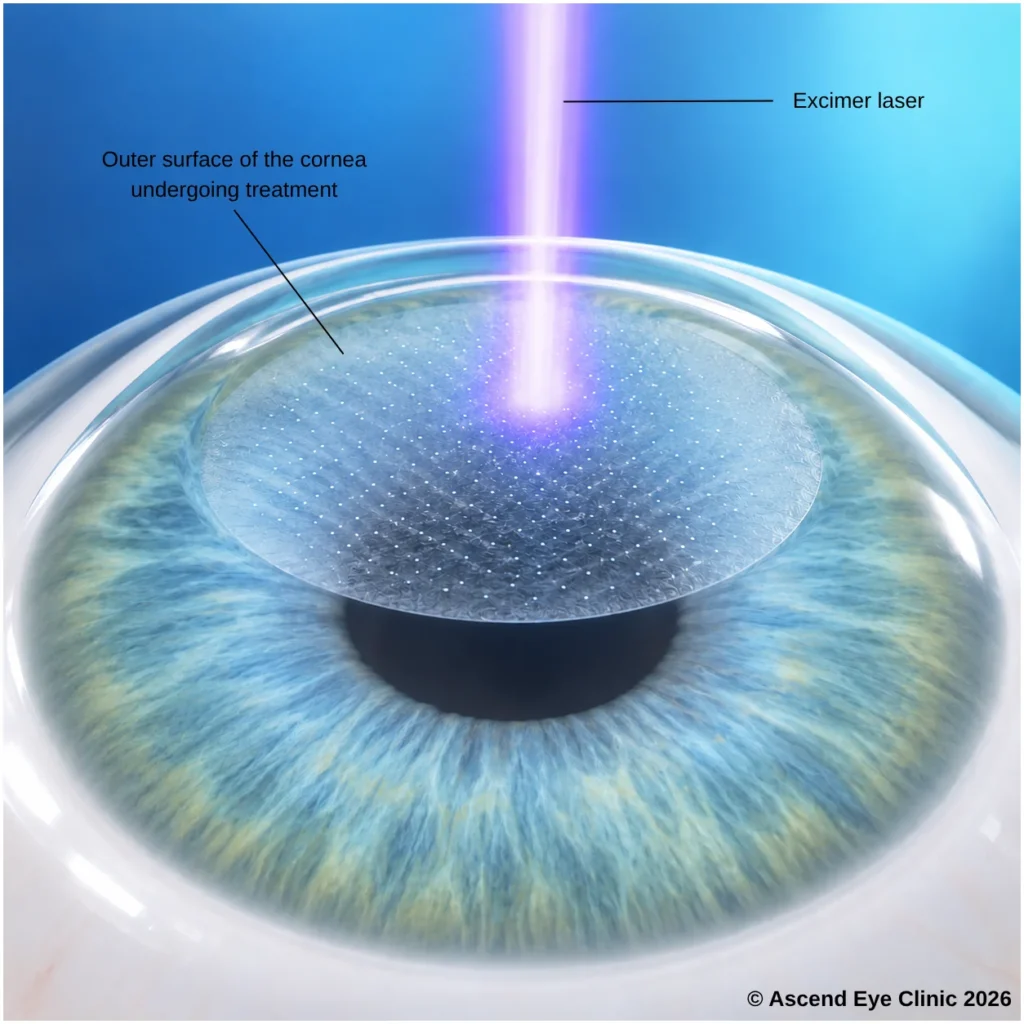
PTK uses an excimer laser to remove a very thin layer from the surface of the cornea. This smooths areas of irregular or poorly adherent epithelium and allows a new surface layer to heal and attach more firmly to the tissue beneath.
The procedure is performed after anaesthetic eye drops are applied. The loose or abnormal surface epithelium is first removed, followed by controlled laser treatment to the underlying corneal surface. A bandage contact lens is then placed over the eye to protect the cornea while the epithelium grows back.
After treatment, the eye can feel sore, watery or sensitive to light for the first few days while the surface heals. Eye drops are prescribed to support healing and reduce the risk of infection, and the bandage contact lens is removed once the epithelium has recovered. Regular follow-up is arranged to monitor healing and assess the stability of the corneal surface.
From your initial consultation to treatment and follow-up care, our team will guide you through every stage of your journey. We will take the time to explain your condition, answer your questions and help you feel informed and supported throughout your care.

Your consultation begins with a detailed assessment of your vision and eye health. Depending on your condition, this may include measurements of your vision and eye pressure, examination of the front and back of the eye, and advanced diagnostic imaging.
Our team will guide you through each test and explain what is being assessed. Your results will then be carefully reviewed to understand your individual needs and determine whether monitoring or treatment may be recommended.
Every eye and every patient is different. Your treatment plan will be tailored according to your examination findings, visual needs, general health and lifestyle.
We will explain the recommended treatment, its expected benefits, possible risks and any suitable alternatives in a clear and straightforward manner. You will have time to ask questions and consider your options before deciding how you would like to proceed.
Before your treatment, our team will guide you through the necessary preparations, paperwork and medication instructions. Where applicable, we will explain how to use your prescribed eye drops and how to care for your eyes afterwards.
We understand that undergoing a procedure can feel unfamiliar or worrying. Our team will be available to answer your questions and ensure that you know what to expect before the day of your treatment.
On the day of your procedure, you will arrive at the hospital or surgical centre where your operation has been scheduled. The surgical team will help you prepare and explain what will happen at each stage.
Anaesthetic eye drops or other forms of anaesthesia may be used, depending on the procedure, to keep you comfortable. Your doctor and the surgical team will support and reassure you throughout the operation.
Most eye surgeries are performed as day procedures, although the duration and recovery process will depend on the treatment you receive. Your vision may be temporarily blurred afterwards, so you should arrange for someone to accompany you home and should not drive unless your doctor has advised that it is safe to do so.
We will provide clear instructions on how to care for your eyes, use any prescribed medication and manage your activities during recovery. We will also explain which symptoms are expected and when you should contact the clinic for further advice.
Follow-up appointments allow us to monitor your vision, assess your recovery and identify any concerns at an early stage. Our team remains accessible should you have any questions or concerns throughout your recovery.
Recurrent corneal erosion can cause repeated episodes of sudden eye pain, discomfort and blurred vision. At Ascend Eye Clinic, we will assess the corneal surface, identify the cause and recommend treatment to help the surface heal more securely and reduce further episodes.
Book a consultation to have your cornea assessed and discuss the appropriate treatment options.
Recurrent corneal erosion occurs when the outermost layer of the cornea does not attach firmly to the tissue underneath. This allows the surface to repeatedly loosen or break away, causing sudden episodes of pain and irritation.
The corneal surface can heal after an episode without forming a strong attachment underneath. This leaves the affected area vulnerable to reopening, particularly when the eye is dry or when the eyelid opens after sleep.
During sleep, the eyelid can stick slightly to the corneal surface. When the eye opens, the eyelid can pull against the weakened surface cells and cause them to separate, producing sudden sharp pain.
Symptoms include sudden sharp pain, watering, redness, sensitivity to light, a gritty or foreign-body sensation and blurred vision. Episodes often begin during the night or immediately after waking.
A previous scratch or injury to the cornea is a frequent cause. Some people also have an underlying abnormality of the corneal surface that prevents the outer cells from attaching securely.
Yes. The original injury can appear to have healed completely while the attachment between the new surface cells and the underlying cornea remains weak. Episodes can therefore occur months or years later.
Vision can become blurred during an active episode because the smooth surface of the cornea has been disrupted. Vision generally improves as the surface heals, although repeated or severe episodes can lead to persistent irregularity or scarring.
The surface of the cornea often heals over several days. However, the attachment underneath takes longer to strengthen, so treatment is continued after the immediate pain has resolved.
Avoid rubbing the eye and arrange an eye examination, particularly if the pain is severe, vision is reduced or the eye is very red or sensitive to light. We will examine the corneal surface and determine the appropriate treatment.
Treatment depends on how severe and frequent the episodes are. Options include lubricating eye drops, ointment at night, medication during an active erosion, a bandage contact lens to protect the healing surface and procedures to improve how firmly the corneal surface attaches.
The pain often improves before the corneal surface has developed a strong attachment. Continued lubrication reduces friction between the eyelid and cornea while the newly healed surface strengthens.
A bandage contact lens is different from a normal vision-correcting contact lens. It temporarily covers and protects the corneal surface, reduces friction from blinking and allows the damaged area to heal underneath.
A procedure is considered when erosions continue despite appropriate lubrication and medical treatment, particularly when episodes are frequent, severe or repeatedly affect the same area.
Treatment can involve removing loose surface cells, gently polishing the underlying corneal surface or using phototherapeutic keratectomy (PTK). PTK uses an excimer laser to remove a very thin layer of abnormal tissue so that new surface cells can heal with a stronger attachment.
Recurrence is still possible because the underlying problem involves attachment of the corneal surface. Treatment is aimed at strengthening this attachment and reducing the frequency and severity of future episodes.
Hi, I would like to book a consultation with Dr Errol Chan from Ascend Eye Clinic
