
Children’s eyes continue to develop throughout childhood, and changes in vision are not always easy to recognise. Early eye assessment helps identify conditions that can affect visual development, learning and everyday activities, allowing treatment and follow-up to begin at the right time.
Children can develop vision and eye conditions that affect learning, coordination, and visual development. As children do not always recognise or describe symptoms such as blurred vision, regular eye examinations help identify problems early.
At Ascend Eye Clinic, we assess and manage a wide range of children’s eye conditions. We provide age-appropriate examinations and personalised care to support healthy vision and visual development of your children
Conditions we commonly see include:
Children do not always describe changes in their vision clearly. Parents and teachers often notice changes in behaviour or appearance first:
Signs to look out for include:
Regular eye examinations help detect vision problems early, especially as children do not always realise or explain that they are having difficulty seeing or problems with their eyes. Early diagnosis and treatment support healthy visual development and reduce the risk of long-term vision problems.
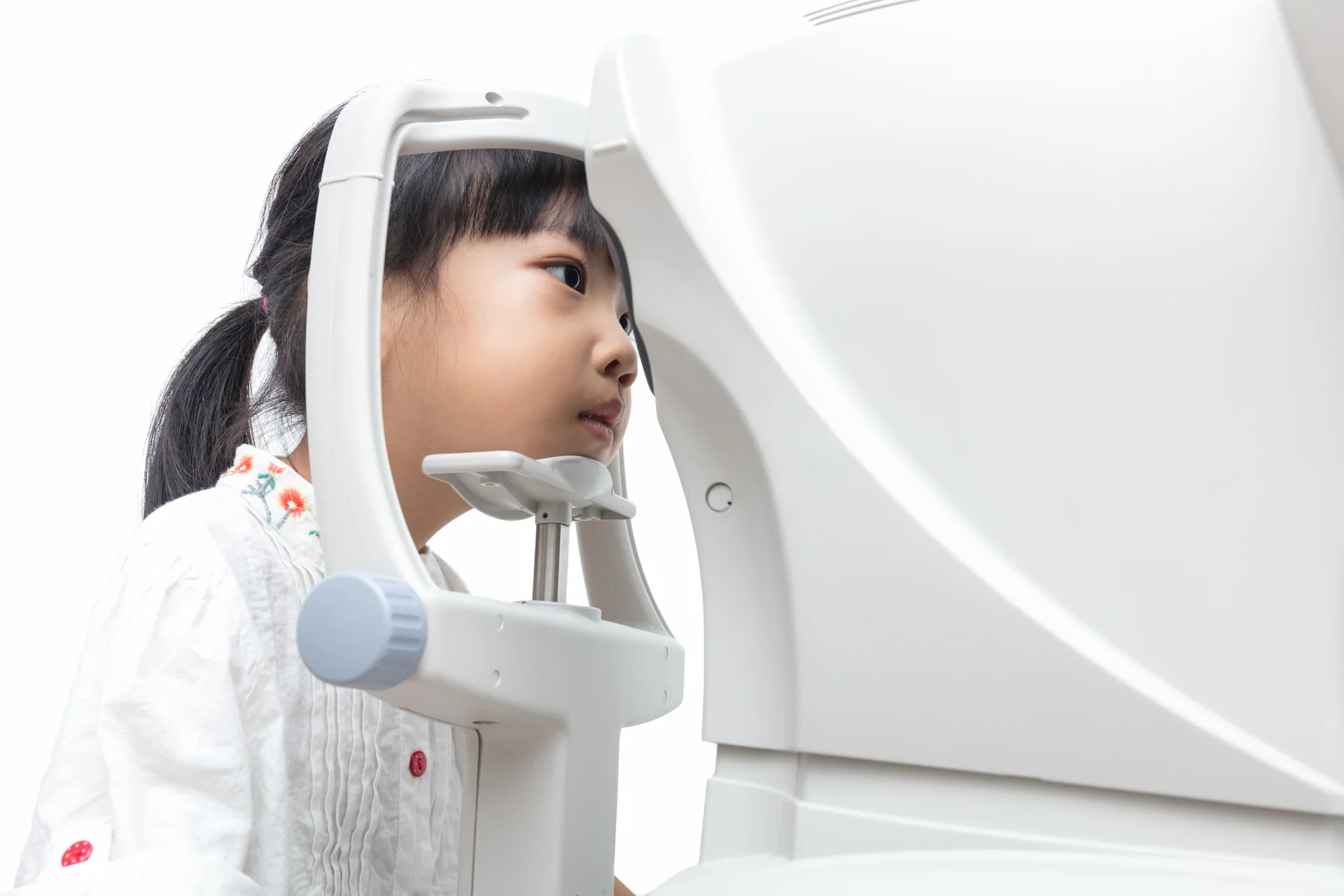
Our team will adapt each examination according to your child’s age, comfort and ability to cooperate, using a patient and reassuring approach throughout the assessment.
Measures how clearly your child can see in each eye using methods suitable to the age of your child and helps identify reduced vision or differences between the eyes.
Determines whether your child has short-sightedness, long-sightedness or astigmatism. Cycloplegic eye drops are often used in children to temporarily relax the eye’s focusing muscles and obtain a more accurate prescription.
Checks how well the eyes are positioned and move together, helping to identify conditions such as squint and problems with eye coordination.
Assesses how well both eyes work together and your child’s ability to perceive depth.
Provides a magnified examination of the front of the eyes, including the eyelids, cornea, iris and lens.
Tests such as OCT or fundus photography may be performed when appropriate to examine and document the retina, macula and optic nerve in greater detail.
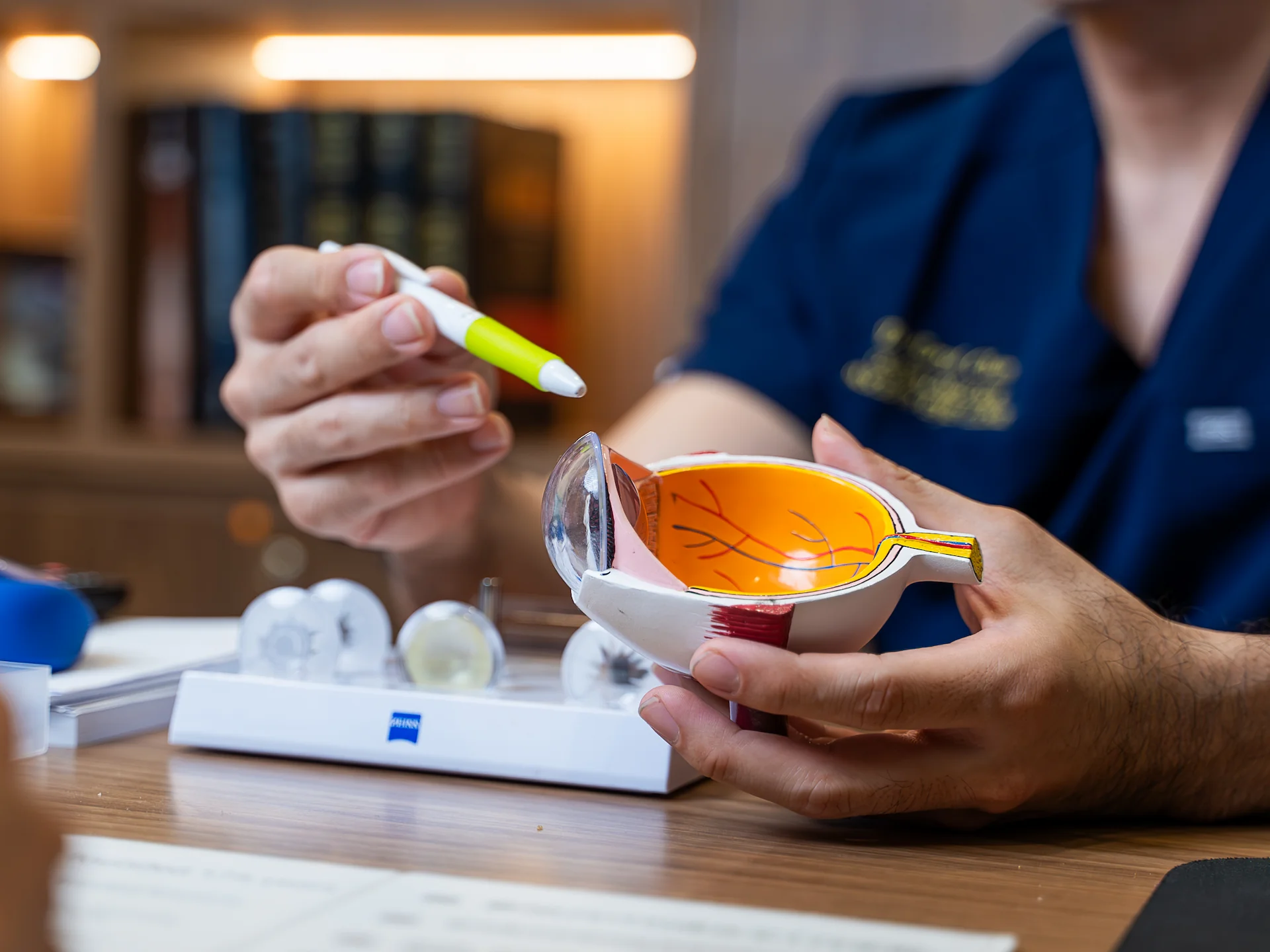
Treatment for children’s eye conditions depends on the diagnosis, your child’s age, stage of visual development and individual visual needs. The aim is to support clear vision, encourage healthy visual development and manage any underlying eye condition appropriately.
Treatment may include prescription glasses to correct refractive errors, amblyopia therapy such as patching or atropine treatment to strengthen vision in a weaker eye, and myopia control to slow the progression of short-sightedness. Eye drops or other medications may also be prescribed for certain eye conditions.
For conditions affecting eye alignment, eyelid position, the tear drainage system or other structures of the eye, surgical treatment may be recommended where appropriate. The type and timing of treatment will depend on the condition and how the condition affects your child’s vision and visual development.
As children’s eyes continue to grow, treatment may need to be adjusted over time. Changes to glasses prescriptions, amblyopia treatment or control of myopia progression may be made according to your child’s visual progress and response to treatment.
From your child’s first consultation to treatment and follow-up care, our team will guide you and your child through each stage of the journey. We are experienced in examining and caring for children and will adapt the consultation according to your child’s age, level of comfort and individual needs.
We understand that eye examinations can sometimes feel unfamiliar to children. Our team takes a calm, patient and reassuring approach, allowing time for your child to become comfortable while keeping parents informed throughout their care.
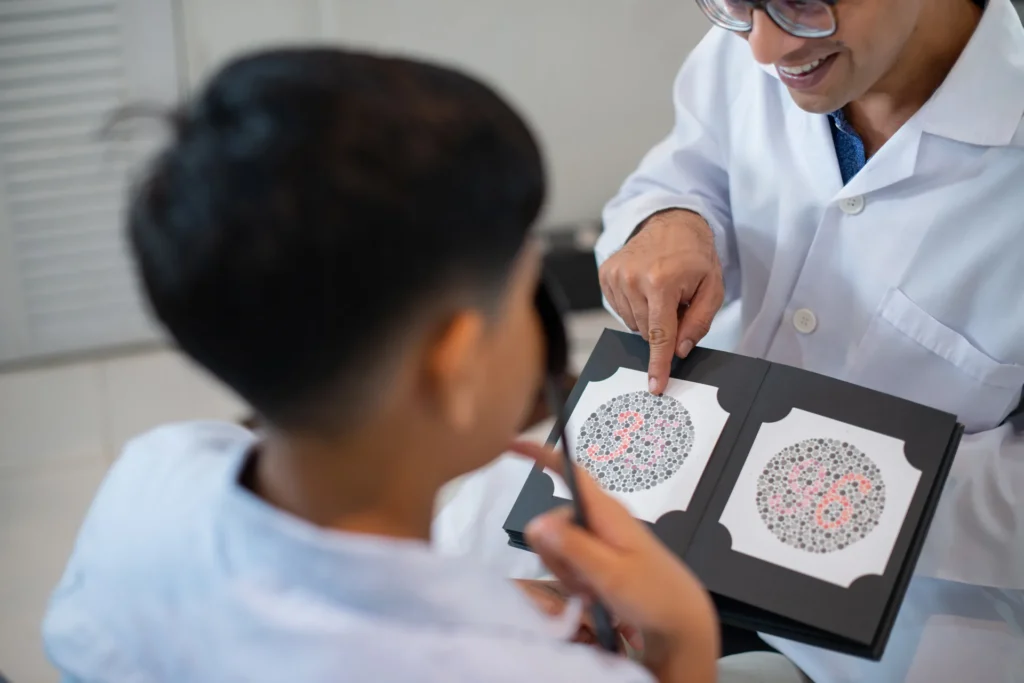
Your child’s consultation begins with an assessment of their vision, visual development and overall eye health. Depending on their age and condition, this may include measurements of vision and eye alignment, assessment of refractive error, examination of the front and back of the eyes, and diagnostic imaging where appropriate.
Children respond differently to eye examinations, so we will adapt the way each test is performed according to your child’s age and ability to cooperate. Our team will guide your child through each step patiently and carefully, while explaining the findings to you in a clear and understandable way.
Every child develops differently, and treatment is planned according to your child’s diagnosis, age, visual development and individual needs.
Depending on the condition, treatment may include glasses, amblyopia therapy, myopia control, eye drops, monitoring or other forms of treatment. We will explain the recommended approach, what it aims to achieve and what you can expect over time, while giving you the opportunity to discuss any questions or concerns.
Once treatment begins, our team will provide clear guidance on how it should be carried out at home and what to expect along the way. This may include advice on wearing glasses, using eye patches or eye drops, or following a myopia control programme.
We understand that children may need time to adjust to treatment. We will work closely with you to make the process as manageable and comfortable as possible, while adapting our approach according to your child’s needs and response.
Some paediatric eye conditions may require a procedure or surgery. If this is recommended, we will explain why it is needed, what the procedure involves and how your child will be cared for before, during and after treatment.
The type of anaesthesia and surgical setting will depend on your child’s age and the procedure being performed. Our team will guide you through the necessary preparations and work closely with the surgical team to help make the experience as smooth and reassuring as possible for your child.
Children’s eyes continue to grow and develop, so regular follow-up is an important part of paediatric eye care. Follow-up visits allow us to monitor your child’s vision, eye alignment, refractive changes and response to treatment over time.
We will adjust treatment where needed as your child grows and their visual needs change. Our team will continue to support both you and your child throughout their care, providing clear guidance and addressing any concerns along the way.
Children may not always realise or communicate when they are having difficulty seeing. A comprehensive eye examination can help identify vision problems early and assess how your child’s eyes are developing.
Book a consultation at Ascend Eye Clinic for a comprehensive assessment. Our team will explain the findings clearly and advise on the appropriate care to support your child’s vision and visual development.
An eye examination is recommended if you notice concerns about your child’s vision, eye alignment, eye movements or visual behaviour. Children may not always realise that their vision is reduced, so an assessment can also be helpful when there is a family history of childhood eye conditions or refractive errors.
Signs may include sitting very close to screens, holding books close to the face, squinting, closing one eye, frequent eye rubbing, headaches, difficulty seeing the board at school, an eye turning inward or outward, or difficulty with reading and other visually demanding tasks.
Yes. A child may have reduced vision in one eye without noticing because the other eye is seeing well. Some refractive errors and amblyopia can therefore remain unnoticed unless vision is tested in each eye separately.
Amblyopia, or lazy eye, occurs when vision in one or both eyes does not develop normally during childhood. It may be associated with unequal spectacle prescriptions, squint, high refractive errors or conditions that interfere with clear vision during visual development.
Treatment focuses on providing the clearest possible vision and encouraging use of the weaker eye. This may include glasses, patching of the stronger eye or atropine eye drops. Treatment depends on your child’s age, vision and the underlying cause.
A squint, or strabismus, occurs when the eyes are not aligned in the same direction. One eye may turn inward, outward, upward or downward. The misalignment may be constant or occur only at certain times.
No. Treatment depends on the type and cause of the squint. Some children may be managed with glasses, amblyopia treatment or monitoring, while surgery may be recommended when eye alignment cannot be adequately managed with non-surgical treatment.
Myopia, or short-sightedness, causes distant objects to appear blurred while nearer objects are clearer. It often develops during childhood and may increase as the eyes continue to grow.
Myopia control treatments are available to help slow progression in suitable children. Depending on your child’s age and prescription, this may include specialised spectacle lenses, contact lenses or low-dose atropine eye drops.
These eye drops temporarily relax the focusing muscles inside the eyes and enlarge the pupils. This allows a more accurate measurement of your child’s refractive error and provides a clearer view of the structures at the back of the eyes.
Eye examinations can be adapted according to your child’s age and ability to cooperate. Different tests, pictures, matching tasks and objective measurements can be used so that useful information can still be obtained even when a child cannot read letters or describe their vision clearly.
Yes. Glasses can be prescribed even for very young children when needed. They may be used to correct blurred vision, support normal visual development, manage amblyopia or help control certain types of eye alignment problems.
The frequency of follow-up depends on your child’s diagnosis, age and treatment. Children receiving treatment for amblyopia, myopia or squint may require more regular reviews so that their vision and response to treatment can be monitored closely.
Screen use does not usually cause permanent eye damage, but prolonged near work can contribute to eye strain and may be associated with myopia development and progression. Regular breaks, appropriate viewing distances and spending time outdoors are important for children’s visual habits.
Prompt assessment is recommended if your child develops sudden loss of vision, significant eye pain, severe redness, a new eye turn, a white appearance in the pupil, an eye injury, marked light sensitivity or sudden changes in visual behaviour.
Hi, I would like to book a consultation with Dr Errol Chan from Ascend Eye Clinic
