
We provide various specialised procedures to treat a wide spectrum of vitreous and retinal eye conditions. Every case is assessed individually with detailed retinal imaging and each treatment is carefully customised to the individual, with compassionate and attentive care throughout your entire treatment journey.
The retina converts light into signals that allow the brain to form an image and the vitreous provides a clear pathway for light to reach the retina. When either structure is affected, vision can become blurred, distorted, shadowed or partially lost.
Depending on the retinal condition and severity, treatment is directed at the underlying problem using the most appropriate approach:
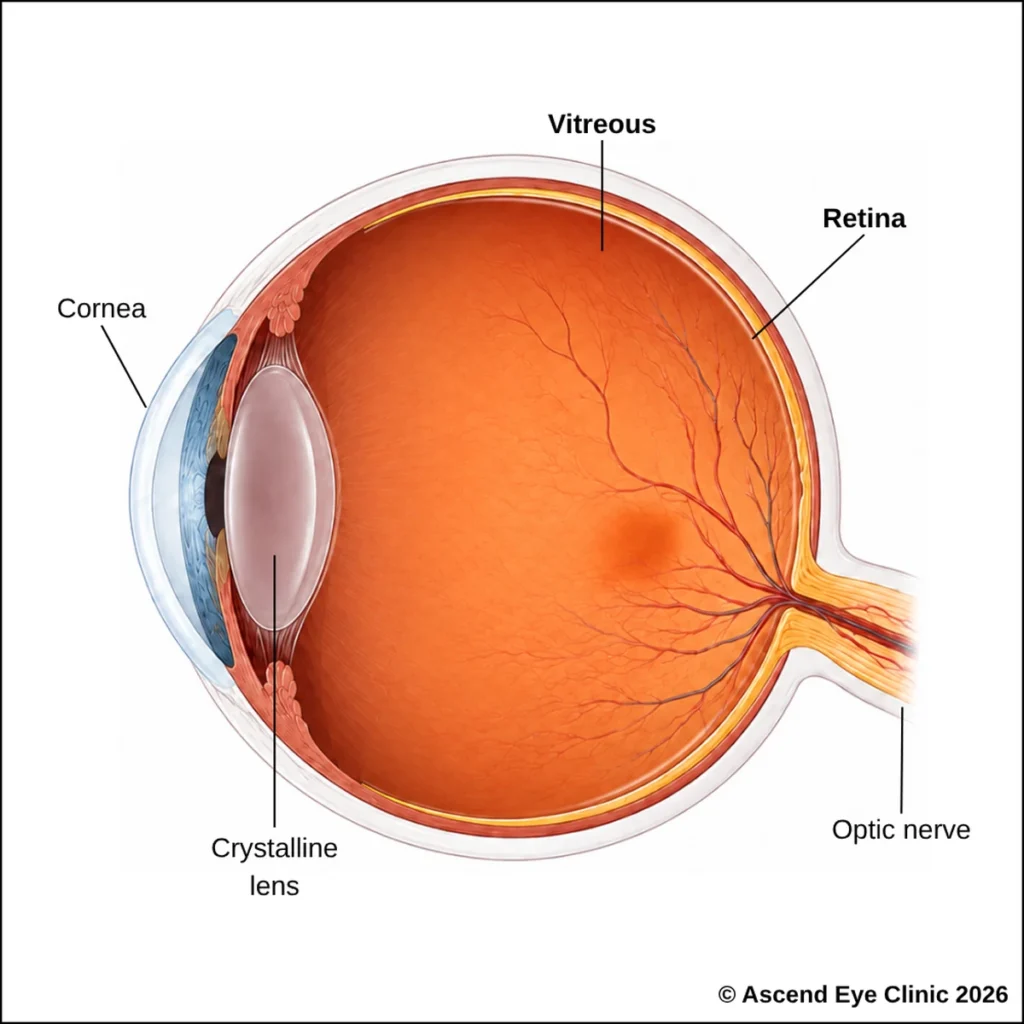
The treatment for retinal conditions depends on the underlying retinal condition and its severity. Following a detailed assessment, we will recommend the appropriate treatment to control the condition, protect the retina and preserve vision.
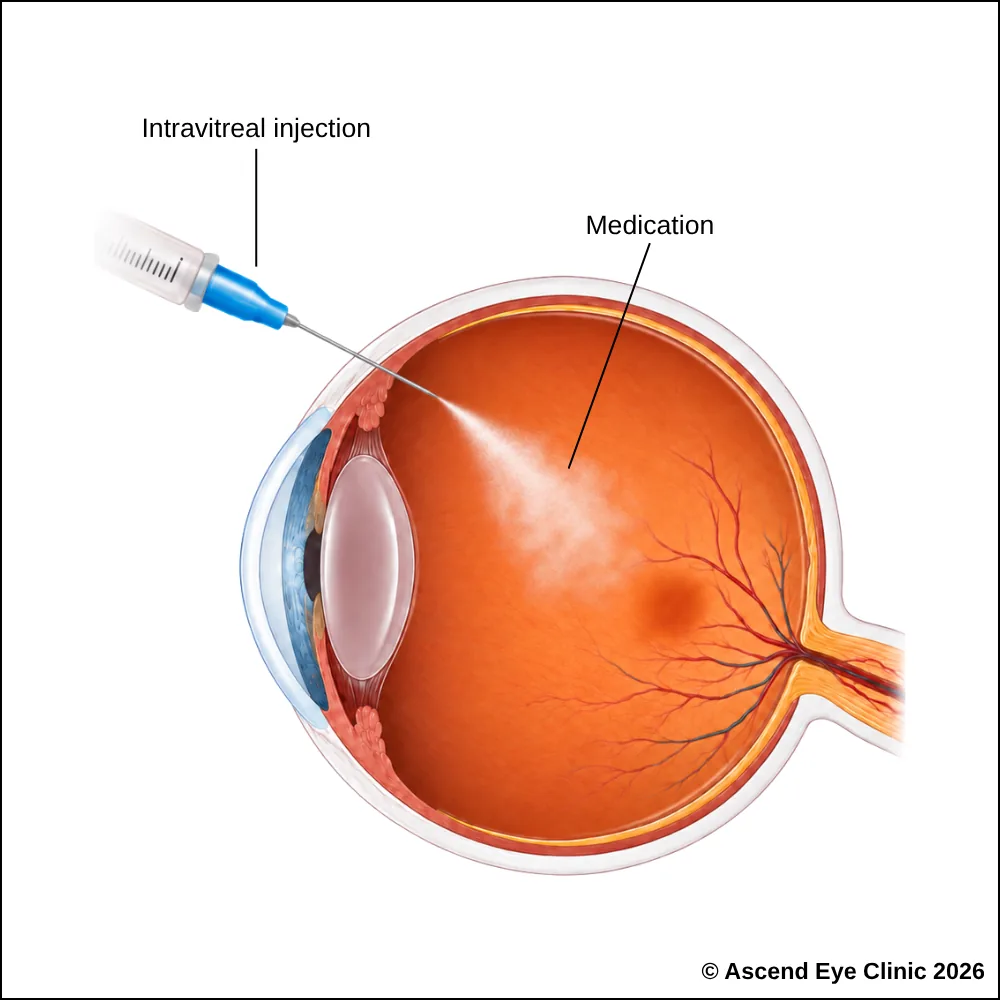
Intravitreal injections deliver medication directly into the eye to treat swelling, leakage, and abnormal blood vessels in the retina. It is commonly used for conditions such as age-related macular degeneration, diabetic macular oedema and retinal vein occlusion.
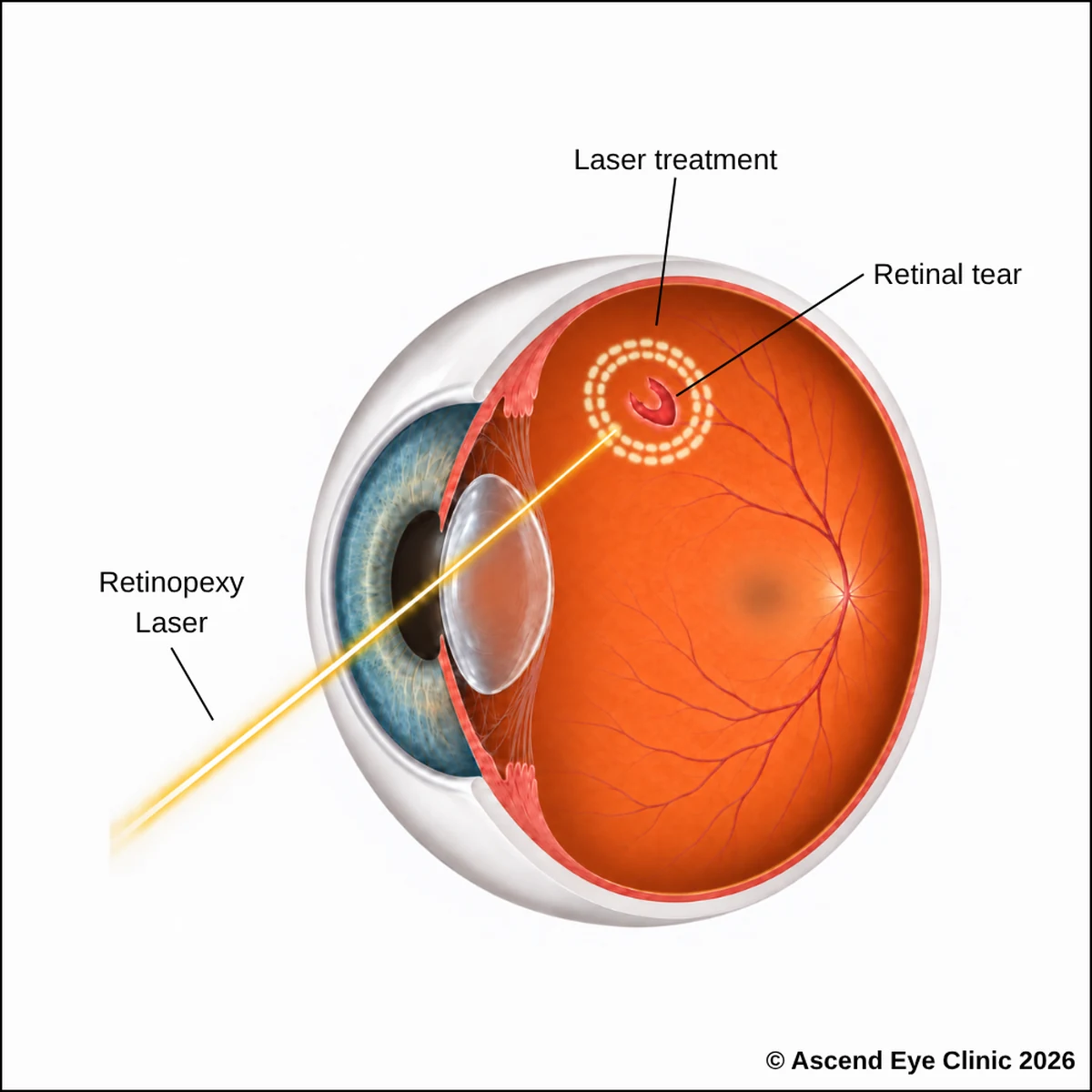
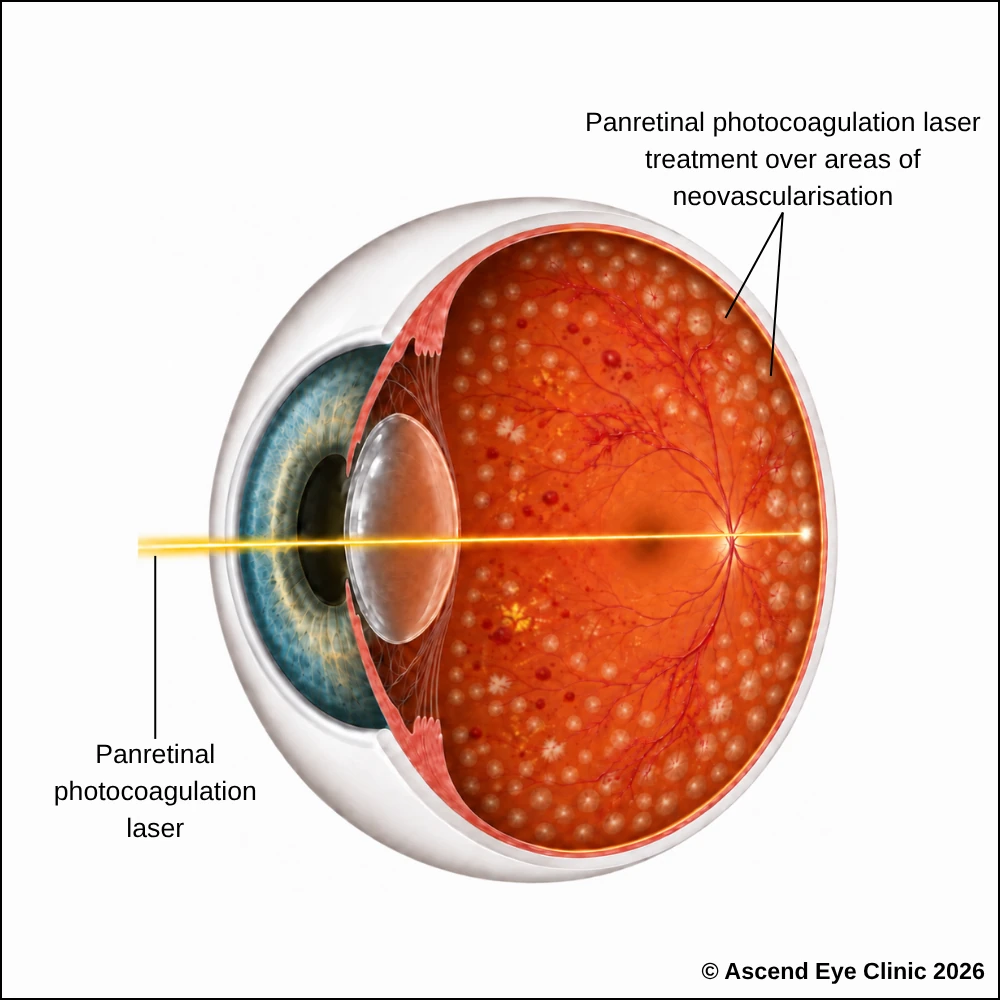
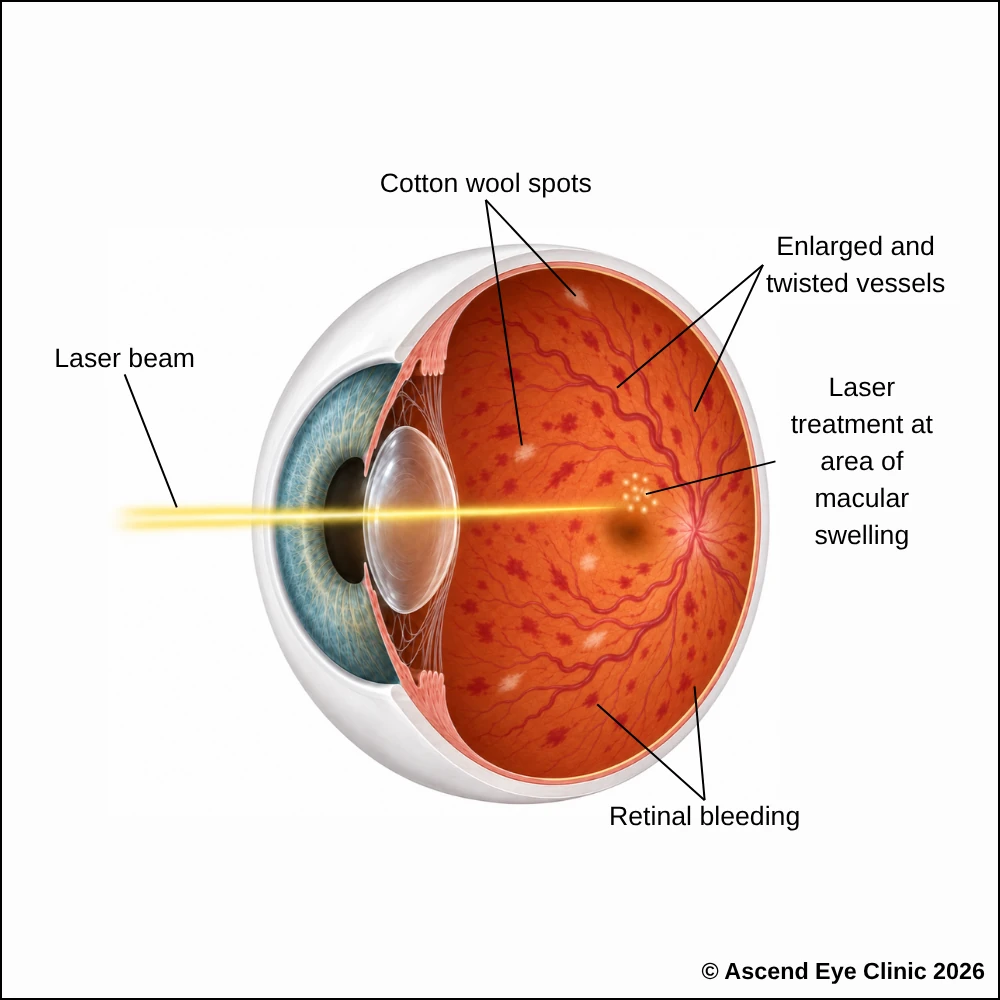
Retinal laser treatment delivers controlled laser energy to targeted areas of the retina to treat retinal tears, reduce vascular leakage, and manage abnormal retinal blood vessels. The treatment approach is selected according to the underlying retinal condition and the location of the affected area.
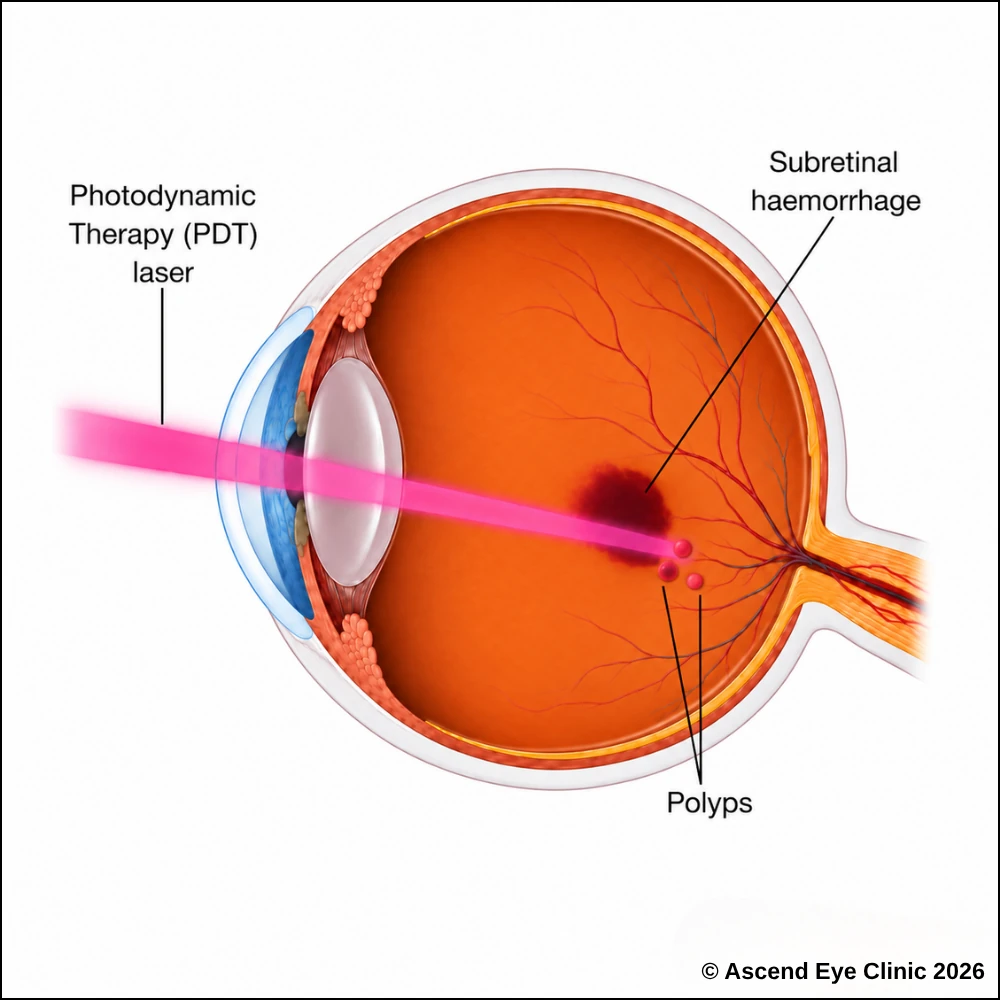
Photodynamic therapy combines a light-activated medication with a targeted laser to close abnormal or leaking blood vessels beneath the retina. It is used in central serous chorioretinopathy and polypoidal choroidal vasculopathy while minimising damage to the surrounding tissue.
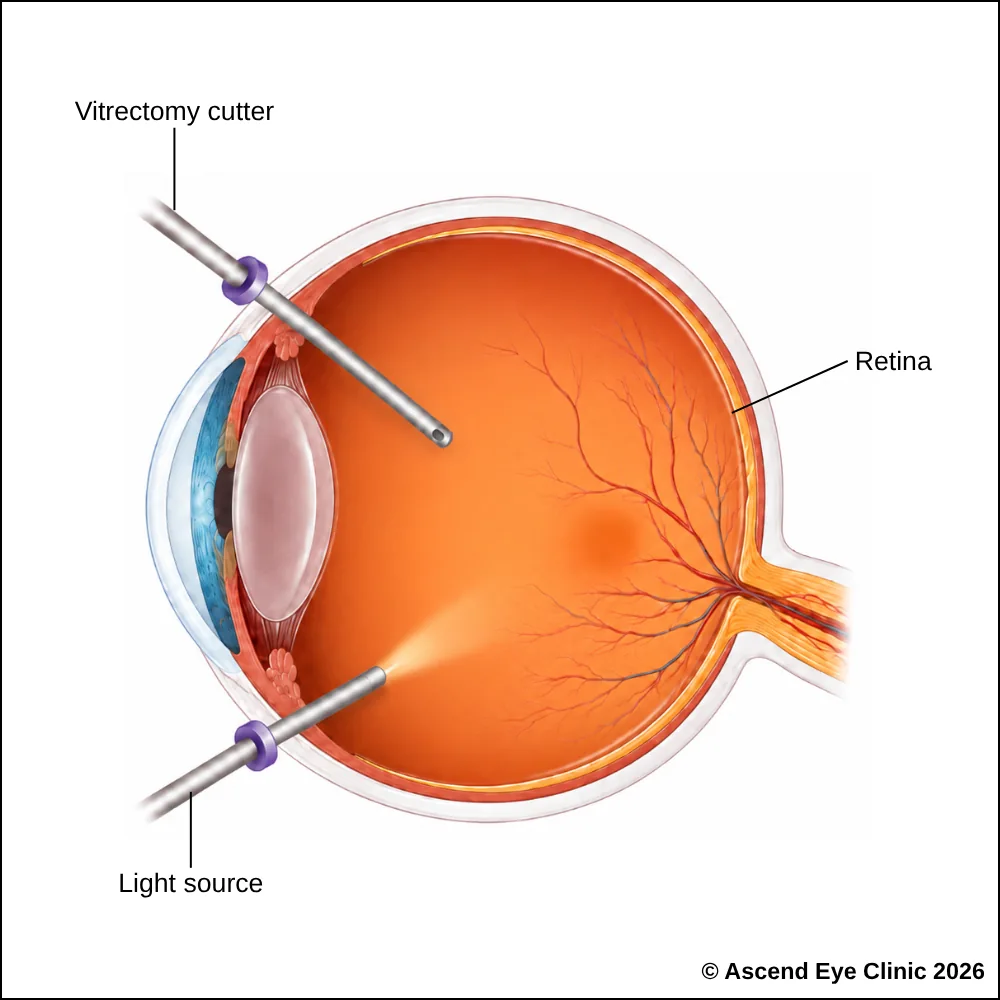
Vitrectomy is a microsurgical procedure during which the vitreous gel is removed to allow direct access to the retina for surgical treatment.
It is performed for a wide range of conditions including:
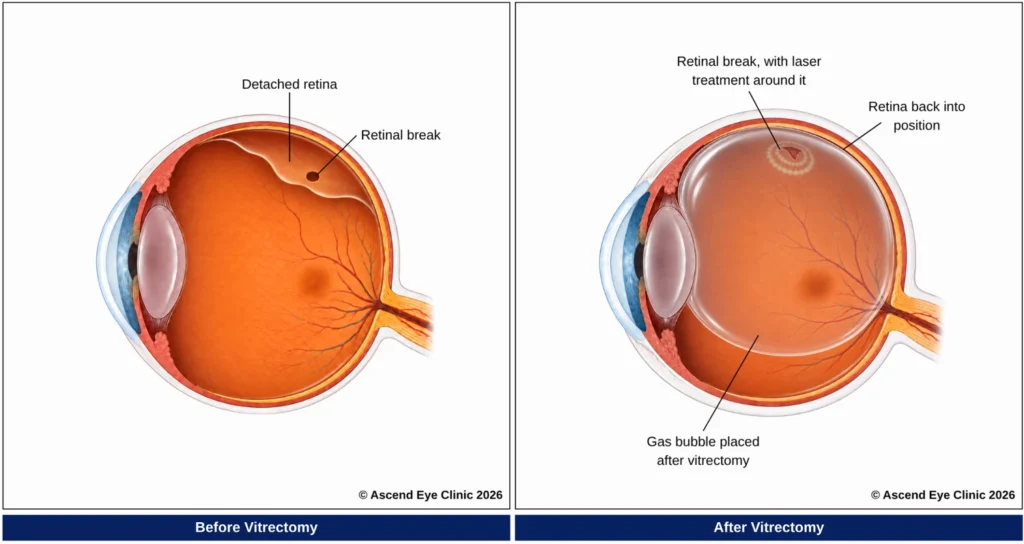
The treatment for a retinal detachment treatment involves reattaching the detached retina. Depending on the location and extent of the detachment, the treatment options include vitrectomy, pneumatic retinopexy or the placement of a scleral buckle. In more severe cases of retinal detachment, vitrectomy and scleral buckle surgery can be performed together as a combined procedure.
From your initial consultation to treatment and follow-up care, our team will guide you through every stage of your journey. We will take the time to explain your condition, answer your questions and help you feel informed and supported throughout your care.
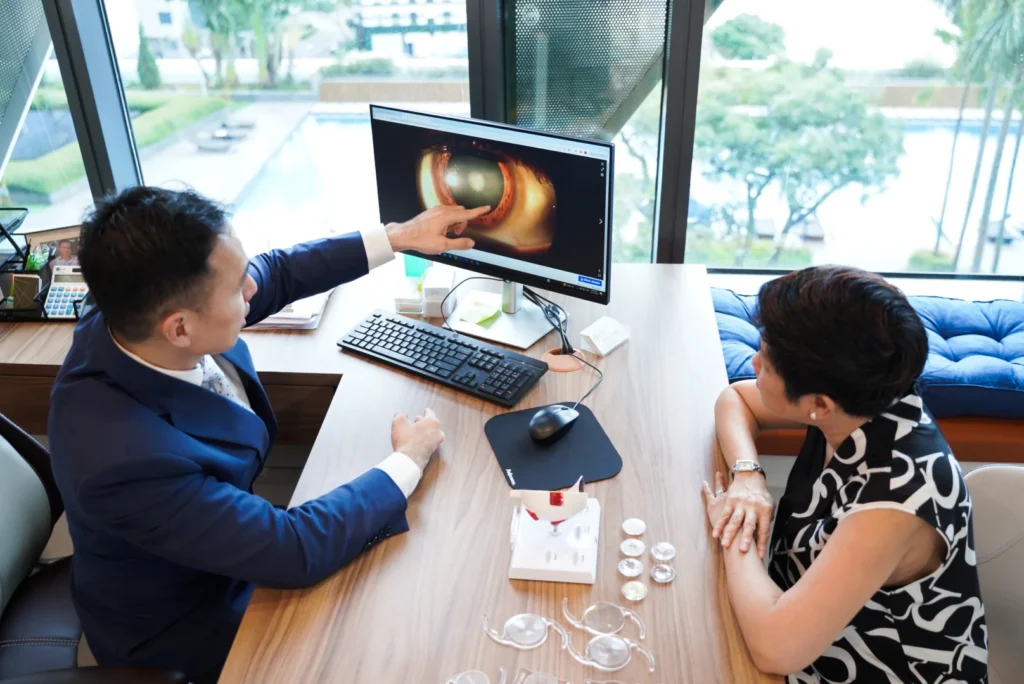
Your consultation begins with a detailed assessment of your vision and eye health. Depending on your condition, this may include measurements of your vision and eye pressure, examination of the front and back of the eye, and advanced diagnostic imaging.
Our team will guide you through each test and explain what is being assessed. Your results will then be carefully reviewed to understand your individual needs and determine whether monitoring or treatment may be recommended.
Every eye and every patient is different. Your treatment plan will be tailored according to your examination findings, visual needs, general health and lifestyle.
We will explain the recommended treatment, its expected benefits, possible risks and any suitable alternatives in a clear and straightforward manner. You will have time to ask questions and consider your options before deciding how you would like to proceed.
Before your treatment, our team will guide you through the necessary preparations, paperwork and medication instructions. Where applicable, we will explain how to use your prescribed eye drops and how to care for your eyes afterwards.
We understand that undergoing a procedure can feel unfamiliar or worrying. Our team will be available to answer your questions and ensure that you know what to expect before the day of your treatment.
On the day of your procedure, you will arrive at the hospital or surgical centre where your operation has been scheduled. The surgical team will help you prepare and explain what will happen at each stage.
Anaesthetic eye drops or other forms of anaesthesia may be used, depending on the procedure, to keep you comfortable. Your doctor and the surgical team will support and reassure you throughout the operation.
Most eye surgeries are performed as day procedures, although the duration and recovery process will depend on the treatment you receive. Your vision may be temporarily blurred afterwards, so you should arrange for someone to accompany you home and should not drive unless your doctor has advised that it is safe to do so.
We will provide clear instructions on how to care for your eyes, use any prescribed medication and manage your activities during recovery. We will also explain which symptoms are expected and when you should contact the clinic for further advice.
Follow-up appointments allow us to monitor your vision, assess your recovery and identify any concerns at an early stage. Our team remains accessible should you have any questions or concerns throughout your recovery.
Medical Director & Senior Consultant Ophthalmologist
Ascend Eye Clinic, Singapore
Changes such as blurred vision, distortion, flashes, floaters or a shadow in the visual field can be linked to conditions affecting the retina or vitreous. A detailed retinal assessment helps us identify the underlying cause and guide personalised treatment focused on protecting your vision and supporting long-term retinal health.
The seriousness depends on which part of the retina is affected and how much the condition is affecting your vision. Some retinal conditions can be monitored, while others require treatment to prevent further damage. We will assess the retina carefully and explain what the findings mean for your vision.
Some retinal conditions can remain stable, while others can progress and cause further changes to the retina or vision. Early assessment helps us determine whether treatment is needed and allows us to monitor for changes before more significant vision loss develops.
Not every retinal condition leads to permanent vision loss. The outcome depends on the type and severity of the condition, how long the retina has been affected and which part of the retina is involved. Where treatment is required, the aim is to preserve vision and prevent further deterioration.
Vision can improve after treatment, although the amount and speed of recovery vary between individuals. Some people notice a significant improvement, while others may have some remaining blur or distortion if the retina was already damaged before treatment. We will discuss what level of recovery can reasonably be expected based on your condition.
Retinal conditions can develop for many reasons, including age-related changes, diabetes, previous eye surgery, injury or changes within the vitreous gel inside the eye. In some cases, they can occur without an obvious cause. We will assess the retina and discuss any factors that may have contributed.
Both are possible. Some conditions develop gradually and cause slowly worsening blur or distortion, while others can occur suddenly and cause flashes, floaters or a sudden loss of vision. Any sudden or significant change in vision should be assessed promptly.
Some retinal conditions affect only one eye, while others can occur in both eyes. Even when symptoms are present in only one eye, we will examine both eyes to check for any similar changes or factors that may increase the risk of problems developing in the other eye.
Many retinal and vitreous conditions become more common with age because the vitreous gel and retina naturally change over time. However, retinal conditions can occur at any age depending on factors such as short-sightedness, diabetes, previous eye surgery or injury.
Yes. Diabetes can damage the small blood vessels within the retina and lead to leakage, swelling, bleeding or abnormal blood vessel growth. Other medical conditions that affect the circulation can also influence retinal health, which is why managing your general health remains an important part of protecting your vision.
This depends on the condition. Some mild changes can remain stable or improve without treatment, while others require laser treatment, injections or surgery to protect the retina and vision. We will explain whether monitoring or treatment is more appropriate after examining your eyes.
We monitor your vision together with detailed examination and retinal imaging. Tests such as OCT and retinal photography allow us to compare the retina over time and identify changes in swelling, bleeding, traction or the structure of the retina.
The frequency of follow-up depends on the condition and how stable it is. Some patients require closer monitoring initially, while others can be reviewed at longer intervals once the condition is stable. We will arrange follow-up based on what is most appropriate for your eyes.
Many people can continue their usual activities, although this depends on how much the condition is affecting vision and whether treatment has recently been performed. We will let you know if any temporary restrictions are needed and when it is safe to return to your normal activities.
Seek prompt eye assessment if you notice a sudden increase in floaters, repeated flashes of light, a dark shadow or curtain across your vision, sudden loss of vision or a significant new area of distortion. These symptoms can be associated with retinal conditions that need timely treatment.
Some retinal conditions can recur or continue to change even after treatment, depending on the underlying cause. This does not necessarily mean that treatment has failed. Regular follow-up allows us to monitor the retina, detect any new changes early and provide further treatment when needed.
Hi, I would like to book a consultation with Dr Errol Chan from Ascend Eye Clinic
