
Dry eyes can cause burning, grittiness, redness, fluctuating vision and a constant feeling of irritation or tiredness. Personalised dry eye treatment can help relieve these symptoms, improve tear quality and restore greater comfort to your eyes throughout the day.
Dry eye syndrome occurs when the eyes do not produce enough tears, or when the tears evaporate too quickly or are of poor quality. This causes the surface of the eye to become dry and irritated.
Common symptoms include burning, grittiness, redness, fluctuating or blurred vision, sensitivity to light, tired eyes and sometimes excessive tearing. Symptoms can either be occasional or persistent and is commonly worsened by prolonged screen use, air-conditioning, contact lenses, ageing and certain medical conditions or medications.
Learn more about dry eye here.
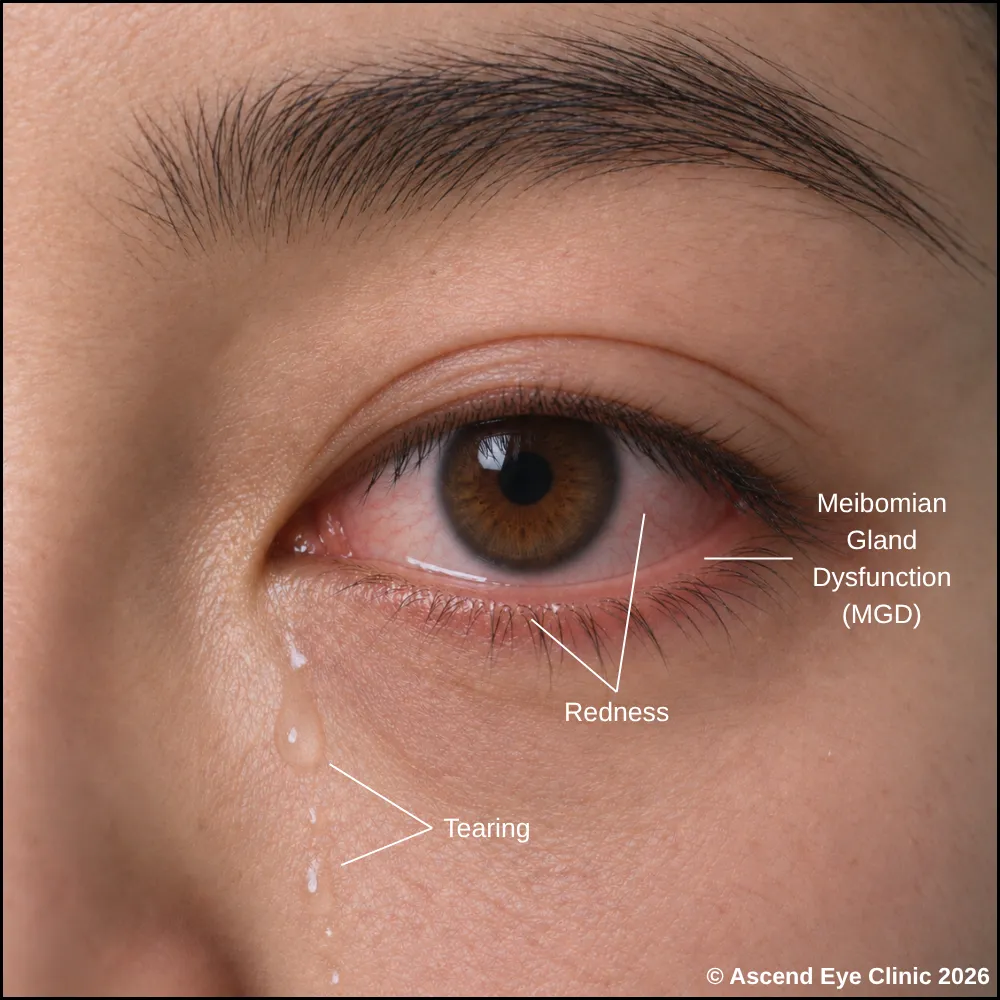
Dry eye can develop for different reasons, including reduced tear production, excessive tear evaporation, inflammation of the eye surface and meibomian gland dysfunction. Treatment is recommended according to your symptoms and examination findings, with the aim of improving tear-film stability, reducing irritation and addressing the factors contributing to your dry eye.
Prescription eye drops are recommended when lubricating drops alone are not sufficient to control dry eye symptoms. Medications such as ciclosporin eye drops (Ikervis®) help reduce inflammation on the surface of the eye and support healthier tear production, allowing the tear film and ocular surface to improve gradually over time.
The drops are used regularly at home according to the prescribed schedule. As the effect of ciclosporin develops progressively, consistent treatment is important and improvement may take some time to become noticeable.
Some temporary stinging, burning or irritation can occur when the drops are first applied. Your symptoms and the surface of your eyes will be reviewed during follow-up, and treatment is adjusted depending on how your eyes respond.
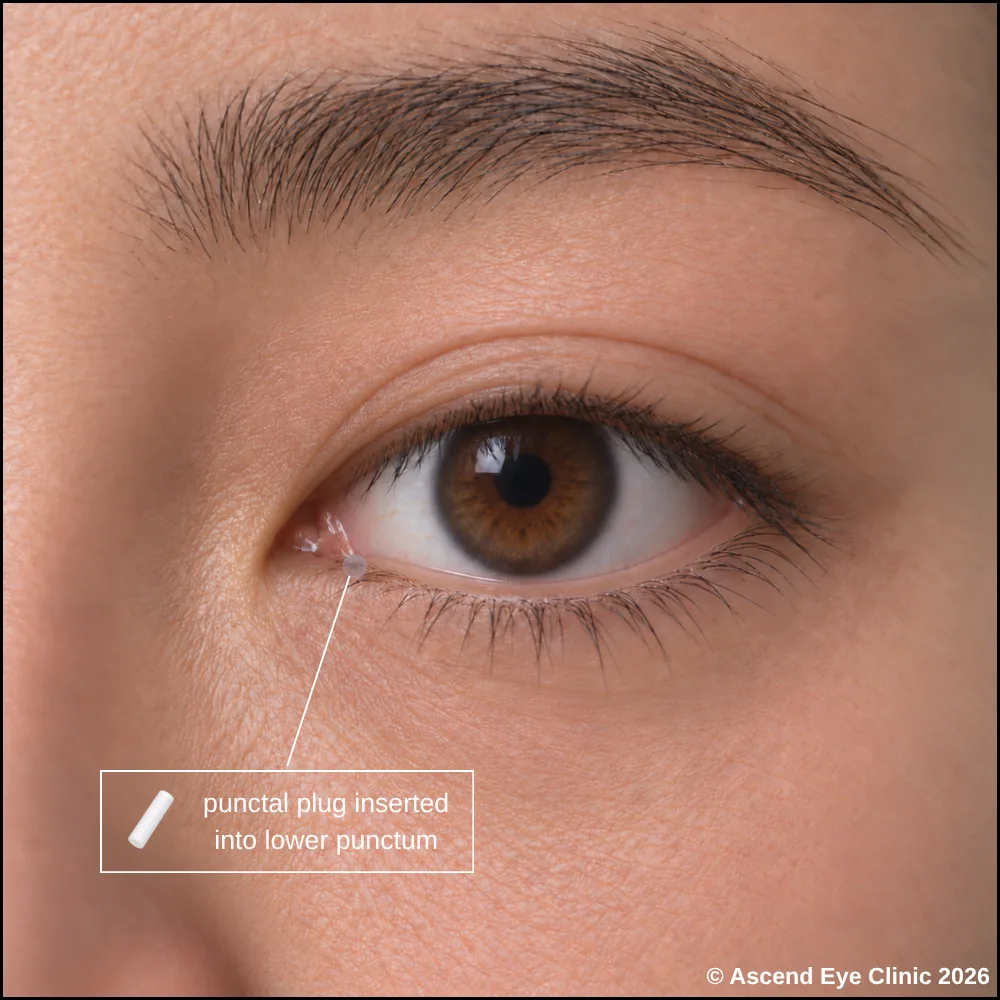
Punctal plugs are used to help retain tears on the surface of the eye. Tiny silicone or dissolvable collagen plugs are placed into the small tear-drainage openings of the eyelids, slowing the normal drainage of tears so that your natural tears and lubricating eye drops remain on the eye for longer.
Before insertion, the tear-drainage openings are examined and anaesthetic eye drops are used for comfort. The plug is then gently inserted into the appropriate punctum using a small instrument. The procedure is performed in the clinic, taking only a few minutes and causes minimal discomfort.
You can return to your normal activities immediately afterwards. The plugs are not noticeable once in position, although some patients may experience temporary awareness of the plug or increased tearing. Follow-up reviews are arranged to assess your symptoms and ensure that the plugs remain appropriately positioned.
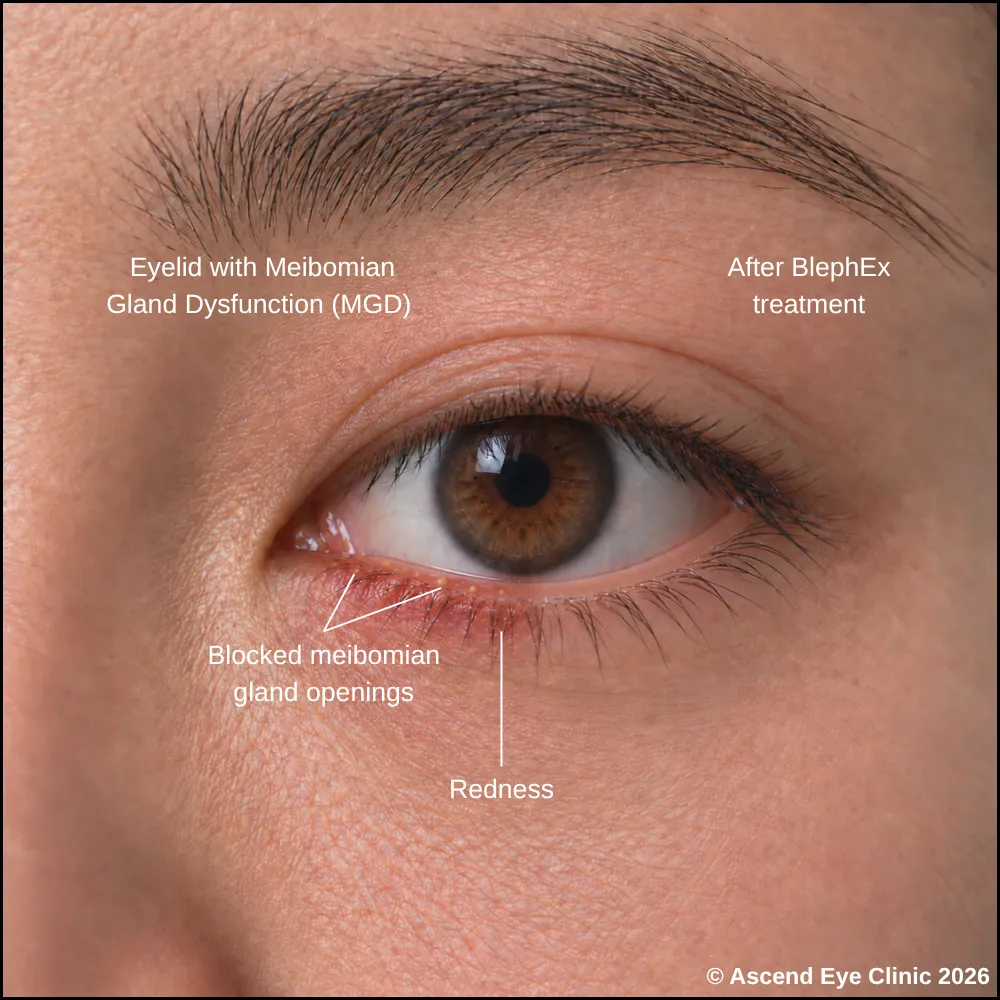
BlephEx™ is used to is used to treat dry eye associated with blepharitis and build-up along the eyelid margins. Removing accumulated crusting, debris and biofilm around the eyelashes helps keep the eyelid margins cleaner and the openings of the meibomian glands clearer, supporting healthier oil flow into the tear film.
During treatment, a specialised rotating medical-grade tip is gently passed along the eyelid margins and around the base of the eyelashes to clean away accumulated material. You may feel gentle pressure or a light tickling sensation as the eyelids are cleaned. The treatment is performed in the clinic and is completed within a short time.
The eyelids may feel slightly sensitive immediately afterwards, but you can generally return to your usual activities straight away. Regular eyelid hygiene is recommended to help maintain the improvement, and treatment can be repeated if crusting, debris or eyelid inflammation builds up again over time.
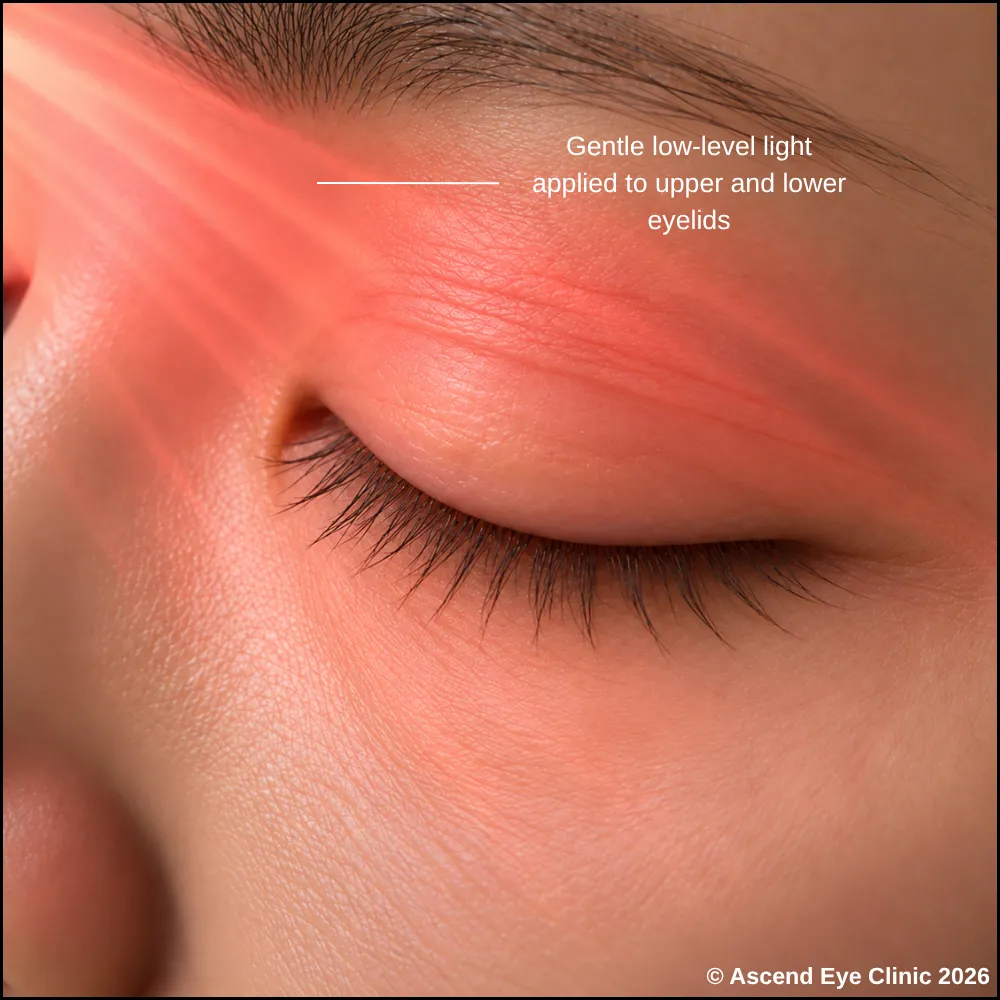
Eye-Light® is used to manage dry eye associated with meibomian gland dysfunction. It delivers low-level light to the eyelids to help reduce inflammation, support meibomian gland function and improve the quality and flow of oils that help stabilise the tear film.
During treatment, the eyelids are exposed to low-level light using the Eye-Light® device. The procedure is performed in the clinic and is generally comfortable, with little to no downtime.
Mild skin redness or warmth may occur temporarily after treatment. Improvement develops progressively, and several sessions may be recommended depending on the severity of meibomian gland dysfunction and your response to treatment.
IPL treatment uses controlled pulses of light applied to the skin around the eyelids to help manage dry eye associated with meibomian gland dysfunction. The light helps reduce inflammation around the eyelids and meibomian glands, while warming and softening thickened oils to improve their flow onto the eye surface and support a more stable tear film.
During treatment, protective eye shields are placed over the eyes before controlled pulses of light are delivered to the skin around the eyelids and upper cheeks. You will feel brief flashes of light and mild warmth as each pulse is applied. The treatment is performed in the clinic and is completed within a relatively short time.
There is little to no downtime after IPL treatment. The surrounding skin is expected to feel mildly warm or appear slightly red for a short period after the session. Improvement develops progressively as meibomian gland function and oil flow improve, and several treatment sessions are recommended, with the frequency depending on the severity of the dry eye and response to treatment.
Dry eye symptoms can be uncomfortable and frustrating, particularly when they begin to interfere with reading, screen use, work or everyday activities. From your first consultation, our team will take the time to understand how your symptoms are affecting you, carefully assess the health of your eyes and recommend treatment aimed at providing meaningful and lasting relief.
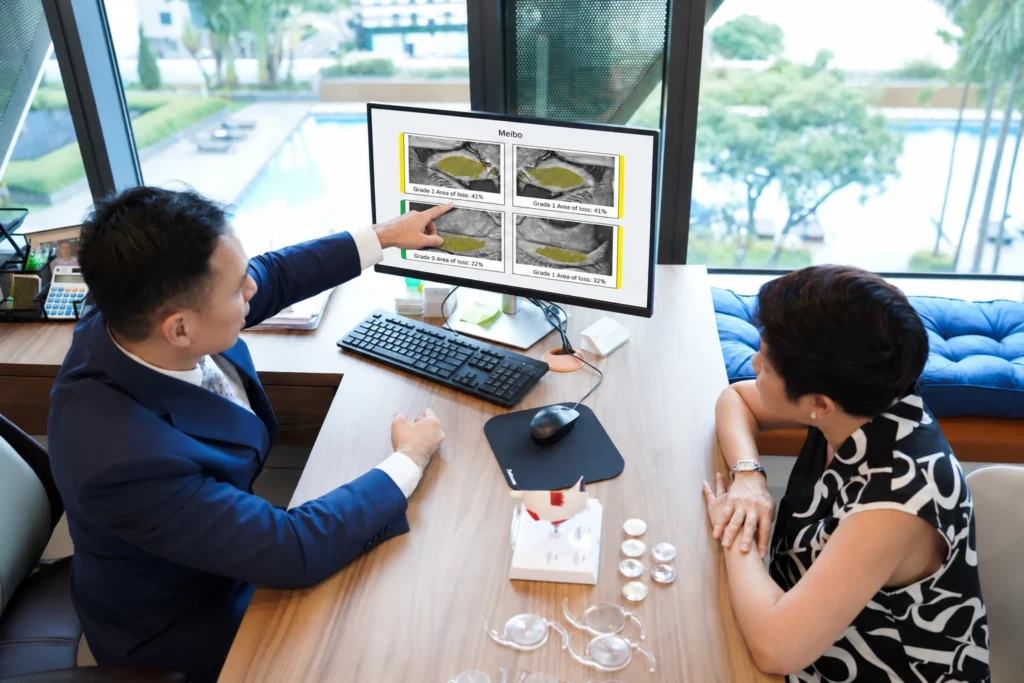
Your visit begins with a detailed discussion about your symptoms, including when they occur, what makes them worse and how they affect your daily activities. We will also ask about factors such as contact lens use, screen time, medications, previous treatments and your general health.
Your eyes will then be carefully examined to assess the tear film, eye surface, eyelids and meibomian glands and to identify the factors contributing to your dryness.
We understand that dry eye can feel different for every patient, so we pay close attention not only to the examination findings but also to the symptoms that are bothering you most.
Once we understand the cause and severity of your dry eye, we will explain the findings and recommend a treatment plan suited to your individual needs.
Where suitable, treatments can be performed during the same visit following your assessment. Before any in-clinic treatment, our team will explain what will happen and what you may feel during the procedure. We will make every effort to keep you comfortable throughout, and you will always have the opportunity to ask questions before proceeding.
Dry eye often improves gradually and we will closely monitor how your eyes respond and adjust treatment accordingly. Follow-up visits allow us to assess how comfortable your eyes feel, examine the tear film and eye surface, and determine whether your current treatment is providing sufficient relief.
Our aim is not only to improve the appearance of the eye surface during examination, but to help your eyes feel more comfortable in your everyday life and provide a treatment plan that is manageable for you over the longer term.
At Ascend Eye Clinic, we understand how persistent dry eye symptoms can affect your comfort, concentration and daily activities. We take the time to listen to what you are experiencing, carefully assess the underlying cause and recommend treatment that suits your individual needs.
Our goal is to help your eyes feel more comfortable, support a healthier tear film and work with you towards meaningful, long-term improvement.
Treatment depends on what is causing the dryness. Lubricating eye drops, prescription medication, treatment for blocked meibomian glands, punctal plugs or a combination of these approaches will be utilised to improve tear-film stability and reduce irritation.
Dry eye is often a long-term condition, so treatment focuses on controlling the underlying cause, improving comfort and keeping the eye surface healthy. Some patients improve significantly with a short course of treatment, while others benefit from ongoing care.
We assess the tear film, eye surface and meibomian glands to identify the main cause of the dryness. Treatment is then selected according to whether the problem is mainly reduced tear production, excessive evaporation, gland blockage, inflammation or a combination of factors.
This depends on the treatment used and the severity of the condition. Lubricating drops can provide relief quickly, while treatments that reduce inflammation or improve gland function work more gradually over several weeks.
Many patients use lubricating or prescription eye drops regularly while the tear film is unstable. The frequency can be reduced once symptoms and the eye surface improve, depending on the underlying cause.
If lubricants alone do not provide sufficient relief, we can add treatments that target inflammation, blocked meibomian glands or excessive tear drainage. The next step is based on the findings from your dry eye assessment.
Yes. Prescription anti-inflammatory eye drops are used when inflammation is contributing to persistent dry eye. These medications work gradually and are used consistently over time to improve the health of the eye surface and tear film.
Yes. Treatments such as intense pulsed light and low-level light therapy are used to improve meibomian gland function, reduce inflammation and help restore a healthier oily layer to the tear film.
The number of sessions depends on the treatment and severity of the gland dysfunction. Some treatments are performed as a course, followed by review to assess how well the tear film and symptoms have improved.
Punctal plugs are small devices placed into the tear-drainage openings of the eyelids. They slow the drainage of tears from the eye, allowing your natural tears and lubricating drops to remain on the surface for longer.
Most dry eye treatments cause little or no discomfort. Light-based treatments are non-invasive, while punctal plug insertion takes only a few minutes and is performed with local anaesthesia to ensure minimal discomfort.
This depends on the severity of the dryness and the treatment being used. Contact lenses sometimes need to be reduced or temporarily stopped while the eye surface recovers. We will advise when it is comfortable and safe to resume lens wear.
Regular use of prescribed drops, good eyelid hygiene, regular screen breaks and avoiding direct airflow from fans or air-conditioning all help support treatment and improve tear-film stability.
Yes. Dry eye symptoms can return if the underlying cause persists or the meibomian glands become blocked again. Ongoing maintenance and regular review help keep the condition under control and reduce flare-ups.
Improvement is assessed through both your symptoms and repeat examination of the tear film and eye surface. We look for better tear stability, healthier meibomian gland function and reduced irritation, together with improved day-to-day comfort.
Hi, I would like to book a consultation with Dr Errol Chan from Ascend Eye Clinic
